
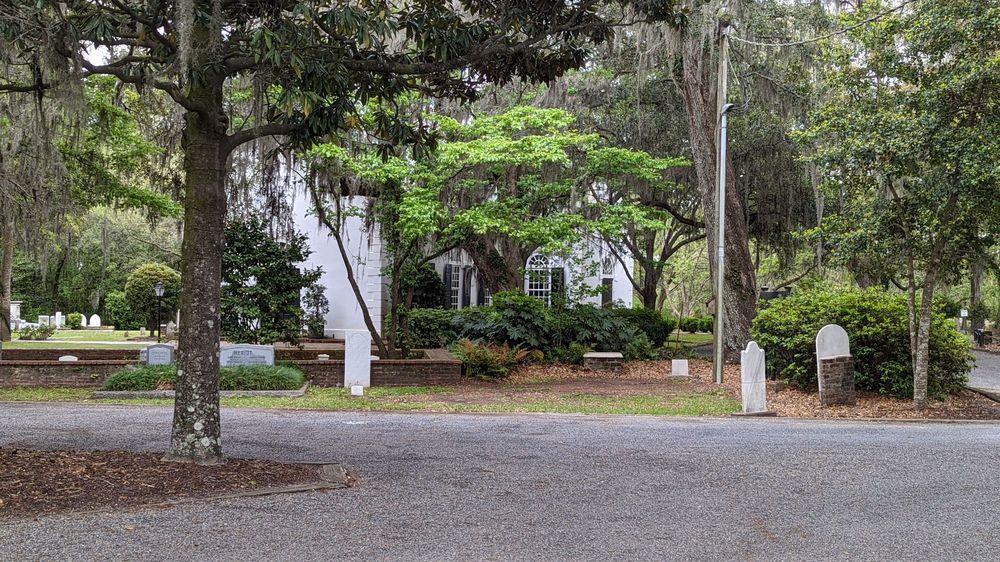
Old Saint Andrew’s Parish Church was built in 1706 on the Ashley River. Simple in style, it is the oldest surviving structure still used for worship south of Virginia. The church was one of 10 Anglican churches established in South Carolina by the Church Act of 1706, which named the Church of England as the official church of the state.
It is also South Carolina’s only remaining colonial cruciform church. It was one of ten Anglican churches in South Carolina established by the Church Act. It was built to serve the Anglican planters along the Ashley River, a thriving tidal waterway that connected them to the city of Charles Town and to each other.
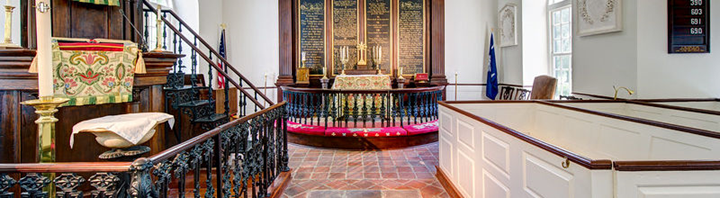
Rice, indigo, and slaves brought prosperity to the lands along the Ashley River, where some of the wealthiest plantations in British North America were located.
Eliza Lucas Pinckney’s family worshipped at this small church, and she was married there. Eliza, as well as the other parishioners, would have arrived either by carriage drawn by horses or a sloop on the water.
The original building was forty feet long and twenty-five feet wide, built of brick, with a roof of pine, and had two doors and five small, square windows. A wider “great” door was used by the gentry and faced the river. A narrower “small” door was used by commoners and clergy and faced west.
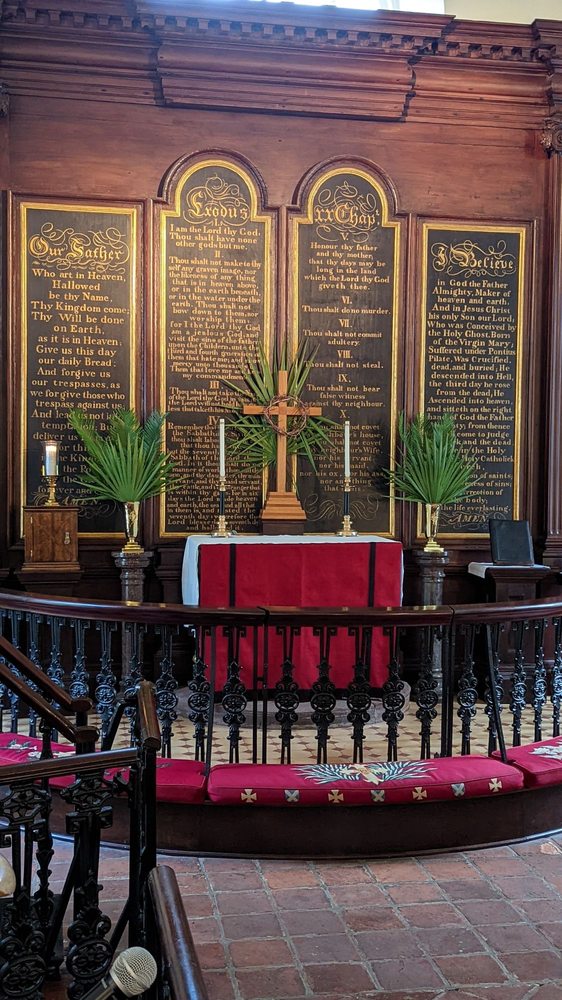
The altar rail with the gold leaf of (from left to right) the Lord’s prayer, Ten Commandments, and the Apostles’ Creed.
The church survived a major fire in the 1760s but was quickly rebuilt inside its existing walls. But the parish declined before the Revolution and into the antebellum era.
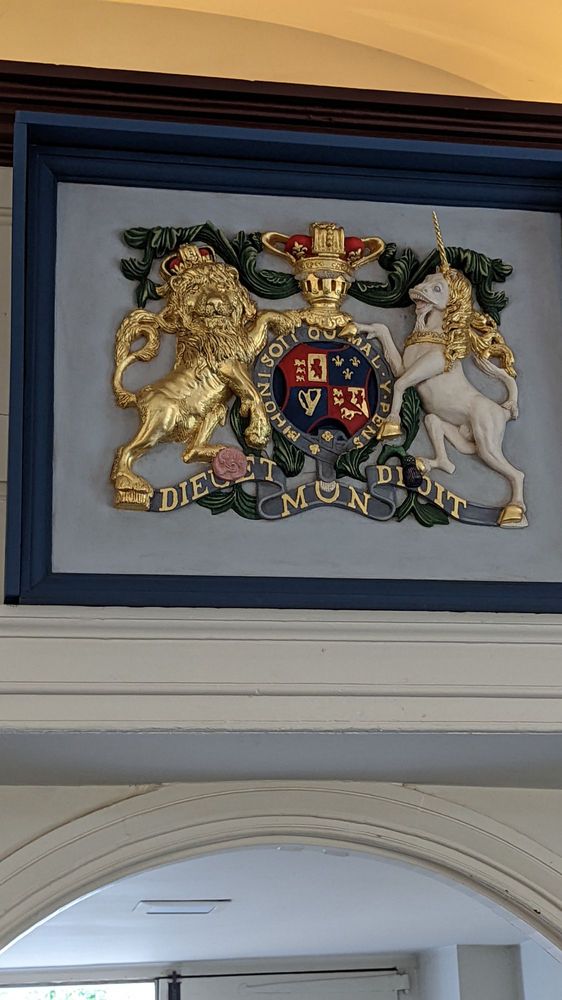
The seal of the church as you leave the sanctuary.
The parish engaged in an active ministry to enslaved people before the Civil War and to freed people after it. The church was badly damaged in the Charleston Earthquake of 1886. It was dormant from 1891 to 1948, when it reopened to serve the growing population of West Ashley.
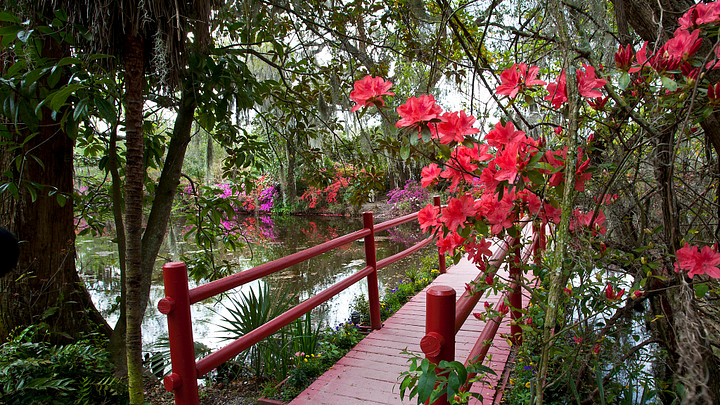
John Grimké Drayton, who built the beautiful gardens at Magnolia Plantation, served as St. Andrew’s rector for 40 years. Photo by Perry Baker.
After Drayton’s death in 1891, the church was mostly abandoned until the mid-20th century, when the post-war building boom brought parishioners to the suburbs around the old plantations.
When the church reopened, the women of the church would spend a day cleaning for services. At the time, the area was rather remote with no restaurants nearby, so the ladies brought their lunches and began sharing them with visitors to the area who were coming to see the plantations.
From this was born the Annual Tea Room and Gift Shop, which opened in 1953. The weeklong event features handmade crafts in the gift shop and lunches of soups, salads and sandwiches. Proceeds from the event support the church women, who also provide daily tours of the church, for seventy years. How I would love to attend one of their teas in March!

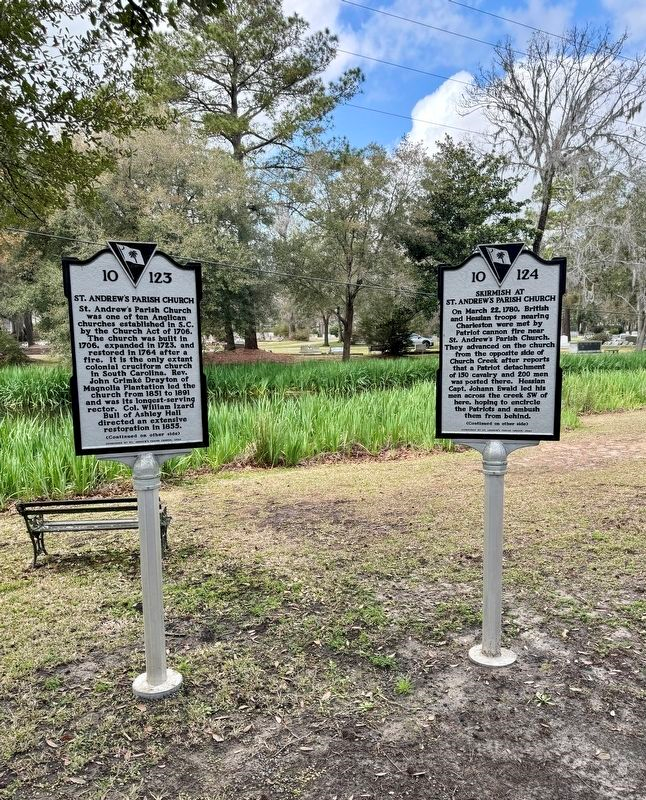
Two historical markers were recently installed at Old St. Andrew’s on S.C. Highway 61 in conjunction with the South Carolina Department of Archives and History. One of the plaques tells of a little-known Revolutionary War skirmish that took place at the church. On March 22, 1780, British and Hessian troops were met by Patriot cannon fire near this church. The colonials escaped this large enemy group.
Despite fires, hurricanes, and two wars, this church has survived and continued to minister to its people.
 Sheila Ingle