“One of the great stories from the American Revolutionary Era happened in Virginia – the story of the “Patriot Pastor,” John Peter Muhlenberg.
On January 21, 1776, at the Lutheran church in Woodstock, Virginia, Pastor Muhlenberg preached from the third chapter of Ecclesiastes, which starts, “To everything there is a season.”
After reading the eighth verse, “a time of war, and a time of peace,” he declared, “And this is the time of war.” He then threw off his clerical robe to reveal the uniform of a Continental Army Colonel. It turns out that Pastor Muhlenberg also had a military background, and George Washington had personally asked him to raise and command the 8th Virginia Regiment of the Continental Army.
Outside the church, drums began to roll as the men in the congregation turned to kiss their wives and then walked down the aisle of the church to enlist. Within a half hour, 300 men had joined the 8th Virginia Regiment and marched on to fight for their country’s independence.
After the Revolutionary War, John Muhlenberg went on to serve the new republic in both the U.S. Senate and House of Representatives. The “Patriot Pastor” became a great American story of faith and freedom.”
On the plaque are these words telling a snippet about his service to his country.
SOLDIER Commissioned Colonel of Virginia Militia 1775 Commanded Eighth Virginia Regiment Which Became the “German Regiment” of the Continental Army Fought at Charleston and Philadelphia Promoted to Brigadier General 1777 Wintered with his Troops at Valley Forge 1777-1778 Fought at Brandywine, Germantown, Monmouth and Stony Point Member, Royal Arch Masonic Lodge, Philadelphia 1779 Named Commander of All Forces in Virginia 1780 Fought at Portsmouth and Yorktown Promoted to Major General 1783 Retired November 3, 1783
Serving / His Church / His Country / His State
Muhlenberg commanded a Virginia regiment during the Revolution, first seeing action at Sullivan’s Island in South Carolina. He led his men in further engagements, worked closely with George Washington and before the war’s end rose to the rank of brigadier general. After the war, he served in the U.S. House and Senate, representing Pennsylvania.
This pastor, and many others, were Patriots who fought for the independence of our country.
Tomorrow, there will be a remembrance at the site of the Battle of the Waxhaws. The South Carolina Society of the Sons of the American Revolution, the South Carolina Daughters of the American Revolution, and the South Carolina Children of the American Revolution will honor you and the men who fought with you at that battle.
You were a member of the reinforcements consisting of 380 men, the 3rd Virginia Detachment, under the command of Colonel Abraham Buford that failed to reach the city before Charles Town fell. Cornwallis dispatched Lieutenant Colonel Banastre Tarleton to pursue and engage you.
As I have been getting more involved in lineage societies over the past twenty years, I have thought more and more about you. Born in one century on November 30, 1761 in Spotsylvania County and dying in the next century on November 8, 1839 in Woodford County, Kentucky, you must have lived through many changes. In The Descendants of Captain Thomas Carter, it states that you and Susannah and you visited in 1809 a new wax museum in Lexington and had your silhouettes cut. That forty mile journey didn’t deter you from visiting this collection.
I am proud of you for fighting for our freedom during the Revolutionary War. It makes sense that you enlisted in the Virginia line, where you were born and raised. When I read your pension record, I saw you served your promised 18 months. You were committed to our independence from England.
It is only 96 miles from where I live in Spartanburg, SC to where you fought in the Battle of the Waxhaws. From what I read, this was a bloody battle, and I am glad you were one of the 53 prisoners. After you escaped, you were able to join the war again and be at the surrender of Cornwallis at Yorktown; that must have been quite the celebration.
Along with the other men under Colonel Abraham Buford in the Virginia Continentals and Virginia Regiment, the normal rules of war weren’t adhered to in this battle. Most people today consider it a slaughter.
I wrote about this battle in a book about Elizabeth Hutchinson Jackson, the mother of President Andrew Jackson, called Brave Elizabeth. Here is the introduction to the chapter titled “The Fog of War.”
Ordinary sights and sounds of the forest flooded the Camden-Salisbury Road, and the air was filled with darting birds and their songs. A menagerie of spring wildlife made their afternoon excursions. A doe followed by her fawn leapt over the fallen tree. A red-tailed hawk silently swooped toward the uneven red clay to grab an unsuspecting field mouse. Young squirrels easily jumped from limb to limb, and bunnies hopped awkwardly around their mother.
It was Monday, May 29, 1780, when military sounds interrupted this warm and sultry spring day.
First along the road trekked a caravan of supply wagons and field artillery. Some wagons were drawn by four horses and others by two. Strapped down in the covered baggage wagons were medicine chests, tents, and officers’ gear. Foodstuffs were also in covered wagons, and the various barrels of hard- tack, potatoes, corn, and dried and salted beef were tightly packed. In between the casks were iron cooking pots and skillets, tin kettles, axes, and wooden cooking utensils. Another set of wagons carried extra rifles and muskets, sturdy barrels of gunpowder, and lead bricks to make bullets. Two, six-pounder cannons on caissons brought up the rear.
Shouts from the wagoners and the crack of whips encouraged the horses forward.
In the midst of the wagons rode the advanced guard. When a Continental Army force marched, it carried its own supplies. All these accouterments and provisions were essential to the livelihood of the 3rd Virginia Regiment of Colonel Abraham Buford. Since the fall of Charlestown to the British on May 12, his men were the last Continental troops in the South. They had been ordered to retreat to Hillsborough, North Carolina and await orders.
It was barely three o’clock when the military sounds of wagons and horses turned into the sounds of battle and bloodshed.
I wonder if the scene around that dirt road was similar to what I wrote?
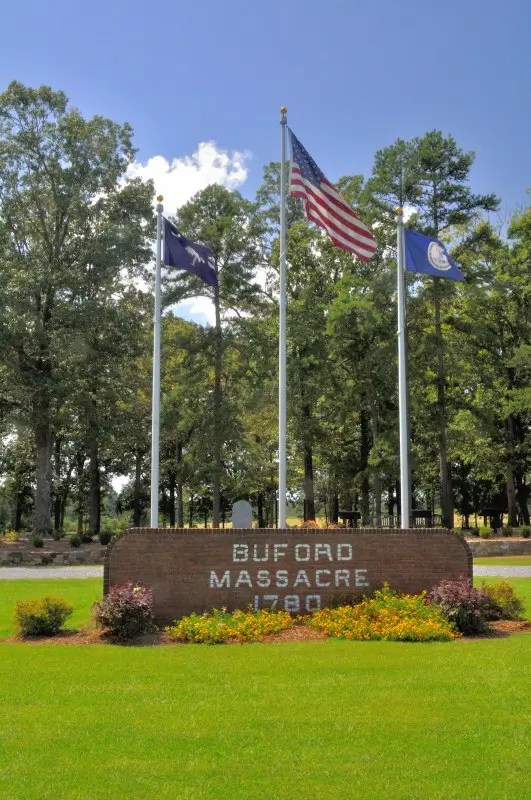
One of the memorials to those who fought in this battle is at the site of the common grave.
There is a new one closer to the street that has a list of those Americans who fought in the Battle of the Waxhaws, and your name is there. I was so proud to let those know to be sure your name was there, but I am delighted that my sixth great grandfather, Private Thomas Davis, stood tall during the Revolutionary War.
My grandmother, Lucile Hitt Collins, did an enormous amount of research of our family. She was your fourth great granddaughter, and she savored history, especially family history. Like you, she was a schoolteacher. I also chose this profession and enjoyed my years as an educator. You must have passed down that gene for education.
Christmas is my favorite holiday, and I love it that your parents, James Davis and Mary Elizabeth Carter, were married on Christmas day. She was sixteen, and your father was eighteen.
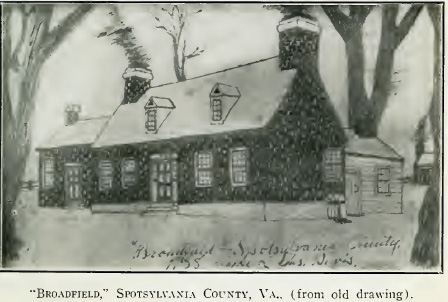
Two years later, they moved into a large home on the plantation called Broadfield in Spotsylvania. I can picture the interior where you grew up with its great inside chimneys, large rooms, and dormer windows. With 600 acres to choose from, was that brick, story and a half home on a hill perhaps?
I found this sketch you did of the house before you moved to Kentucky. With you and your nine siblings, I guess it was a bit crowded at times. Thank you for taking time to make the sketch to take the memory with you.
With you father dying when you were only four, that must have been a loss to your whole family.
I am glad you kept an account book. In February, 1783, you wrote, “Paid for & brought home for Fred’ks’b’g my wedding clothes – 18.3 pounds. 1 Black Velvet Coat, 1 Green Silk Waistcoast, 1 pr Black Cloath Breeches, 1 pr Silk Stockings and one Hat.” You must have been quite dashing! I am sure your bride, Susannah Hyatt, was impressed.
Since you were the youngest child, your inheritance was not linked to your father’s estate. I wonder where you found the money to buy the 400 acres in Orange County? And why on earth did you decide to leave one of the loveliest parts of Virginia to live in unsettled and untamed Kentucky? Were there some heated discussions between you and Susannah? To leave family and friends for a new home beyond the mountains must have been hard.
But you did leave. Selling most of your household goods, because all had to be carried on horseback. There was no room on the trails for wagons; the trek was six weeks. This tedious journey was around 325 miles.
A warm welcome awaited you, as neighbors from miles around arrived to rear a cabin. The day was appointed, and a multitude of capable and willing hands arrived. This helping newcomers was considered a duty of every able-bodied man.
That little account book must have been important to you, since you continued to write about your business. Lists of the servants you took with you to Kentucky and the new furniture you bought for your home upon arrival are there. There are amazing details, e.g. the dozen silver teaspoons, half a dozen tablespoons, and a small silver ladle you bought on July 2, 1783 to take to Kentucky. The story goes that these were the first silver spoons in the state.
Then you have your book purchases listed, too. The Art of Surveying, Bailes Dictionary,The Surveyor, in 4 Vols., History of Europe, in Vols., Robertson’s History of Scotland,Shakespeare’s Works in 6 Vols, Blackwell’s Classics, in 2 Vols., Malvern Dale, a novel, Common Prayer Book, and Domestic Medicine. (It appears that my love of history and its stories goes back to you!)
When you advertised in the Kentucky Gazette for a job in 1788, you mentioned your qualifications to teach “reading, writing and arithmetic, its various branches, bookkeeping, surveying and navigation, geography or the use of the globes, etc.” Your tutor must have instilled in you a curiosity for many things. Compared to the teaching you did, did you, also, enjoy the land surveys you did on the side?
Amazing that you and Susannah raised thirteen children there on Sinking Creek in Woodford County, and I am glad you received your pension for your service. Your granddaughter Sallie said you always enjoyed company dropping by, was quite the tease, and a good story teller.
I truly wish I could have known you! Would you have caught me around the waist, as you did Grandmother Susanna, and dance me around the room?
Winston Churchill said, “We sleep safely at night because rough men stand ready to visit violence on those who would harm us.”
Thank you for fighting for our country. I am so thankful for your service and your patriotism.
It is the beginning of the New Year, 2024, and it reveals on the calendar 365 unknown days. Some are already marked on our personal datebook as holidays, family and friends’ birthdays, and anniversaries. But we know we will encounter surprises and unknown celebrations.
There will also be plenty of choices to make. Some will be easy decisions, and others may drive us to distraction with their complications. Following the paths of others might seem easier, but the conclusion for us would end in errors and blunders. The resolve to walk the road “less traveled” could be a solitary journey. But if it is the way for us, we can march on it with certitude and resolve.
We chose to attend a commemoration program at the Cowpens Battlefield today. John’s SAR Chapter, the Daniel Morgan NSDAR, and the state SAR, along with the National Park Service, commemorated the 243 anniversary of the Battle of Cowpens today. It was in the twenties, but there was little wind. The large tent with heaters kept us from freezing.
I met a fellow DAR from Hendersonville, NC and another DAR from Lexington, Kentucky. My mother, both her parents, and great grands were born and lived in that quaint North Carolina town. As to Kentucky, my dad was reared on a farm about sixty miles from Lexington. I was thrilled with our three connections. They were both visiting the battlefield today with their husbands, who were SAR members. What a delightful time we had talking about our families and our love for America and its history. All three of our families had served in the military, also.
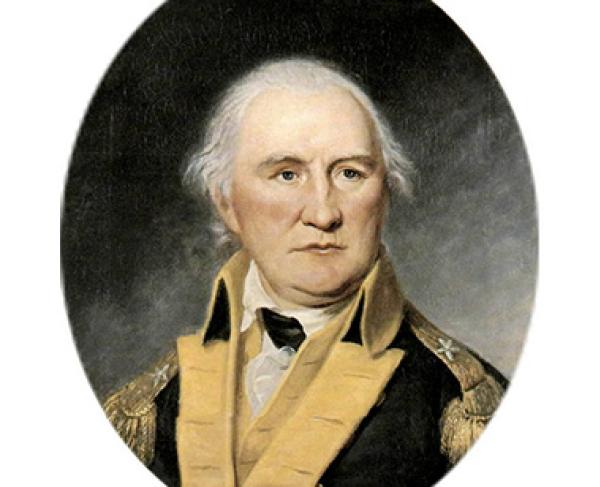
The leader of the Whigs, those fighting against the English for their freedom, were led by a man named Daniel Morgan.
Daniel Morgan was a penniless, illiterate teenager with nothing but the clothes on his back when he showed up in Winchester, Virginia, evidently escaping a mysterious past that he never discussed with anyone. He found work as a teamster and eventually he saved enough money to buy a team and a wagon of his own. He took the jobs no one else wanted–the most grueling, the most dangerous–and he established a successful trade. Morgan literally brawled and fought his way up the frontier ladder, teaching himself to read and write along the way.
In 1755, while working as a teamster on Braddock’s expedition, Morgan slugged a British officer who had insulted him. For that he was sentenced for 500 lashes–often a death sentence. For the rest of his life Morgan would show his scars to anyone who asked to see them, and to many who didn’t. He always said that he counted the lashes as they were being administered, and there were only 499 of them. “King George still owes me one,” he would say with a laugh.
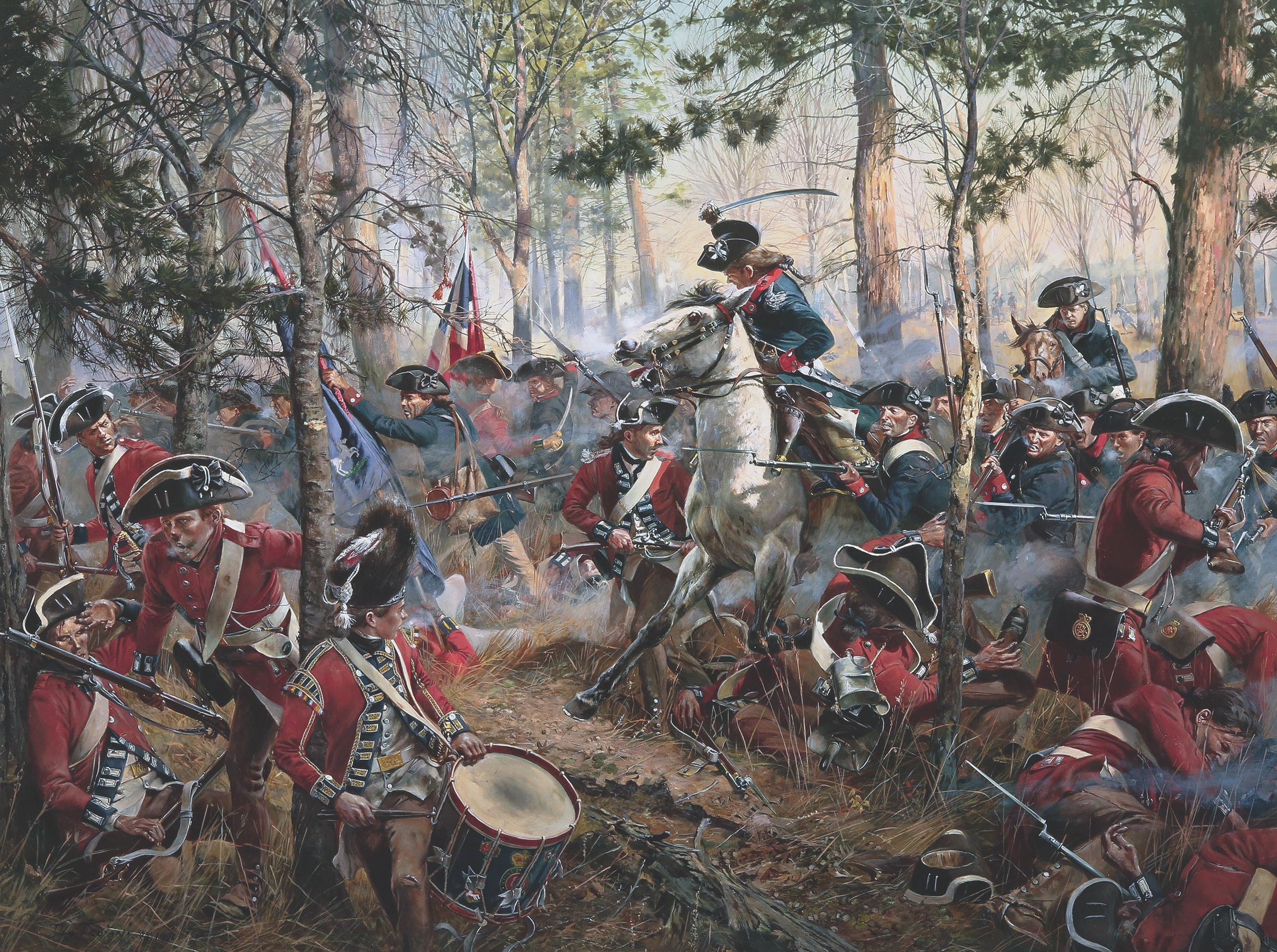
Morgan was already a legend and a hero when he and his “Flying Army” squared off against Banastre Tarleton on a frosty Carolina morning at a place called Cowpens. There he would score one of the most impressive (and improbable) victories in American military history, nearly annihilating Tarleton’s command, at trifling cost to his own–employing an innovative and daring battle plan that ended with a double envelopment of the British. Of his battle plan, historian John Buchanan says, “This untutored son of the frontier was the only general in the American Revolution, on either side, to produce a significant original tactical thought.” A few days after the battle, Morgan wrote to a friend, “I have given him (Tarleton) a devil of a whipping.”
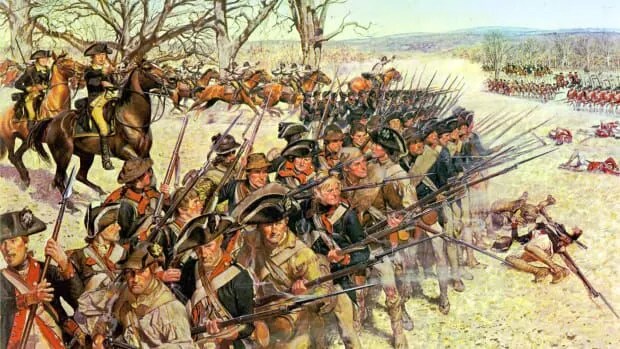
3026934 The Battle of Cowpens 1781 Daniel Morgan\’s, 1996 (w/c & gouache on paper) by Troiani, Don (b.1949); Private Collection; (add.info.: General Daniel Morgan\’s Continentals rout the British 7th Regiment of Foot.); � Don Troiani; American.
The British historian Charles Stedman, who served under Cornwallis during the campaign, would later write, “Had Lord Cornwallis had with him at the action at Guilford Courthouse those troops that were lost by Colonel Tarleton at the Cowpens, it is not extravagant to suppose that the American colonies might have been reunited to the empire of Great Britain.”
On January 16, 1781, Morgan’s 1800 men deployed with a group of riflemen in front (in trees), followed by militiamen, then more riflemen. The night before the battle, Morgan told his men “Just hold up your heads, boys! Give them three fires and you will be free. Then when you return home, how the old folks will bless you and the girls will kiss you, for your gallant conduct.” The next morning, Tarleton and the British (about 1100 men in all) began marching toward them. As the British approached, the riflemen in front picked off many of them, then fell back and joined the second. Then the militiamen fired off two volleys and fell back to the third line. The British were drawn forward.
As Dr. Christine Swager describes in her book, “Come to the Cowpens,” Daniel Morgan was known as the best horseman, the fastest runner, the fiercest fighter and the strongest wrestler. On a bitter cold day in January 1781, at an upcountry cattle pasture known as “the cow pens,” the cantankerous brigadier general led an army of militiamen, Continental soldiers and cavalry in a stunning defeat of the British.
This victory was a stunning example of military prowess and skilled leadership, the Battle of Cowpens near Chesnee, South Carolina, was a critical American victory in the Revolutionary War. This engagement further weakened British attempts to wrest the southern colonies from American control.
“It is impossible to foresee all the consequences that this unexpected and extraordinary event may produce.” – Report of Lord Cornwallis to Sir Henry Clinton, and he was right.
Huzzah to those men who put their lives on the line for you and me!
My grandmother, Lucile Hitt Collins, was a teacher, a homeschool teacher, a reporter, a farmer, and a lover of America and its history. She researched our family lines all the way back to Charlemagne and joined many lineage societies including the Daughters of the American Revolution, the Daughters of the American Colonists, the Colonial Daughters of the Seventeenth Century, and the Magna Carta Dames and Barons.
One of the amazing things she shared with me was the stories of our family who lived during these times. At the drop of a hat, she had a story to share about someone who made a difference. Sometimes they were about the choices an ordinary person made. Other times they were about their actions. But they were all about heroes and heroines who stood tall.
“If there must be trouble, let it be in my day, that my child may have peace.” Thomas Paine
I was eighteen years old when I finally caught her vision for the American Revolution myself. Our parents took us to Williamsburg, Virginia. This was a side trip on our way to Washington, DC. I don’t remember a lot of details, but I do remember the sense of awe I had as we wandered the dirt streets. It was the first time that history came alive for me.
And it started with the film we watched in the Visitor’s Center.
I have always been a movie buff. I love the stories told in color on the big screen. There was something about that movie, “Williamsburg, the Story of a Patriot,” that brought reality to the stories Lulu had been sharing.
The other day, this movie was shared on Facebook, and I immediately reposted it on my Facebook author page. It not only brought back precious family memories, but also a new sense of why I write about our country’s beginnings. I wanted to share it with you.
Benjamin Rush declared, “Patriotism is as much a virtue as justice, and is as necessary for the support of societies as natural affection is for the support of families.”
I am thankful for all those men, women, and children who left the security of their homes to sail to America in the 17th century. They stepped out with courage and determination to make a better life for themselves and their families. From the time they arrived here, it was a struggle day in and day out to survive.
Then in the 18th century, they fought Great Britain to stay in America as free men, not buckling under England’s boot. Let’s continue to tell their stories and celebrate their lives.






 Sheila Ingle