Tag Archives: ” poetry

The Fickle Month of March

American humorist and author once wrote, “Springtime is the land awakening. The March winds are the morning yawn.”

When I was in the sixth grade, snow fell on every Wednesday in Spartanburg. It was the most fun when we only attended school for two days a week. None of us who lived then will ever forget that month and the snow piles up everywhere.

There are also some historical events that also happened in March.

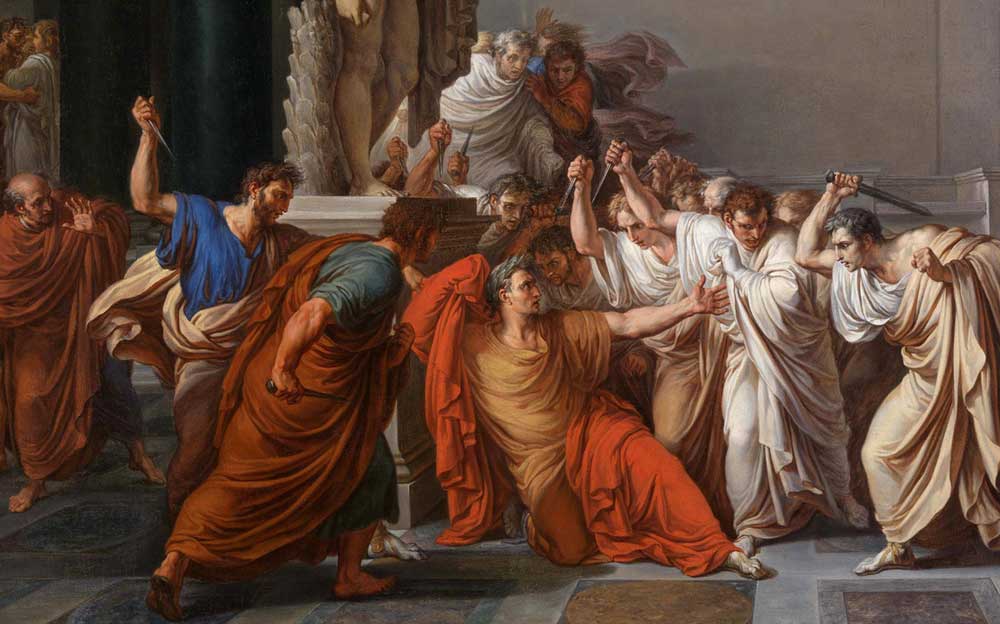
“Beware the Ides of March” is a familiar phrase to those who have read Shakespeare’s Julius Caesar. These were the Soothsayer’s words to Julius Caesar on his impending death in the play, and on March 15 in 54 BC, Caesar was assassinated.
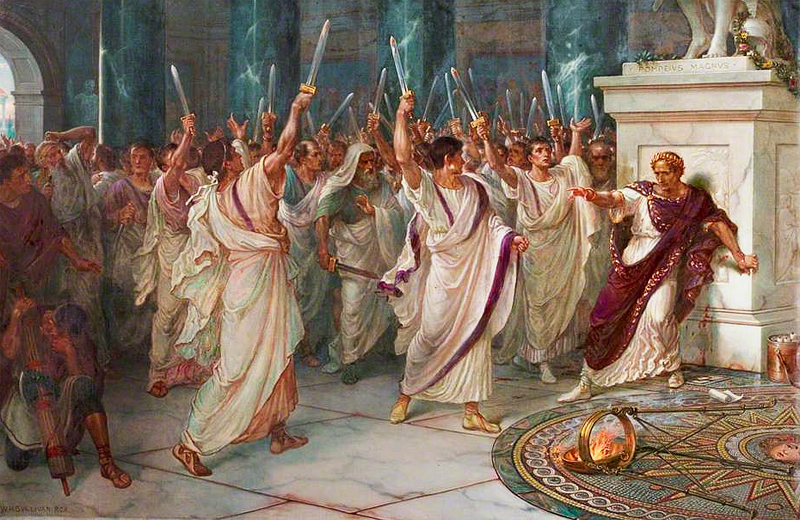
The Assassination of Julius Caesar by William Holmes Sullivan, c. 1888

Another dramatic event happened on March date in 1917.  Czar Nicholas II of Russia abdicated his throne, ending a 304-year-old royal dynasty.

Centuries apart, two rulers lost their thrones and places in history, one with a knife and another with a signature.

On March 15, 1765, Andrew Jackson was born in the Waxhaws of South Carolina. For the first fifteen years of his life, he lived in this Scots-Irish community. His widowed mother, Elizabeth Hutchinson Jackson, made sure that her three sons received a good education and religious training. She was a Patriot and believed in the American Revolution, and she modeled for her sons a life of determination to do the right thing, in spite of the odds.

The website states, “The museum contains Revolutionary War artifacts and artifacts related to President Jackson and contains exhibits that reveal the lifeways of South Carolina’s backcountry during the late 18th century. Discover the impact of the Revolutionary War on the local community.”

And then there are those daffodils that are everywhere in March. Going back to my sixth grade year, our teacher required us to memorize a poem every month. “I Wandered Lonely As a Cloud” was her choice for this first spring month. This lyrical poem by William Wordsworth is familiar to many.

I wandered lonely as a Cloud
   That floats on high o’er Vales and Hills,
When all at once I saw a crowd,
   A host of golden Daffodils;
Beside the Lake, beneath the trees,
Fluttering and dancing in the breeze.

Continuous as the stars that shine
   And twinkle on the Milky Way,
They stretched in never-ending line
   Along the margin of a bay:
Ten thousand saw I at a glance,
Tossing their heads in sprightly dance.

The waves beside them danced, but they
   Out-did the sparkling waves in glee:—
A Poet could not but be gay
   In such a jocund company:
I gazed—and gazed—but little thought
What wealth the show to me had brought:

For oft when on my couch I lie
   In vacant or in pensive mood,
They flash upon that inward eye
   Which is the bliss of solitude,
And then my heart with pleasure fills,
And dances with the Daffodils.

March is certainly a fickle month, as to weather. As one of my favorite authors described it, “It was one of those March days when the sun shines hot and the wind blows cold: when it is summer in the light, and winter in the shade.” Charles Dickens

T

“Beware the Ides of March”

“It was one of those March days when the sun shines hot and the wind blows cold: when it is summer in the light, and winter in the shade.”
― Charles Dickens, Great Expectations

It certainly is a strange and different month. One year, it snowed every Wednesday in March. We would go to school on Monday and Tuesday each week, and then the snow days began. The snow piled up, and the sledding was fun. Those days of missing school have not been forgotten.

This is the month when we used to buy new kites. Flying them was sometimes a challenge with the still winds on one day and the gusts on another day. A kite could quickly crash, get caught in trees, or be carried away until it was out of sight. These thin, plastic toys were entertaining, but so flimsy.

March Madness and St. Patrick’s Day are just around the corner. Some famous people were born in this month, e.g. President Andrew Jackson, singer James Taylor, composer Andrew Lloyd Webber, Albert Einstein, and Dr. Seuss. Women’s History Month claims this month as its own, and daffodils are its flowers. Spring begins on March 20.

In 44 BC, Roman dictator and emperor Julius Caesar was in the midst of a series of political and social reforms when he was assassinated by a group of nobles and friends on the Ides of March. This murder was further immortalized in the tragedy Julius Caesar by English dramatist William Shakespeare. In the play, a soothsayer warns Caesar to “beware the Ides of March.”

March was my grandmother’s favorite month. She lived on a dairy farm in Shelbyville, Kentucky, and winter weather had its own staying-power there. The blooming daffodils in our yard were usually about three weeks ahead of hers. Lulu would call my mom with the definitive morning when her daffodils opening their sunny blossoms. Sometimes they were covered with snow, but Lulu was ecstatic to see those harbingers of spring.

I am pleased that my daffodils, transplanted from where I grew up, survived. They were planted there under three white dogwood trees. When my folks sold the house, I transplanted some of the bulbs. As they have multiplied, they are now in three beds and not one. These sturdy flowers dance with the winds and smile in the rain

Perhaps we should take lessons from the daffodils and choose dancing and smiling.

Each month in my sixth grade class, our teacher selected a poem for us to memorize. We had to go to the front of the class to recite it. Looking back, I am not sure whether the worst part was the memorization or the standing. As I remember, we all survived the discipline of this recitation.

One of my favorite poems was I Wandered Lonely as a Cloud by the English poet, William Wordsworth The first verse is still in my memory bank.

“I Wandered Lonely as a Cloud”

William Wordsworth

I wandered lonely as a cloud

That floats on high o’er vales and hills,

When all at once I saw a crowd,

A host, of golden daffodils;

Beside the lake, beneath the trees,

Fluttering and dancing in the breeze.

Continuous as the stars that shine

And twinkle on the milky way,

They stretched in never-ending line

Along the margin of a bay:

Ten thousand saw I at a glance,

Tossing their heads in sprightly dance.

The waves beside them danced; but they

Out-did the sparkling waves in glee:

A poet could not but be gay,

In such a jocund company:

I gazed—and gazed—but little thought

What wealth the show to me had brought:

For oft, when on my couch I lie

In vacant or in pensive mood,

They flash upon that inward eye

Which is the bliss of solitude;

And then my heart with pleasure fills,

And dances with the daffodils.

“A cloud comes over the sunlit arch, a wind comes off a frozen peak, and you’re two months back in the middle of March.” ―  Robert Frost

“If”by Rudyard Kipling

At the Chautaugua Festival last night at our Spartanburg Public Library, the actor playing Robert Smalls quoted a poem that I had to memorized at one time. Truly it is full of challenging thoughts and remembrances on how to live purposefully and without regrets.

There is something in me that responds to a poetic piece when I hear it or read it. Since this poem is still on my mind this morning, I thought I would share it with you.

“If”
By Rudyard Kipling
“If you can keep your head when all about you
Are losing theirs and blaming it on you,
If you can trust yourself when all men doubt you,
But make allowance for their doubting too;
If you can wait and not be tired by waiting,
Or being lied about, don’t deal in lies,
Or being hated, don’t give way to hating,
And yet don’t look too good, nor talk too wise:

If you can dream—and not make dreams your master;
If you can think—and not make thoughts your aim;
If you can meet with Triumph and Disaster
And treat those two impostors just the same;
If you can bear to hear the truth you’ve spoken
Twisted by knaves to make a trap for fools,
Or watch the things you gave your life to, broken,
And stoop and build ’em up with worn-out tools:

If you can make one heap of all your winnings
And risk it on one turn of pitch-and-toss,
And lose, and start again at your beginnings
And never breathe a word about your loss;
If you can force your heart and nerve and sinew
To serve your turn long after they are gone,
And so hold on when there is nothing in you
Except the Will which says to them: ‘Hold on!’

If you can talk with crowds and keep your virtue,
Or walk with Kings—nor lose the common touch,
If neither foes nor loving friends can hurt you,
If all men count with you, but none too much;
If you can fill the unforgiving minute
With sixty seconds’ worth of distance run,
Yours is the Earth and everything that’s in it,
And—which is more—you’ll be a Man, my son!”

Source: A Choice of Kipling’s Verse (1943)

Design a site like this with WordPress.com
Get started