“He who has not Christmas in his heart will never find it under a tree.”
Roy L. Smith
Never a poet put pen to paper with more skill than Henry Wadsworth Longfellow. He was a legend in his own lifetime and is known in many circles as “The Children’s Poet.” Several schools are named for him.
“One of America’s best known poets, Henry Wadsworth Longfellow (1807-1882) contributed to the host of Christmas carols sung each Christmas season when he wrote the poem “Christmas Bells” on December 25, 1864. The original poem had seven stanzas but in 1872 John Baptiste Calkin took out two stanzas referencing the American Civil War and gave us the memorable Christmas carol we know today as “I Heard the Bells on Christmas Day.”

Longfellow crafted this poem some months before Lee’s surrender to Grant at Appomattox Court House on April 9, 1865. Within the poem, however, he captures the years of despair from the horrors of the American Civil War and, beyond that, to a future that was filled with hope.
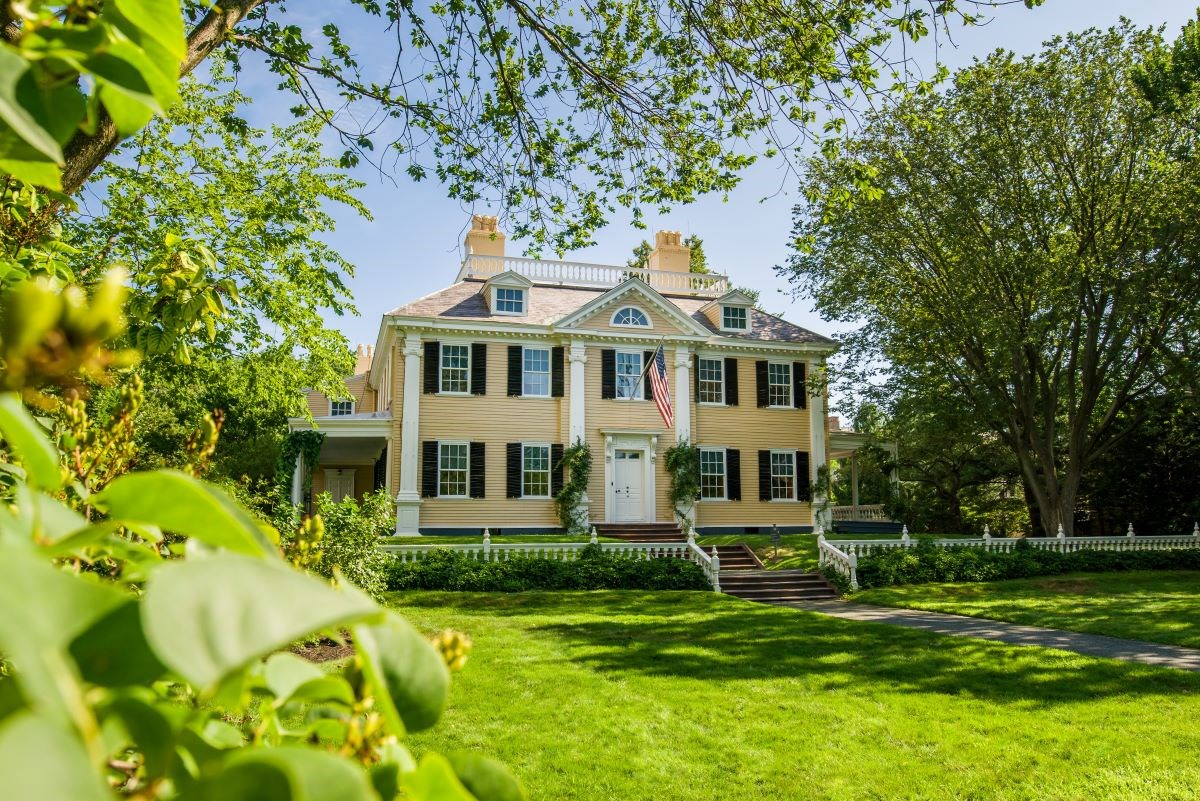
The depth and breadth of these words can only also be understood within the context of Longfellow’s own life. On July 13, 1843 Henry married Frances Appleton. They settled down in the historic Craigie House overlooking the Charles River in Cambridge, MA where they soon had five children
1861 was a year of personal and national tragedy for Longfellow and his family. On April 12, 1861 the opening shots of the American Civil War were fired, and on July 10 Fanny Longfellow was fatally burned in an accident in the library of Craigie House.
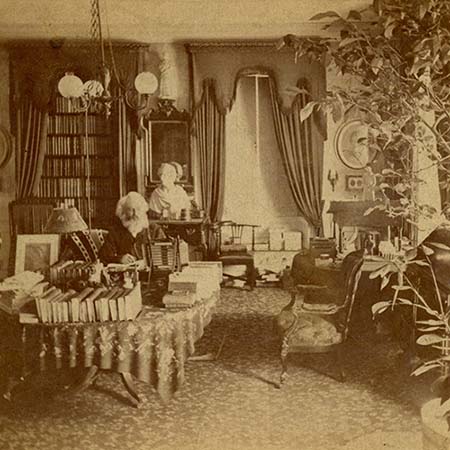
After trimming some of their seven year old Edith’s curls, Fanny decided to preserve the clippings in sealing wax. Melting a bar of sealing wax with a candle, a few drops fell unnoticed upon her dress. But when a gust of wind came through an open window, the hot wax ignited the light material of her dress–completely wrapping her in flames. To protect her children, she ran into Henry’s study and together they tried frantically to put out the flames.
Henry severely burned his face, arms, and hands. The next morning, Fanny died. Too ill from his burns and grief, Henry did not attend her funeral. Later, he grew his trademark full beard because of his inability to shave after the tragedy.
The first Christmas after Fanny’s death, Longfellow wrote, “How inexpressibly sad are all holidays.” A year after the incident he wrote, “I can make no record of these days. Better leave them wrapped in silence. Perhaps someday God will give me peace.” Longfellow’s journal entry for December 1862 reads, “‘A merry Christmas’ say the children, but that is no more for me.
In the middle of the Civil War, in March of 1863, 18-year-old Charles Appleton Longfellow of Cambridge, Massachusetts quietly left his family’s home, a colonial mansion that had served as General Washington’s headquarters from 1775 to 1776.
Unbeknownst to his family, he boarded a train bound for Washington, D.C., traveling over 400 miles down the eastern seaboard in order to join President Lincoln’s Union army.

Almost a year later, Longfellow received word that his oldest son Charles, a lieutenant in the Army of the Potomac, had been severely wounded with a bullet passing under his shoulder blades and severely injuring his spine. The Christmas of 1863 was silent in his journal.
On Friday, December 25, 1863, Longfellow—as a 57-year-old widowed father of six children, the oldest of which had been nearly paralyzed as his country fought a war against itself—wrote a poem seeking to capture the dissonance in his own heart and the world he observes around him that Christmas Day.
He heard the Christmas bells ringing in Cambridge and the singing of “peace on earth, good-will to men” (Luke 2:14, KJV), but he observed the world of injustice and violence that seemed to mock the truthfulness of this optimistic outlook.
The theme of listening recurs throughout the poem, eventually leading to a settledness of confident hope even in the midst of bleak despair as he recounts to himself that God is alive and that righteousness shall prevail.
“I heard the bells on Christmas day, their old familiar carols play, and wild and sweet the words repeat of peace on earth, good-will to men!” His original words spoke of “each black accursed mouth the cannon thundered in the South” and it was “as if an earth quake rent the hearth-stones of a continent, and made forlorn the households born of peace on earth, good-will to men!”
We can feel the pathos of his heart as he continues, “And in despair I bowed my head; ‘there is no peace on earth,’ I said; ‘for hate is strong, and mocks the song of peace on earth, good-will to men!”
But with hope shining through, “Then pealed the bells more loud and deep: ‘God is not dead, nor doth he sleep! The Wrong shall fail, the Right prevail, with peace on earth, good-will to men!”
11 For unto you is born this day in the city of David a Saviour, which is Christ the Lord.
12 And this shall be a sign unto you; Ye shall find the babe wrapped in swaddling clothes, lying in a manger.
13 And suddenly there was with the angel a multitude of the heavenly host praising God, and saying,
14 Glory to God in the highest, and on earth peace, good will toward men.” Luke 2:11-14
Merry Christmas!
 Sheila Ingle