Lizzie
Lizzie Ingle closed her eyes again, but sleep continued to evade her weary body.
Three o’clock was too early to be getting out of bed; the long-legged brunette could have slept about an hour longer, but she was wide awake. The rooster was not even making its familiar morning squawks from the pen in the backyard. Her husband continued to snore with his usual gusto.
Just as the wagon ride from Green Knob Mountain had shaken their bodies around those mountain curves last week, thoughts and fears had rattled Lizzie’s consciousness all night. In fact, the past two weeks had been unsettling from start to finish.
Lizzie began to play back the days in her mind.
Her thirty-six-year-old husband, Make Ingle, and his brothers owned a pulpwood business. Fair weather was vital to their partnership. Blaine, Frank, Isaac, and Make, the four brothers, worked year-round to support their families. They owned two wagons with teams of mules and made deliveries to the Chesapeake and Ohio Railroad every other day. Then the railroad cars moved the wood to Champion Mill in Canton, North Carolina.
Green Knob Mountain was between Flag Pond and Erwin, Tennessee, in the middle of the Appalachian Mountains. Their house was near the top, and Lizzie was proud of those four rooms. There were windows on all sides, and the painted skies at sunrise and sunset thrilled her soul.
It was a natural forest with thickets of wild blueberries and blackberries, rhododendrons, and mountain laurel. Besides these lush plants, there was an abundance of trees. Fraser fir and red spruce were the two species the Ingles cut most.
Monday, Wednesday, and Friday were their transport days; they felled the trees each day, except Sunday. The siblings needed a day of rest on the Sabbath; cutting, trimming, and hauling trees were demanding work. Accidents were more numerous if fatigue was a factor, because it led to carelessness.
The men and their sons, who were the work crew, deftly labored together to produce each full truck. Ten-year-old Oscar and eight-year-old Harvey were Make’s oldest children. Even though they were young, the two could cut the logs with a crosscut saw to fit in the eight-foot wagon. There was much competition between these two brothers.
This 1915 winter was abundant with snow. Each week, the inches built up, and then came the torrential spring rains. Makeshift log bridges washed away; the mud converted to a deep and sloshy jam on the dirt roads and trails that circled the hills. Spring planting was postponed again and again.
Make could ordinarily make ends meet for his household with odd jobs, but the weather had thwarted all prospects for making extra money. Rebuilding fences, replacing stones in chimneys, and fixing leaking roofs were all impossible because of the weather. Rain was a fact of life in this mountainous area, but this year a daily deluge had been the pattern.
Week by week, twenty-nine-year-old Lizzie watched her husband’s frustration grow. They had been married for eleven years, and she knew his moods well. He continued to fix what he could around the house and barn. All the knives he used for butchering and axes for cutting wood had been sharpened. He mended plows, tack for the horses, and the two water troughs. Dropping tobacco from his pipe every few minutes, he repaired the patched steps to the second floor. Nervous energy kept him primed for the next task.
Lizzie’s brow furrowed as she thought back to the evening they talked about the inevitable move.
In late April, only two weeks ago, Lizzie and Make sat down to discuss their options. They made themselves comfortable in the caned chairs that Make had fashioned as a present to mark their first anniversary.
Before he spoke, Make methodically stoked his pipe. “Sweetheart, I reckin I’m ’bout to my wits end and don’t know which way to turn.” He shook his head in bewilderment. “This here weather has pert-near got the best o’ me and our future.”
Lizzie was squinting to mend the socks in her lap. There were several pairs that needed her attention. Her glasses were on the mantel, but she didn’t want to get them. She had impatiently waited for this opportunity to see what he had in his mind. Early in their marriage, she had learned that no good consequences came from harping at Make. She laid the socks aside.
Make started again. “Me ‘n Isaac ‘n Blaine, got together at Frank’s yesterd’y to see what we could figger out. We overhauled the wagons. Replaced some broken boards in the bed, ‘n fixed one of the axles, ‘n greased all the wheels. Sharp’n’d ever’ saw ‘n ax. None of us has been sick with the flu n’r pneumonia this year. We’re as fit as fiddles! But we can’t work.”
“My ma tole’ me once’t that Unicoi means ‘fog draped,’” said Lizzie. “Unicoi County is slap lost in a cloud this year, Make. This weather’s fogged in the whole of this mountain, n’ it’s a plumb misery.” She shook her head. “The Good Book tells us not to fret, but I confess I’ve been a’frettin’.”
Lizzie reached around to rub her back. She was pregnant with their fifth child; July was her due date, and that was only three months away. Annie Mae was six and Jenny five. During this pregnancy, Lizzie had experienced a lot of back pain, and she had needed her daughters. The two girls were excited about a new baby and were willing to do chores. Since Jenny was born, Lizzie had lost three babies. She and Make were thrilled about this child.
In vexation, Make reached up with both hands to scratch his head. The action mirrored his thoughts. Then he stood up and paced. “When me n’ the boys were feeding the horses and cows t’other day, Oscar and Harvey started talkin’ agin about those Boy’s Life magazines I bought fer ‘em. Who would have thought magazines would be popular with my boys?”
The proud father raised his chin a little higher, reflecting on his third-grade education. He wanted more for all his children. “I remember standin’ there in Erwin’s hardware store lookin’ at the magazine covers and soundin’ out the words ‘stories of adventure and darin’.’ That story of the blind scouts and what they could do even now teches me. Oscar and Harvey still a’carry those beat-up compasses they made out of scraps last year around in their overall pockets. Lizzie, they lernt how jist from readin’.”
He pointed his finger toward the bedroom where his children slept. “That twenty cents for magazines was dern well spent. I wonder where they would have gotten their schoolin’ iffen Miz Jennie Moore hadn’t decided to come to these here mountains. She has lernt my boys. And jist think: I heped cut down the trees thet built Rocky Fork Community Center. I’m terrible proud of that.”
Lizzie smiled.
Make smiled back. “I don’t hev’ the book smarts you have, sweetheart. I could never hep’ start a college like yer brothers Harrison and Lee did. In my part of the hills, Forks of Ivy, nev’r had nary a school when I’s a’comin’ along. The folks taught us to figger a bit and write our names. The onliest book we had was the Bible. Papa said it was the onliest book we’d ever need to read. Some of them words are mighty long.”
“Lizzie,” he rambled on, “I can’t rightly say jus’ what I mean, but I want our young’uns to have more’n we had. This hilly ground is ‘bout wore out for planting. All this rain’s gonna put a blight on our corn and tobak’r. We didn’t git to plant the garden on Good Friday, and this rain is looking like we might need to build an ark, rather’n sow seeds!” Weariness and defeat etched each of his sentences.
“We got to…” Make halted.
His finished sentence was life changing.
“Leave these hyer mountains and go south. Me n’ the boys can git jobs in one of them cotton mills whar’ we c’n make a paycheck ev’r week. The mills hev’ got rental houses n’ they hire school teachers and doctors. It’s a village. You’ll have neighbor wimen to talk to n’ we c’n walk to church.”
Lizzie looked into his eyes.
“Sweetheart, say somethin’. Are you with me? I know we c’n do it together. I figger we c’n sell what we can’t take with us. That c’n git us started. Isaac ‘n Blaine’l buy one of my wagons and stock. Our cabin’l git us a pretty good penny. I can’t imagine us leaving our place here. I hate it like the dickens. This home and land are our’n, n’ it sorely hurts my heart to leave it. But we got to git ahead, n’ then we can move ourselves back to these beautiful mountains.”
Though strained with emotion, Make’s voice ended with a slight hope in the future. “Ever since thet comp’ny man come around t’other week from thet Tucapau Mill tellin’ us they wuz a’hirin’, I been a’ considering thet this here’s the best thang t’do. I like it thet we’d be hepin’ the war over in Europe. South C’lina ain’t too far thet we can’t come back to visit.” He paused. “Lizzie, you still ain’t said nuthin’. Talk to me.”
“Lordamercy, Make! I don’t know when I’da put in a word. You ain’t stopped long a’nuff to take a breath! Shore, I reckon we’ll go to South C’lina.” She lifted herself out of the chair, walked to her husband, and put her arms around his neck. “I mind our wedding vows said ‘fer better ‘r fer worse,’ and we’ve seen both. A move might be just the ticket. This here winter and sprang has slap-dab wore me out. I love you, Harvey Maken Ingle, and don’t you ne’er fergit it.”
Within ten days, Lizzie and Make had either sold, given away, or packed up their household. Both their families had helped. Each day was like a family reunion on Green Knob Mountain. Most of the talk was of remembrances, since no one wanted to dwell on them leaving. Their working together proved true that many hands made light work. As the pile to give away grew twice as tall as the pile of takes, Lizzie truly saw what this moving was requiring of her. She kept giving slices of her heart away to someone else.
Each night the families gathered in Make’s barn. Sawhorse tables filled quickly with ham, fried chicken, vegetables of all kinds, plus biscuits, cornbread, and plenty of desserts. Some of the men gathered around the glass jars of homebrew, and the children ran wild with their games.
Lizzie plucked her dulcimer. Isaac and Blain kept time with their fiddles. A neighbor played his banjo. The songs were loud. Children and adults clogged, and the wood floor quivered. Some only hummed and clapped; no one was silent.
“Sourwood Mountain,” “Turkey in the Straw,” and “Little Brown Jug”were performed several times each night. They were obvious favorites from the exuberant playing and singing.
The children belted out the chorus of “Little Brown Jug” to the top of their lungs. Their laughs often turned into foolish giggles with the chorus.
Ha, ha, ha, you and me,
Little brown jug, don’t I love thee!
Ha, ha, ha, you and me,
Little brown jug, don’t I love thee!
When the mournful ballads were played, rather than the hoedown songs, the singing had a reverence about it. “Barbara Allen” was the most requested. The first line always quieted the crowd.
In Scarlet Town where I was born
There was a fair maid dwelling
Made every youth cry ‘Well-a-day’
Her name was Barbara Allen.
Awakening in a strange house in another state, Lizzie softly cried, stuffing her hand in her mouth, not wanting to wake her husband. She covered her head with the quilt, thinking of the family they left behind.
Make and his brothers had packed the large wagon. Rather than moving trees, this time it would carry a family’s household. There was room for the coops of chickens and the few pieces of their worn furniture. They had piled the truck high with the children’s two sleeping pallets, their parents’ bed and mattress, Lizzie’s rocking chair, the two caned chairs, a butter churn, an iron wash pot, and their kitchen table and benches. In between were linens, clothes, pots, dishes, and what was left of the canning from last summer.
Leftover onions, apples, Irish potatoes, and sweet potatoes from the stone well house were stored in homemade hemp sacks. Corn, beans, okra, peanuts, tomato, squash, and watermelon seeds were in small handmade sacks for a new garden. A few leftovers from the pantry were added at the last minute.
Inside the pillow cases were Make’s tools for woodworking, and Lizzie’s dulcimer was wrapped in a quilt rolled up in between the folded mattress. At last, there were no small holes or gaps to stuff. They tied rope over and around the wagon bed until it was wrapped like a package.
The cows’ mournful mooing that final morning echoed the family’s silent words. The clan shared final hugs, as well as tears, as the eager Ingle children jumped around. Between the generations was a lack of awareness; each was in their own separate world.
Squashed together on the buckboard seat were the girls and their parents; the two boys barely had room for their bottoms in the bed of the wagon. The seven-months-pregnant Lizzie had little space to spare. Jenny was the first to sit in her daddy’s lap as he drove. The others would have their turns.
Pulling out as the sun came up behind the mountains was a view to remember. It was a welcome sight for the beginning of their trek.
Lizzie had reached and held her two girls tight when Make drove past the family cemetery where their three babies were buried. She choked down sobs but couldn’t hold back the tears. Make reached over to grab her hand. So his wife would not miss every possible glimpse of the tiny rocks that covered the three small graves, Make slowed the wagon and mules again.
The journey took about three days. From the first rays of light until dusk, they moved further from home. Each night, they cuddled together under the wagon to sleep. They followed the dirt roads through Asheville, Hendersonville, Tryon, Saluda, Landrum, and Spartanburg. Stopping to let the mules rest and the children run was part of the day. On the steep grade down the Saluda Mountain, Make had to pull the brake up over and over to stay on the road and not go over the side of the mountain.
Finally they crossed the railroad tracks of Tucapau Station #4129 for the Southern Railroad. This was where the raw cotton from the fields came in and where the finished products from the mills were also shipped out.
Slowly the wagon moved along Chestnut Street, and the family saw the Tucapau Baptist Church. Lizzie pointed out another steeple, but they couldn’t tell the denomination. Cookie-cutter houses lined each road. Within easy walking distance were a school, a community building, and the company store.
When the four-story Tucapau Mill with the pointed roof of the belfry rising above it came into view, its size shocked Lizzie and Make. The red brick building was massive. From the smokestack wafted smoke from the boiler room. Their children pointed with animated gestures and voices to this huge structure on the banks of the Middle Tyger River.
As the couple looked at all the extraordinary sights, they began to grasp some of the magnitude of how their lives were going to change.
Lizzie and Make heard the mill whistle blow, but knew nothing of its significance. It signaled that for some of the workers at Tucapau Mill their ten-hour work day was finally over. A mill whistle chartered and controlled the mill workers.
As the mules moseyed along, the community waved a welcome. Many added a smile and howdy. Finally Make pulled on the reins and then the brake in front of a white house with a chimney. Taking a deep breath, he reached over to Lizzie.
“Welcome home, sweetheart! Welcome home!”
The children started climbing out and ran to the front porch. Finding the front door unlocked, the four raced in. Make helped Lizzie down, and the two stood intently looked at 4 Pine Street.
As they walked by and saw the loaded wagon, new friends, who had just gotten off work, put their lunch buckets down and started helping unload. They exchanged names with handshakes and made short work of placing it all inside.
Lizzie’s rag rugs were positioned in every room. One of their new neighbors placed a Mason jar of blue irises on top of the oilcloth tablecloth. Before long there was a pot of beans and corn pone for their supper. One lady came over with a half dozen eggs. No one came empty-handed, and the adults’ welcomes were sincere. Their neighbors showered them with hospitality.
Lizzie and Make were overwhelmed.
A seven-year-old boy named Jimmy Jordan wandered over and quickly made friends with Oscar and Harvey. The three started a game of catch that would become a daily pastime for the boys for many years.
Four little girls from next door took Annie Mae and Jenny to their porch to play with their dolls. Lizzie had made her daughters’ dolls from different scraps and made sure they had long yarn hair to pull back with ribbons. Introductions of their cloth dolls and an examination of their clothes kept the six in a circle until suppertime. Both the dolls and their owners passed inspection.
And now it was Monday, their first day of work at Tucapau Mill.
Lizzie pulled the quilt up around her shoulders. The covering was a wedding present, handmade by her mother. The pinks, blues, and greens of the design were cheerful, and Lizzie sought their joy. Neither she nor Make Ingle had ever worked in a mill before, and her apprehension was causing her heart to race. Her husband’s hard sleeping was beyond her ken.
In midsnore, Make sputtered and then stretched his six-foot frame. He turned to his wife of fifteen years and said good morning with a kiss. “Reckin we might sip on a cup of coffee, sweetheart?” He then rolled over, pulled on his overalls from beside the bed, and headed for the outdoor privy.
With a smile, Lizzie rose and went to fill the enamel coffee pot with water and coffee. She stoked the embers in the fire box of the wood stove with a couple of pine knots and kindling. She checked the ash box to see if it needed emptying, but there was room for more ashes. Then she lit a few candles.
Walking back to their bedroom, she pulled on her print cotton dress and a bleached-white apron to cover some of the bulge of her pregnancy. A blue hand-knitted sweater completed her work ensemble. Slipping on her shoes and brushing her hair back from her face, Lizzie was ready for the day.
Realizing there was plenty of time to get breakfast started before waking the sleeping children, she decided to make flapjacks. They would be filling, and she knew the sorghum molasses would be tasty on top. Lizzie pulled out her cast-iron frying pan, greased it with butter from the ice box, and started making the batter. She poured two cups of coffee and handed Make his when he came back in the door.
He sat down at the table and blew on the hot brew. “I reckin we didn’t sleep too well last night. I kept dreamin’ I was fallin’ off a cliff. Sorry about all my tossin’, sweetheart. My brain danced around over the past two weeks last night. I jest couldn’t turn it off. These flapjacks smothered in molasses will straighten us out for the day.”
Lizzie turned three onto a plate, so Make could start eating while they were hot. She knew he didn’t like cold food when it was supposed to be hot. She handed him breakfast. “I’ll have some more cooked for you shortly.”
“Lizzie, in a couple of hours we are gonna be mill hands in a cotton mill in South C’lina. I can scarcely believe it. Fer shore, we are gonna be larning a new job. I want to larn it quick, so I can make a decent livin’ fer us.” Make stopped to fill his mouth with flapjacks, then continued, “It’s important that you take it easy, sweetheart. I know you’re used to standing on your feet in the house doing your work, but this is gonna be different. Breaks are gonna be important. You need to pay a’fair amount of attention to you and the baby all the time.”
“I know,” Lizzie quietly responded, as she gave him three more pancakes. “I’m afeared too. This young’in was kicking to beat the band this morning, so I know the little darlin’s agettin’ a mite crowded.
“Make, did you see that precious girl next door? Her name is Peggy, and she has purty blonde hair. Her head is larger than normal, and there’s not much light in her eyes. She just looks around absent-mind- like.
“Peggy came over with her momma, Sara Jane, yestiddy. While we’s sittin’ on the porch, Sara Jane told me that Peggy was seventeen, even though she looks a lot younger. She couldn’t larn nuthin’out of books. But down ter th’ mill, she tuk to spinnin’right off. Peggy larn’d faster’n enny of th’ others.
“Me n’ Peggy are mountain girls, but I do believe she is more strong jawed. Her husband got hurt in the mill, and now he’s a cripple. But he still pulls his weight. He’s got an ole horse and wagon, and he hauls coal, wood, or furniture. Peggy says he don’t make much, but he gits out n’ does the best he can ever’ day.” Lizzie wiped her eyes with her apron hem. Then she sat down with her own cup of coffee and flapjacks.
Make asked the Lord’s blessings on their food, children, and their neighbors. “Lord in Heaven, make us truly thankful for these n’ all Thy many blessin’s. Bless this food to the nourishm’t of our bodies and us to Thy service. We ask your blessin’s on all who stand in need. In Jesus name, amen.”
They sat in silence, hearts going out to their new neighbors, and both began to think of ways they could lessen the loads next door.
It wasn’t long before the morning craziness of the family commenced. Four sleepy children arose, and the smells from the kitchen drew them away from their pallets. Lizzie had put a platter of flapjacks in the stove’s warmer for them, and their quiet turned to excitement over the molasses.
Lizzie quickly made bologna sandwiches for their lunch. One of their new neighbors had brought it from the company store, and the homemade bread was from someone else. She made two sandwiches for Make. They had leftover cake from the pounding, so Lizzie put a slice of that in to celebrate their first day at a new school and a new job. She wrapped it all in clean cloths. The children had pokes, and the adults would carry lunch pails.
The parents led the way out the door, and the children looked like small clones walking behind them. Annie Mae and Jenny’s dresses were made from the same bolt of cloth as Lizzie’s, and the boys sported overalls like Make.
As they walked toward the school, they were joined by other parents and their children. It was a long parade by the time they reached the school.
The first Monday whistle blew, as Lizzie and Make crossed the bridge over the river with all the rest of the workers. They saw the two dams that controlled the water that ran the mill on the Tyger River and created Berry’s Pond. It was a stunning and clear river, and the falls created a soothing sound of water tumbling.
This identical walk to the mill would be repeated over and over, but never again without the knowledge of the struggle and work that would be required inside.
Lizzie cradled her pregnant belly and walked into the yawning door of Tucapau Mill.
Born in 1885 in Unicoi County, Tennessee, Artie Elizabeth Horne Ingle died on her sofa of a cerebral hemorrhage in 1939.
Lizzie married at age sixteen on September 1, 1900; she and Make had seven sons and three daughters. About 1923, the family moved to another mill village in Union, South Carolina, and Make worked as a night watchman at Union Mills. Lizzie became a busy homemaker in a two-story, eight-room house on 14 Lawson Avenue. They joined the Green Street Methodist Church.
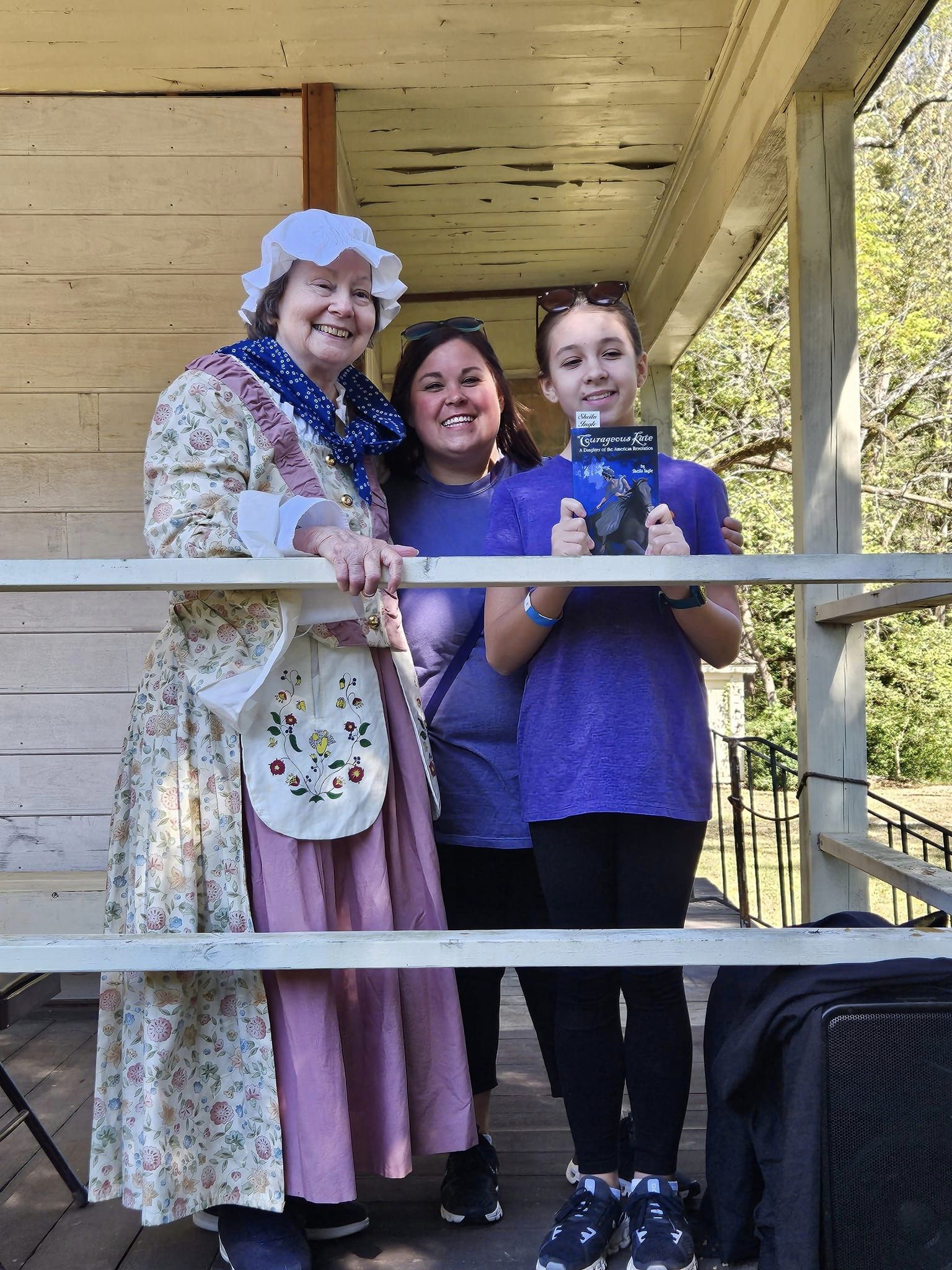
This is one of the chapters from Tales of a Cosmic Possum. John, his brother, and his cousins shared their memories with me to write about the women in their family that worked in the cotton mills of upstate South Carolina. We have been talking about how we grew up and our families recently. The book is easily available on Amazon.

















 Sheila Ingle