Tag Archives: Charleston

Charleston – the Holy City

The word “sunballousa” is Greek for “placing together for comparison.” Pondering would be a good synonym.

I really like the sound of it, and it reminds me of something that is extraordinary. Since I am Southern both in birth and speech, I can make more than four syllables when pronouncing it. Believe it or not, this word makes me smile when I say it.

There are times when the dawn and my coffee move me to pondering. I think about yesterday, plan for the day, and wonder about tomorrow.

We are in Charleston, my birthplace for a couple of days, and already sunballousa has invaded my mind and heart.

The moss on the trees immediately reminds me that I am visiting a city that continues to delight and mesmerize me. I am always surprised by the Holy City. There are treasures in the gardens, and walking the old cobblestone streets is a conduit to an older time. I can’t, or maybe shouldn’t climb on the cannons on the battery like I used to, but I remember the excitement of doing it.

The churches, the flower ladies, the Ashley River, the Cooper River, the horse-drawn carriages, the walkers, the bicyclists, the narrow streets, the artists – the old and the new living side-by-side.

Maybe this poem says it best.

“Dusk”

by Dubose Heyward

“They tell me she is beautiful, my City,
That she is colorful and quaint, alone
Among the cities. But I, I who have known
Her tenderness, her courage, and her pity,
Have felt her forces mould me, mind and bone,
Life after life, up from her first beginning.
How can I think of her in wood and stone!
To others she has given of her beauty,
Her gardens, and her dim, old, faded ways,
Her laughter, and her happy, drifting hours,
Glad, spendthrift April, squandering her flowers,
The sharp, still wonder of her Autumn days;
Her chimes that shimmer from St. Michael‘s steeple
Across the deep maturity of June,
Like sunlight slanting over open water
Under a high, blue, listless afternoon.
But when the dusk is deep upon the harbor,
She finds _me_ where her rivers meet and speak,
And while the constellations ride the silence
High overhead, her cheek is on _my_ cheek.
I know her in the thrill behind the dark
When sleep brims all her silent thoroughfares.
She is the glamor in the quiet park
That kindles simple things like grass and trees.
Wistful and wanton as her sea-born airs,
Bringer of dim, rich, age-old memories.
Out on the gloom-deep water, when the nights
Are choked with fog, and perilous, and blind,
She is the faith that tends the calling lights.
Hers is the stifled voice of harbor bells
Muffled and broken by the mist and wind.
Hers are the eyes through which I look on life
And find it brave and splendid. And the stir
Of hidden music shaping all my songs,
And these my songs, my all, belong to her.”


So what is in the midst of your sunballousa today?

One thing I know it is time well-spent. Enjoy!

Wouldn’t You Love to Have a Cup of Tea With Her?

Posted on

I have always been excited to learn about women who were first at something, and Elizabeth Timothy wins in that category in South Carolina.

Image result for photos of elizabeth timothy
When her publisher husband died in 1738, Elizabeth Timothy became the first female newspaper publisher and editor in America.
Elizabeth was born in Holland and immigrated to America in 1731 with her husband and four children. They sailed with other French Huguenots fleeing persecution.
Timothy met Benjamin Franklin, who hired him to be librarian of Franklin’s Philadelphia Library Company. Then Franklin trained him in the printing business at the Pennsylvania Gazette.

Image result for photos of elizabeth timothy
Franklin had helped establish the “South Carolina Gazette” in Charlestown. When the publisher died, Timothy took his place in 1733. They signed a six year contract with Timothy’s son Peter as the next in line as publisher. “The Gazette” became the South Carolina’s first permanent newspaper under Timothy.

Image result for photos of elizabeth timothy
The family joined St. Philip’s Anglican Church and became quite active. Timothy organized a subscription postal system that originated in his printing office. In 1736, he obtained 600 acres and a town lot.

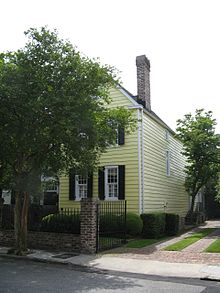
Image result for photos of elizabeth timothyTimothy Print Shop
Lewis died in 1739, and Elizabeth took over. She was the mother of five children and momentarily expecting the sixth, but she took on another job. She ran the Gazette under the name of her 13-year-old son Peter. There was a year left on the contract, but not an issue was missed.

Image result for photos of elizabeth timothy

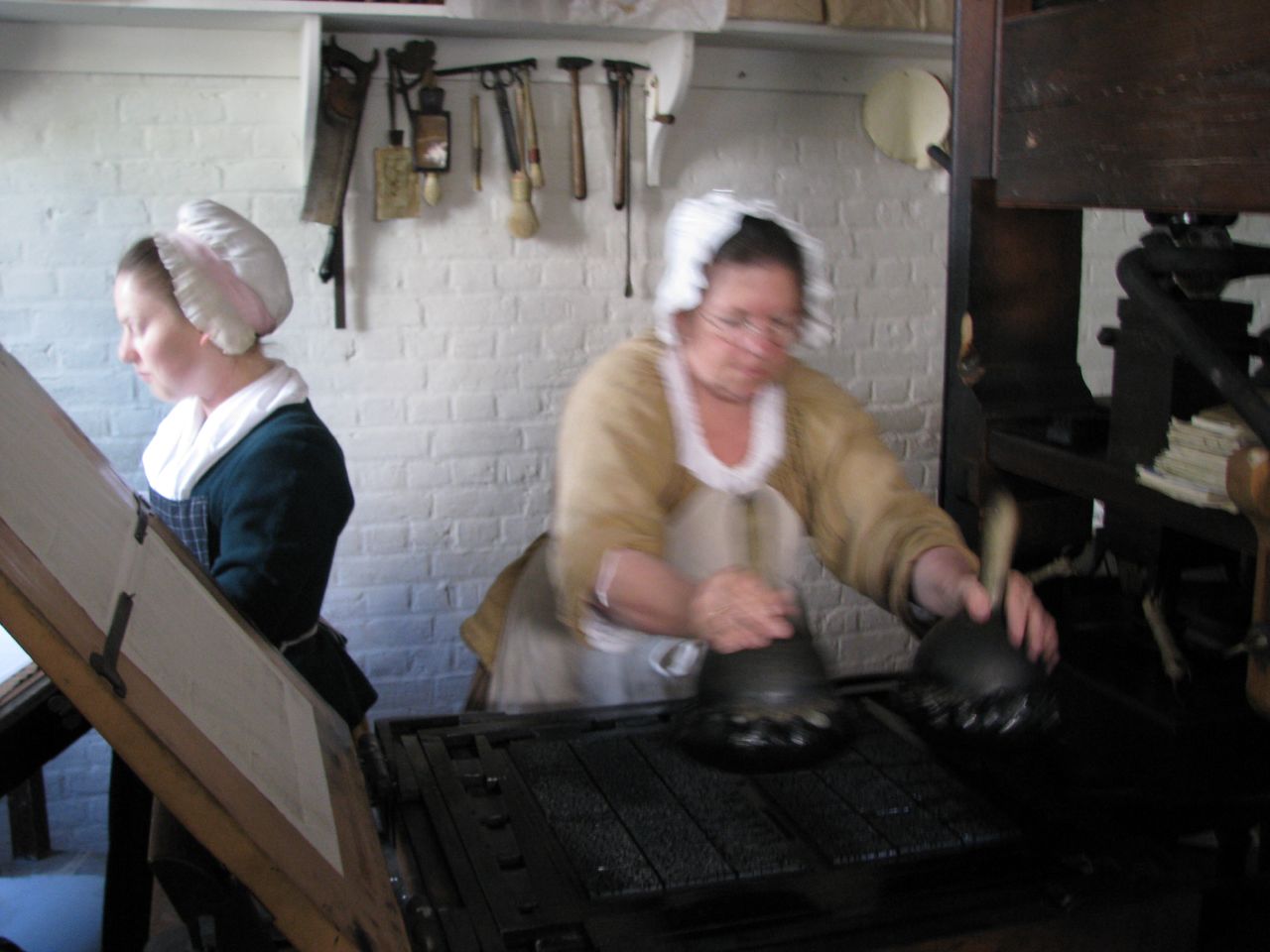
Likeness of printing presses in the 18th century.
Elizabeth added a personal touch to the Gazette by adding woodcuts for illustration and advertisements. In the first issue after her husband’s death, she included a sentimental message asking for continued support from their customers.
Besides the Gazette, she printed books, pamphlets, tracts, and other publications. Franklin said that she was superior to her husband in her accounts; she “continu’d to account with the greatesr Regularity and Exactitude every Quarter afterwards; and manag’d the Business with such Success that she not only brought up reputably a Family of Children, but at the Expiration of the Term was able to purchase of me the Printing House and establish her Son in it.”
When her son Peter turned 21 in 1746, he assumed the operation of the Gazette from his mother. She turned right around and opened her own business, a book and stationery store next door to the printing office on King Street. Of course, she advertised in the Gazette. (I wonder if she had to pay?) In an ad in October, 1746, she announced that she had books available like pocket Bibles, spellers, primers, and books titled Reflections on Courtship and Marriage, Armstrong’s Poem on Health, The Westminister Confession of Faith, and Watt’s Psalms and Hymns. She also sold bills of lading mortgages, bills of sale, writs, ink powder, and quills for reasonable prices.
Elizabeth ran her business for about a year before she left Charlestown for a season. She was back by 1756. She died in 1757, and her estate included three houses, a tract of land, and eight slaves. She was a wealthy woman.
As the mother of six children and the wife of a wealthy and influential publisher, Elizabeth Timothy enjoyed a social position attained by only a few women printers of the colonial period. But her success of the newspaper and printing business after Lewis Timothy’s death can only be attributed to her own business acumen and management skills.
As the first woman in America to own and publish a newspaper, she played a vital role in the development of Charlestown and South Carolina. As official printer to the colony, she was closely associated with the South Carolina Assembly and colony’s government. And as the proprietor of a commercial printing business and bookstore, she printed, published, and offered for sale numerous books and pamphlets, and was at the center of the colony’s cultural and literary life.

Image result for photos of elizabeth timothy
In 1973, Elizabeth Timothy was inducted into the South Carolina Press Association Hall of fame. She was inducted into the South Carolina Business Hall of Fame in 2000.
Mark Twain once said, “Twenty years from now you will be more disappointed by the things that you didn’t do than by the ones you did do. So throw off the bowlines. Sail away from the safe harbor. Catch the trade winds in your sails. Explore. Dream. Discover.”
Elizabeth Timothy was a South Carolina woman who didn’t need these encouraging words. In reading about her life, I believe she had some similar words as her motto.

Silkwood sampler created by Elizabeth Timothy in 1735. Image result for photos of elizabeth timothy

Design a site like this with WordPress.com
Get started