Author Archives: Sheila Ingle

Judith Giton: A Carolina Matriarch and Woman of Substance

In 1684, nineteen-year-old Judith Giton escaped from her home country, France, because of her religious faith. Choosing not to change her Huguenot religion to Catholicism, government restrictions curtailed their lives in France.

The Huguenots were followers of John Calvin and part of the Protestant Reformation. They believed in Bible study and prayer to guide their lives. Worshiping simply was important.

Under house arrest, with her mother Madeline and two brothers, Pierre and Louis, they all fled in the middle of the night with little more than the clothes on their backs. They had planned for weeks their escape route. Even though the guards pursued them, they were helped by sympathizers to their Huguenot faith.

Other Huguenots had left their homes because of the legal and financial harassment from the government that was meant to impoverish them. Over 200,000 fled; 2300 left for America.

Finally sailing from London, the voyage wasn’t easy. Scarlet fever ran rampant on the ship, and Judith’s mother died of this disease. With a layover in Bermuda, the three siblings arrived in Charles Town. They were penniless. This noble family worked the land to survive, and within two years, both brothers died.

Image result for old picture of Charleston in 1710

Pestilence, hard work, famine, and death were their companions. One new settler described his first impressions in a letter saying, “a sail from a boat was our first house and the earth our bed. A cabin like that of savages…was our second house.”

Judith married a man not of her social status; Noe Royer was a weaver; this was considered a mesalliance. He bought land and built a house on Church Street. The couple had three children.

Shortly, 35-year-old Royer died, and Judith married another French Huguenot named Pierre Manigault. Manigault was a cooper/barrel maker, and they had two children. Again she married outside her social status. Since Judith had inherited Royer’s house, they stayed there. She took in boarders for extra money. In a seaport town like Charles Town, there was always a full house.

Joining the French Huguenot congregation that met in its church building on Church Street, the blended family was faithful in attendance. Expanding his business to include distilleries, he was wealthy by 1710.

What a brave, single woman Judith was to leave for America; she survived by working hard and putting aside her nobility. She was one of the first women to begin a new life here. When Judith’s life was finally an easier one again, she died in 1711.

The American poet, Robert Frost, wrote, “Freedom lies in being bold.”

Little is known of Judith Giton’s life, and they are mostly facts. Below is a letter, written six years after her arrival, she wrote to the soldier brother that stayed in France; she describes her early life here. Judith was a survivor, and she chose a new life and independence here in America.

This South Carolina woman struggled, but never gave up. The understatements in it speak louder than the details she chose not to include.

“For eight months we had suffered from the contributions and the quartering of the soldiers, on account of religion, enduring many inconveniences. We therefore resolved on quitting France at night, leaving the soldiers in their beds, and abandoning the house with its furniture. . . . [They hid for ten days, then traveled from city to city to get out of France. At one point they were only 90 miles from where her brother, to whom she is writing, was stationed as a soldier.] Mother and I entreated my eldest brother to consent that we should go that way. . . . It was in the depth of winter. But he would not hear of it, having nothing in his mind but “Carolina,” and dreading to miss any chance of coming hither. The thought that we thus lost so good an opportunity to see you at least once more, has been a constant source of grief to me, ever since.

After this, we passed into Holland, in order to go to England. We were detained in London for three months, waiting for a vessel ready to sail for Carolina. Once embarked, we were miserably off indeed. The scarlet fever broke out in our ship, and many died, among them our aged mother. . . .

Our vessel put in [at Bermuda] for repairs, having been badly injured in a severe storm. Our captain . . . was thrown into prison, and the ship was seized. It was with the greatest difficulty that we secured our passage in another ship, for our money had all been spent. After our arrival in Carolina, we suffered all sorts of evils. Our eldest brother died of a fever, eighteen months after coming here. . . .

We ourselves have been exposed, since leaving France, to all kinds of afflictions, in the forms of sickness, pestilence, famine, poverty, and the roughest labor. I have been for six months at a time in this country without tasting bread, laboring meanwhile like a slave in tilling the ground. Indeed I have spent three or four years without knowing what it was to eat bread whenever I wanted it.

God has been very good to us in enabling us to bear up under trials of every kind.

from “Letter of Judith Giton Manigault,” trans. by Charles W. Baird in History of the Huguenot Emigration to America, Vol. 2 (New York: Dodd, Mead and Company, 1885), 112–114.

The present French Huguenot church was built in 1844 and is located on Church Street in Charleston. It is the oldest Gothic Revival Church in South Carolina. This congregation is Judith Giton’s congregation, and it is breath-taking.

I applaud the Giton family’s move to the colony of Carolina. Walking away from what was known and familiar to a world that held a slew of unknowns took courage. Judith Giton worked hard to survive; this matriarch of the Manigault family has influenced our state for the better.

As Helen Keller said, “Remember, no effort that we make to attain something beautiful is ever lost.”


“Come Rain or Come Shine”

I’m gonna love you, like nobody’s loved you
Come rain or come shine
High as a mountain, deep as a river
Come rain or come shine
I guess when you met me
It was just one of those things
But don’t you ever bet me
‘Cause I’m gonna be true if you let me
You’re gonna love me, like nobody’s loved me
Come rain or come shine
We’ll be happy together, unhappy together
Now won’t that be just fine
The days may be cloudy or sunny
We’re in or out of the money
But I’m with you always
I’m with you rain or shine.

The lyrics to this slow-moving declaration of love has moved hearts when sung by talents like Frank Sinatra, Billie Holliday, Barbara Streisland, and others. The repetition clarifies the intensity and veracity of the commitment to someone. Published in 1946, after World War II, when couples were looking for lasting marriages, it became popular. Dancing to it played by the Tommy Dorsey Band would have moved married couples to believe again that their marriage could/should/would work.

My parents were married on October 29, 1946. After moving to Spartanburg in 1951, they joined the Quadrille Club. Along with other young couples, they dressed for a party in flowing long dresses and tuxedos to dance the night away. A Christmas dance and spring dance gave them opportunities for ballroom dancing with friends. Jitterbug, the dance of teens during this era, was not on the agenda. The caller for the dances, with the solemn “Ladies and Gentlemen” and then in exciting tones, introduced the fox trot, the waltz, and the cha cha.

Grace and elegance were part of these dances, and the above clip captures that.

Yesterday I started reading Jan Karon’s newest Father Tim novel called Come Rain or Come Shine.

This talented author, through the course of ten novels, has introduced us to the town of Mitford, North Carolina. Jan lives in Blowing Rock, NC where she retired from the advertising field at age 50. Her first Mitford novel, At Home in Mitford, was published in installments in the local paper. (You might remember that Charles Dickens had his first success in the literary world in this manner.)

Though Southern small town in setting, these character-driven novels deal with realism in the lives of children and adults. Each book holds a surprise for the reader, as a tragic side of life is explored. But entwined is hilarity in tone, dialogue, and circumstance. One of the funniest scenes to me is the wedding of stodgy, middle-aged bachelor Tim Kavanagh and his artist/writer/vivacious neighbor Cynthia Coppersmith. On their wedding day, dressed in her dowdy and well-worn bathrobe, the bride is locked into her bathroom when the handle of the door falls off. I could picture this crazy scene and laughed hilariously.

Two young people, adopted by couples with open hearts, as well as the law, Dooley Kavanagh and Lace Harper, are finally getting married in this latest story about a community that truly acts like an extended family. Mitford’s characters come alive once again as a simple home wedding expands into a town event. I laughed aloud several times yesterday and didn’t want to put it down, once again enjoying Jan Karon’s voice that states without interpretation that life is life. (Believe I might have to complete the reading today.)

The lyrics to this song enhance the turmoil in the book as this young couple move forward to their wedding day. Lack of money, a surprise selling of art, both clouds and sun in weather and circumstances, and a pot-luck wedding reception give credence that marriage is a time of “come rain or come shine.”

One of the quotes that Jan Karon shared that I read several times is good advice to help us live better as a couple, a family, or community.

“Stop trying to protect, to rescue, to judge, to manage the lives around you . . . remember that the lives of others are not your business. They are their business. They are God’s business—even your own life is not your business. It is also God’s business!’ Frederick Buechner”

As always, in my reading, I am reminded of truth, even from the imaginary town of Mitford.


“While I Breathe, I Hope”

“There are only two ways to live your life. One is as though nothing is a miracle. The other is as though everything is a miracle,” said Albert Einstein

In 1776, South Carolina adopted its Great Seal. There are two elliptical areas that are linked by the branches of the palmetto tree. The right area is the goddess of hope, Spes, with the Latin words, “dum spiro spero.” This translates into “while I breathe I hope.” On the left is engraved a tall palmetto tree and an oak tree that is fallen and broken with the words “animis opibusque parati”, meaning “prepared in mind and resources.” These two trees represent the Battle of Sullivan’s Island, fought on June 28, 1776.

This battle took place near Charleston, South Carolina, during the first British attempt to capture the city from American rebels.


The Americans had completed only the seaward wall made from palmetto logs 20 feet long and 16 feet wide; the logs were filled with sand. General William Moultrie (in the above image) commanded the fort.

The British fleet sailed into the harbor to attack the fort. The fleet consisted of 9 man-of-war ships carrying 300 heavy cannon. The cannons were fired, but the balls from the ships’ guns were stopped by the soft, sand-filled palmetto logs.

During the conflict, a flag commissioned by the colonial government and designed by William Moultrie was shot away and fell down outside the fort. In the midst of the firing, Sergeant Jasper rushed out, seized the broken flagstaff, and again set it up on the rampart.

General Henry Clinton and his British troops landed on an island and tried to cross to the further end of Sullivan’s Island. Unexpectedly the water deepened, and the British had to jump aboard their ships to save themselves from drowning. General Clinton ordered a retreat, and the fleet sailed away from Charleston.

“Dum spiro sperot” is also the state motto of South Carolina adopted in 1776. When the Provincial Congress of South Carolina set up its independent government on March 26, 1776, this motto was placed on the great seal.

We have an artist friend, Kris Neely,  who paints a series on found wood that he calls the Guardians. They are appropriately angels. Last year, I bought one of his that has our state motto on it for my husband John. John is an artist and built his own Little House Studio in our back yard. I wanted him to have the encouragement of these words every day as he walked out of his studio.

Yesterday we took daughter Michelle and her family to see the movie Miracles from Heaven. This movie is based on a true story about the Beam family who faced their daughter Annabel’s fight against an incurable disease. Faith and hope fight against reality in this movie; faith and hope win when a miracle occurs.

One of my favorite Easter hymns has the words, “Because He lives, I can face tomorrow. Because He lives, all fear is gone. Because I know He holds the future. And it is worth the living just because He lives.” I recommend this family movie as one that will help you to choose to hold your family more tightly and not to miss an opportunity to hug and love them each and every day.

Here is an interview with the Beam family, not the movie family, that loudly speaks to a breathing hope.

http://www.today.com/parents/miracles-heaven-family-share-story-daughter-s-cure-t81541

As we get closer to celebrating Easter this Sunday, it is all about Jesus, who is the Hope of the world. He died because He loves me. He died because He loves you. And His heavenly Father raised His Son Jesus from the dead, so that all that believe in Him “shall not perish but have everlasting life.” John 3:16

Oh, yes, “while I breathe, I hope.”


Chocolate, Chocolate, and More Chocolate

Ahhh Chocolate!

February is when we consume even more than usual, often from heart-shaped boxes gifted by an admirer. And then chocolate arrives in Easter baskets to continue its place in our homes; most children are satisfied with one chocolate bunny. From Hersey kisses to Kit Kats, all the bite size candies are packaged in seasonal colors to catch our eyes. Cadbury has 21 different flavors of chocolate eggs.

My mother was a fan of a Whitman’s sampler, and she would hide it around the house. Maybe she needed to know there was some close by. I asked her one time which piece of candy in the box was her favorite. She quickly responded, “All of them, of course.”

Probably one of the most universally loved foods, the average American consumes roughly 11 pounds of the stuff a year!

It is hard to imagine a world without chocolate and this love of the heavenly substance stretches all the way back to our country’s colonial roots. Before the mid-1800s, if you had a craving for the world’s favorite sweet, you drank it!

The first printed evidence we have of Chocolate being used in London is in the notice in the Public Advertiser in 1657:

“In Bishopsgate St is an excellent West India drink called chocolate to be sold, where you may have it ready at any time, and also unmade at reasonable rates.”

By the end of the Commonwealth in 1659, Thomas Rugge, a London diarist, was writing in his Journal about coffee, chocolate and tea as new drinks in London, and referring to chocolate as ‘a harty drink in every street’.

This is an 1800 chocolate cup crafted in England.

English worcester porcelain chocolate cup, 1800

Chocolate has its origins in South America where archaeological evidence indicates it was being cultivated and consumed over 3,000 years ago. The Spanish were the first Europeans to try the spicy chili and chocolate beverage of the Aztecs. They introduced it to Europe in the 1600s where, with the addition of sugar, it became the height of fashion.

In 1755, Benjamin Franklin bought chocolate to support the troops in the French and Indian War.

Drinking chocolate of the 18th century was different from our modern day cup of cocoa. It was made with either cacao nibs or blocks of compressed chocolate that were then grated or ground to a paste and dissolved in a warm liquid inside a dedicated chocolate pot.The chocolate was added to any combination of water, milk, cream, wine, or even brandy for an extra kick. This mixture was combined with sugar, though less than we use because it was an expensive import in colonial America. Other common ingredients included chili pepper, vanilla, nutmeg, or allspice. This resulted in a rich, sweet, spicy, and bitter drink that the colonists couldn’t get enough of.

The American Heritage Chocolate Block
Today we can buy chocolate blocks as American housewives did 200 years ago. Whether shaved, melted, or crushed, chocolate found its way into kitchens.

We know that many early Americans were fans of chocolate, but it wasn’t available to everyone. In the 1700s, chocolate was still a fairly expensive drink, similar to tea or coffee, making it a beverage of the upper and middle classes. It was seen as a nutritious and filling health food, commonly had with breakfast.

In1757 George Washington ordered 20 pounds of chocolate from British merchant Thomas Knox. While living at Kenmore Plantation, George’s sister Betty Washington Lewis ordered a gallon of chocolate.

It may seem strange to us that there were special cups just for drinking chocolate. However, since it was a luxury item enjoyed by the upper classes, it had a specific set of objects associated with its preparation and consumption. A teapot or teacup could have easily functioned for drinking chocolate, but the purpose of this specialized material culture was to show off wealth and sophistication.

For this reason, a well-to-do colonial household would have separate sets of vessels for the making and consumption of tea, coffee, and chocolate. Using the right one in the right way let your peers know you were a well-educated gentry woman or man.

Chocolate cups and pots were often made of fancy material like silver or porcelain to show off the wealth of the owner and reflect the nature of the luxury ingredient. Chocolate cups can be identified by their straight sides, unlike the gently sloping sides of a teacup. Similarly, 18th century chocolate pots generally are taller and have straighter sides compared to contemporary teapots. They also have a shorter spout with no strainer and often have a straight handle that juts out from the body.

The most recognizable feature of a chocolate pot however is a hole in the lid where the chocolate mill, or molinillo, would be inserted and rubbed between the hands to briskly stir the chocolate, creating a delicious froth on the top. Kind of makes you want to try eighteenth century chocolate drink, doesn’t it?

The next time you’re enjoying a bite of a Snickers (my dad’s favorite) or sipping your instant cocoa, think of the lofty origins of that treat and be grateful to the sweet-toothed colonials who so prized delicious chocolate!

As Charles M. Schulz quipped, “All you need is love. But a little chocolate now and then doesn’t hurt.” 

Colonial Prayer

Woman carrying water at the rear of a column of Redcoats. "Under the Redcoat" re-creation of the British Army's 1781 Occupation of Williamsburg. Colonial Williamsburg's Historic Area, Williamsburg Virginia. Photo by Barbara Temple Lombardi

“ALMIGHTY God, who hast given us this good land our heritage;

We humbly beseech thee that we may always prove ourselves a people mindful of thy favour and glad to do thy will.

Bless our land with honourable industry sound learning, and pure manners.

Save us from violent discord, and confusion; from pride and arrogancy, and from every evil way.

Defend our liberties, and fashion into one united people the multitudes brought hither out of many kindreds and

tongues.


Endue with the spirit of wisdom those to whom in thy Name we entrust the authority of government, that there may be justice and peace at home, and that through obedience to thy law, we may show forth thy praise among the nations of the earth.

In the time of prosperity fill our hearts with thankfulness, and in the day of trouble suffer not our trust in thee to fail; all which we ask through Jesus Christ our Lord. Amen.”

Though our lives have changed in America, we still ask for continued blessings from God, just as the colonists did four hundred years ago.


Winds of March and Memory

The word March comes from the word, “Martius” that was originally the first month of the Roman calendar, named after Mars, the god of war. (The new year was changed to the Gregorian calendar in 1752.) March was the season of agriculture and war.

The Anglo-Saxons called the month “hlyd monath,” which means stormy month or “hraed monath” which translates rugged month.

Many years ago in my sixth grade class, our teacher selected a poem for us to memorize each month. We had to go to the front of the class to recite it. Looking back, I am not sure whether the worst part was the memorization or the standing. As I remember, we all survived the discipline of this recitation.

One of my favorite poems was I Wandered Lonely as a Cloud by the English poet, William Wordsworth. The first verse is still in my memory bank.

Yesterday, the second bunch of daffodils landed in a jar on my kitchen table, and their spring smells overpowered everything else. These flowers are one of the first tastes of spring in my yard, and they take over the beds. Though the crocuses and hyacinths also have bloomed, their statement is quieter. Daffodils explode.

The daffodils in my yard came from the yard in my first home. They were planted under three white dogwood trees there. When my folks sold the house, I transplanted some of the bulbs. As they have multiplied, they are now in three beds and not one. These sturdy flowers dance with the winds and smile in the rain

Perhaps we should take lessons from the daffodils and choose dancing and smiling.

Blooming daffodils in spring park - csp1416904

I Wandered Lonely as a Cloud
William Wordsworth

I wandered lonely as a cloud
That floats on high o’er vales and hills,
When all at once I saw a crowd,
A host, of golden daffodils;
Beside the lake, beneath the trees,
Fluttering and dancing in the breeze.

Continuous as the stars that shine
And twinkle on the milky way,
They stretched in never-ending line
Along the margin of a bay:
Ten thousand saw I at a glance,
Tossing their heads in sprightly dance.

The waves beside them danced; but they
Out-did the sparkling waves in glee:
A poet could not but be gay,
In such a jocund company:
I gazed—and gazed—but little thought
What wealth the show to me had brought:

For oft, when on my couch I lie
In vacant or in pensive mood,
They flash upon that inward eye
Which is the bliss of solitude;
And then my heart with pleasure fills,
And dances with the daffodils.

March Events:

March 5: War of 1812 State Meeting in Columbia, SC
March 6: Walnut Grove Plantation Reenactment
March 17-19: SCDAR State Conference

Daddy’s Cane


Hand, Walking Stick, Arm, Elderly, Old Person, Cane


I have always been intrigued by canes.

My great grandfather was 6’3″, and his canes were taller than I was during my childhood. I would tightly hold his with both hands and clomp around his house and yard. Then I would lay it down beside me and measure myself with it. Trying to pick things up with the crook could exasperate me or elicit a squeal of joy.

We have several of my dad’s canes, and I have bought John some unique ones. There is a brass duck handle on one, and another has a carved wooden base and handle. I found a handmade cane that has carved on it the story of Creation; the man that creates these is a minister. He is fascinated by finding the stories in wood.

These past few weeks, my husband John has been using my other great grandfather’s cane; this grand died when I was two, and Daddy inherited those simple, black canes. When Daddy had surgery several times or an asthma attack, he would pull out his grandfather’s canes for support.

Two weeks ago, John headed out the front door using one of those black canes to run a quick errand. On the stoop next to the sidewalk of our house was a man. He was sitting down and bowed over. There were two grocery bags at his feet. Dressed in khaki pants, shirt, and sweater, he was taking deep breaths.

Walking over to the stranger, John asked if he could help. The man replied that he was just resting before he climbed the rest of the hill. They talked a few minutes; John helped him up, picked up the bags, and handed over the black cane.

“This cane will help you,” were John’s simple words.

Then he watched the man go on his way.

After hearing this story, when John came in to get the other black cane, I smiled. Those other Collins men would have given that same cane away to someone in need, and I have always admired and appreciated my husband’s kindness.

We are often faced with opportunities to be kind and helpful.

Aesop wrote many fables, and they often dealt with animals who were kind. This author said, “No act of kindness, no matter how small, is ever wasted.”

Our society today is often focused on entitlements and “what’s in it for me.” There’s seldom any reward for unselfish actions.

There have been many stories and movies about the results of being unselfish and reaching out to care for someone else, even a stranger. Pay It Forward hit the theaters in 2000, and I remember being fascinated by the young boy who decided to change the world by reaching out to strangers. His choices, even to bringing a homeless man home to supper, started an avalanche of kindness. This young teen’s idea was rather than pay back a favor from someone; a better idea would be to pay it forward.

I think it would be a good idea to start a chain reaction of paying it forward. What about you?

Groundhog Day

Happy February!

It’s Groundhog Day, and Punxsutawney Phil has given us his forecast for an early spring for 2016. There were celebratory cries in Pennsylvania from the crowd when this favored prediction was announced in poetry this morning.

The daffodils in my yard would agree, since they are half out of the ground. And one of the forsythia bushes has one, bright, yellow bloom. New growth on bushes and blooms on some of our neighborhood trees also are in agreement.

This animal oracle was officially named in 1887by a group of groundhog hunters, and next year this prognosticator will celebrate 129 years of hits-and-misses.

Believe it or not, Groundhog Day has its roots in the ancient Christian tradition of Candlemas Day. The clergy would bless and distribute candles needed for the winter. These candles were always long, and many, because expectations were clear for a cold winter.

This Christian holiday is celebrated annually, mainly in Catholic and Church of England congregations, on February 2. It celebrates three occasions: the presentation of the child Jesus, Jesus’ first entry into the temple, and the Virgin Mary’s purification. There is emphasis on Jesus being the light of the world, and so the candles become important.

Germans pushed this thought a bit further by selecting a hedgehog for predicting the weather. When German settlers came to America, they continued the tradition, except they switched to the groundhog predictions, which were more plentiful here.

Anne Lamott said, “I am going to notice the lights of the earth, the sun and the moon and the stars, the lights of our candles as we march, the lights with which spring teases us, the light that is already present.”

It is time to light some candles to chase away the shadows on this cloudy, rainy day. What about you?

Thankful in 1793, 1942, and 2015

I grew up in a family that ate our meals together at the kitchen table or the dining room table. We had assigned seats at each place that I never figured out. The kitchen table was round, and the dining room table was a rectangle. Mother fixed and served our childhood plates.

My dad was a stickler for manners on all occasions, even at the table. “Please” and ‘Thank you” were phrases that were expected to be used. If we wanted the ketchup bottle, we had to use the required “please.” If “thank you” was not our response, the ketchup would be taken away. We learned in a hurry to not forget the phrases.

I clearly remember a few weeks at the supper table that provided special entertainment. My brother Critt was around three, and I was six. Picking up his milk glass for a drink became a challenge for some reason. He took several sips and then spilled the rest of the glass on the table, the floor, and himself. I remember watching him to see when it was going to happen, and then suddenly he stopped. To this day, I don’t know whether it was on purpose, and he finally grew tired of the game or what. I was certainly sorry the spills stopped, but am sure my parents were thankful.

One of the most heartfelt notes I have seen about Thanksgiving was written on Thursday, November 21, 1793 by 75 year old Samuel Lane of Stratham, New Hampshire.

Here it is, in part:

“As I was musing on my Bed being awake as Usual before Daylight; recollecting the Many Mercies and good things I enjoy for which I ought to be thankful this Day;
The Life & health of myself and family, and also of so many of my Children, grand Children and great grandchildren…
for my Bible and Many other good and Useful Books, Civil and Religious Priviledges…
for my Land, House and Barn and other Buildings, & that they are preserv’d from fire & other accidents.
for my wearing Clothes to keep me warm, my Bed & Bedding to rest upon.
for my Cattle, Sheep & Swine & other Creatures, for my support.
for my Corn, Wheat, Rye Grass and Hay; Wool, flax, Syder, Apples, Pumpkins, Potatoes, cabages, tirnips, Carrots, Beets, peaches and other fruit.
For my Clock and Watch to measure my passing time by Day and by Night.
Wood, Water, Butter, Cheese, Milk, Pork, Beefe, & fish, &c.
for Tea, Sugar, Rum, Wine, Gin, Molasses, peper, Spice & Money for to bye other Necessaries and to pay my Debts and Taxes &c.
for my lether, Lamp oyl & Candles, Husbandry Utensils, & other tools of every sort…
Bless the Lord O my Soul and all that is within me Bless his holy Name…”
And there you have Thanksgiving in its glory in 1793.

Freedom from Want by Norman Rockwell   

The above painting, Freedom from Want, also known as The Thanksgiving Picture or I’ll Be Home for Christmas is one of four oil paintings that the American artist Norman Rockwell painted.

This work, and three others, were inspired by the 1941 State of the Union Address of President Franklin D. Roosevelt, which he called the Four Freedoms. Roosevelt outlined “four essential human freedoms” in 1941: “Freedom of speech and expression, freedom of worship, freedom from want, and freedom from fear.” If you are interested in reading this inspiring speech, you can find a copy at http://www.fdrlibrary.marist.edu/pdfs/fftext.pdf)

Rockwell created this painting in November of November of 1942, and it was published in the March 6, 1943 issue of The Saturday Evening Post. The people in the picture were all friends and family of Rockwell that lived in Arlington, Vermont. He photographed them individually and then painted them into the canvas. It is obviously a Thanksgiving holiday meal, but has become an illustration of all family meals. Interesting footnote to the turkey is that the family ate it; Rockwell commented that he had never eaten one of his paintings before.

Last week, we celebrated Christmas with my sister-in-law, nephew, and his family in Charleston, SC. There was no snow on the ground; in fact, the air conditioning was on, and most of us were either in sandals or barefoot. We celebrated Christmas Eve at Mount Pleasant Presbyterian Church with caroling, readings from scripture, and the observance of the Lord’s Supper. It was a treasured time for me, because Critt introduced us to this service at his church six years ago. Children of all ages are welcome, and the noise level at times is a tad high.

We left there and went to Carol’s for a low country boil meal. The next day began with another homemade feast of shrimp and grits. And then we ended the day with a rib eye roast and all the fixings. No one went hungry for sure, and our fellowship was around the table.

There was something about the table fellowship at both homes. Phones were not around, and the conversation included everyone, especially the two-year-old twin girls. There was little silence as we truly ate far too much. But stories were shared about other Christmases and the menus we had. We talked about those that were missing from our Collins family time. There was much laughter, as we enjoyed each others’ company once again; reconnecting was at its best. The time we spent with each other was the best Christmas present for me, and I so thankful for it.

My grandmother Lulu passed on a recipe to my mom called Charlotte Rouge, and my nephew Ryan loves it, so that was one of my contributions. It is a simple recipe using marsh mellows, lemon jello, crushed pineapple, and whipping cream. This light dessert was enjoyed by the fifth generation in our family this Christmas.

One of my favorite authors is Henry Wadsworth Longfellow. He was inspired to write this poem in 1863 during the Civil War when his son went off to fight for the Union against his wishes.

Christmas Bells

I heard the bells on Christmas Day
Their old, familiar carols play, 
And wild and sweet 
The words repeat 
Of peace on earth, good-will to men! 

And thought how, as the day had come, 
The belfries of all Christendom 
Had rolled along 
The unbroken song 
Of peace on earth, good-will to men! 

Till ringing, singing on its way, 
The world revolved from night to day, 
A voice, a chime, 
A chant sublime 
Of peace on earth, good-will to men! 

Then from each black, accursed mouth 
The cannon thundered in the South, 
And with the sound 
The carols drowned 
Of peace on earth, good-will to men! 

It was as if an earthquake rent 
The hearth-stones of a continent, 
And made forlorn 
The households born 
Of peace on earth, good-will to men! 

And in despair I bowed my head; 
“There is no peace on earth,” I said; 
For hate is strong, 
And mocks the song 
Of peace on earth, good-will to men!” 

Then pealed the bells more loud and deep: 
“God is not dead, nor doth He sleep; 
The Wrong shall fail, 
The Right prevail, 
With peace on earth, good-will to men.”


This poem gave birth to the carol, “I Heard the Bells on Christmas Day.” Here is a version of it sung by Casting Crowns that you might enjoy.

http://www.youtube.com/watch?v=M7670CXvPX0&list=RDM7670CXvPX0&index=1

Being thankful for so many and so much, as this year 2015 ends.


Laura Land Tour: De Smet, SD – Part 1

Kathleen Ernst's avatarSites and Stories

My advice if you head to De Smet:  plan to stay a couple of days.  As Laura Ingalls Wilder fans know, By the Shores Of Silver Lake, The Long Winter, Little Town On the Prairie, and These Happy Golden Years were all set in and near De Smet. The First Four Years, published posthumously, also takes place here. And there is a lot for visitors to see.

The Laura Ingalls Wilder Memorial Society operates the Laura Ingalls Wilder Historic Homes. Start your visit here to purchase tour tickets, browse the gift shop, and see family artifacts.

Laura Ingalls Wilder Historic Homes De Smet SD

The Society currently maintains more than 2,000 original artifacts pertaining to Laura and her family. Photos are not permitted in the exhibit area, but it contains some real treasures.

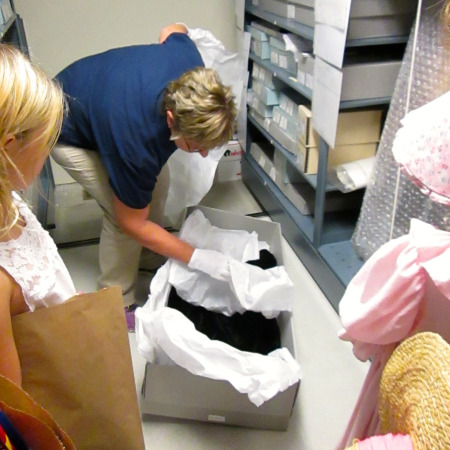
Laura Ingalls Wilder Historic Homes De Smet SD A glimpse of the artifact storage area. Although not normally open to the public, it gives a hint of the Society’s holdings.
Laura Ingalls Wilder Memorial Society De Smet SD The former…

View original post 799 more words

Design a site like this with WordPress.com
Get started