American humorist and author once wrote, “Springtime is the land awakening. The March winds are the morning yawn.”
When I was in the sixth grade, snow fell on every Wednesday in Spartanburg. It was the most fun when we only attended school for two days a week. None of us who lived then will ever forget that month and the snow piles up everywhere.
There are also some historical events that also happened in March.
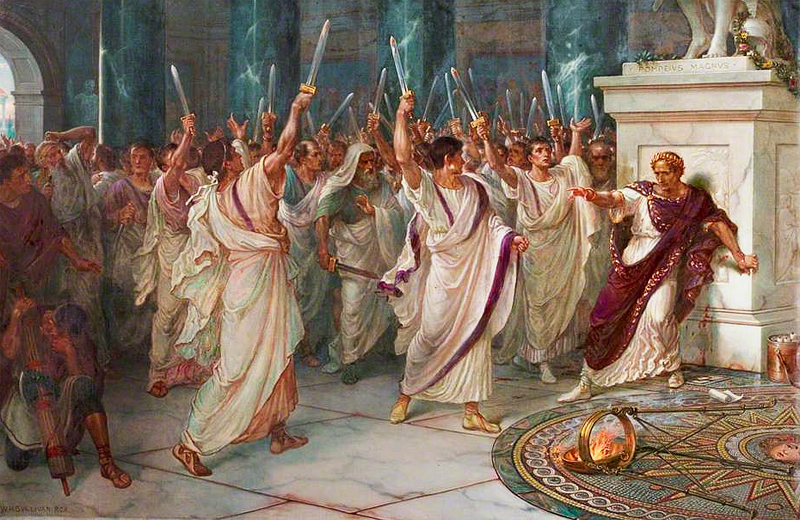
“Beware the Ides of March” is a familiar phrase to those who have read Shakespeare’s Julius Caesar. These were the Soothsayer’s words to Julius Caesar on his impending death in the play, and on March 15 in 54 BC, Caesar was assassinated.
The Assassination of Julius Caesar by William Holmes Sullivan, c. 1888
Another dramatic event happened on March date in 1917. Czar Nicholas II of Russia abdicated his throne, ending a 304-year-old royal dynasty.
Centuries apart, two rulers lost their thrones and places in history, one with a knife and another with a signature.
On March 15, 1765, Andrew Jackson was born in the Waxhaws of South Carolina. For the first fifteen years of his life, he lived in this Scots-Irish community. His widowed mother, Elizabeth Hutchinson Jackson, made sure that her three sons received a good education and religious training. She was a Patriot and believed in the American Revolution, and she modeled for her sons a life of determination to do the right thing, in spite of the odds.
The website states, “The museum contains Revolutionary War artifacts and artifacts related to President Jackson and contains exhibits that reveal the lifeways of South Carolina’s backcountry during the late 18th century. Discover the impact of the Revolutionary War on the local community.”
And then there are those daffodils that are everywhere in March. Going back to my sixth grade year, our teacher required us to memorize a poem every month. “I Wandered Lonely As a Cloud” was her choice for this first spring month. This lyrical poem by William Wordsworth is familiar to many.
I wandered lonely as a Cloud That floats on high o’er Vales and Hills, When all at once I saw a crowd, A host of golden Daffodils; Beside the Lake, beneath the trees, Fluttering and dancing in the breeze.
Continuous as the stars that shine And twinkle on the Milky Way, They stretched in never-ending line Along the margin of a bay: Ten thousand saw I at a glance, Tossing their heads in sprightly dance.
The waves beside them danced, but they Out-did the sparkling waves in glee:— A Poet could not but be gay In such a jocund company: I gazed—and gazed—but little thought What wealth the show to me had brought:
For oft when on my couch I lie In vacant or in pensive mood, They flash upon that inward eye Which is the bliss of solitude, And then my heart with pleasure fills, And dances with the Daffodils.
March is certainly a fickle month, as to weather. As one of my favorite authors described it, “It was one of those March days when the sun shines hot and the wind blows cold: when it is summer in the light, and winter in the shade.” Charles Dickens
“Christmas waves a magic wand over this world, and behold, everything is softer and more beautiful.” Norman Vincent Peale
Several years ago, John and I enjoyed a Moravian Love Feast in Old Salem, NC. I can still taste that sweet, hot, milky coffee and the Moravian sugar cake that was served. It was melt-in-my-mouth delicious! Sharing this time of fellowship with complete strangers, we exchanged smiles and sighs of pleasure.
The Candle Tea is sponsored by the Women’s Fellowship of the Home Moravian Church.
We also sang Christmas carols to the accompaniment of the 1797 Tanneberg organ, viewed the putz/miniature replica of early Salem, and listened to the Christmas story.
As I absorbed this time in the Single Brothers’ House, I was as wide-eyed as any child and walked out of the building looking up to the grandeur of a starry night. Once again, Christmas caught me.
Food brings friends, families, and communities together. Whether it is a holiday meal where many contribute or a shared cup of hot tea with ginger snaps for dipping between two friends, the time is about fellowship and remembrance. In the South, both are vital.
A Moravian Love Feast is a time of spiritual fellowship. Traditional simplicity is the model.
A grace was prayed in unison. “Come, Lord Jesus, our guest to be, And bless these gifts bestowed by Thee. Amen” is the customary Moravian prayer. Hymns were sung, and the choir sang.
Religion and community life blended together on the same path in a Moravian community in early America. Their old style love feasts have stood the test of time.
Doesn’t this sound like a lovely time? If you need a Moravian recipe for sugar cake, they are available. Or you might want to know that Fresh Market stocks these scrumptious squares. And, yes, we had warm Moravian sugar cake for breakfast this morning.
It is the season to celebrate. “For unto us a child is born, unto us a Son is given: and the government shall be upon His shoulder: and His name shall be called Wonderful Counsellor, the Mighty God, the Everlasting Father, the Prince of Peace.” Isaiah 9:6
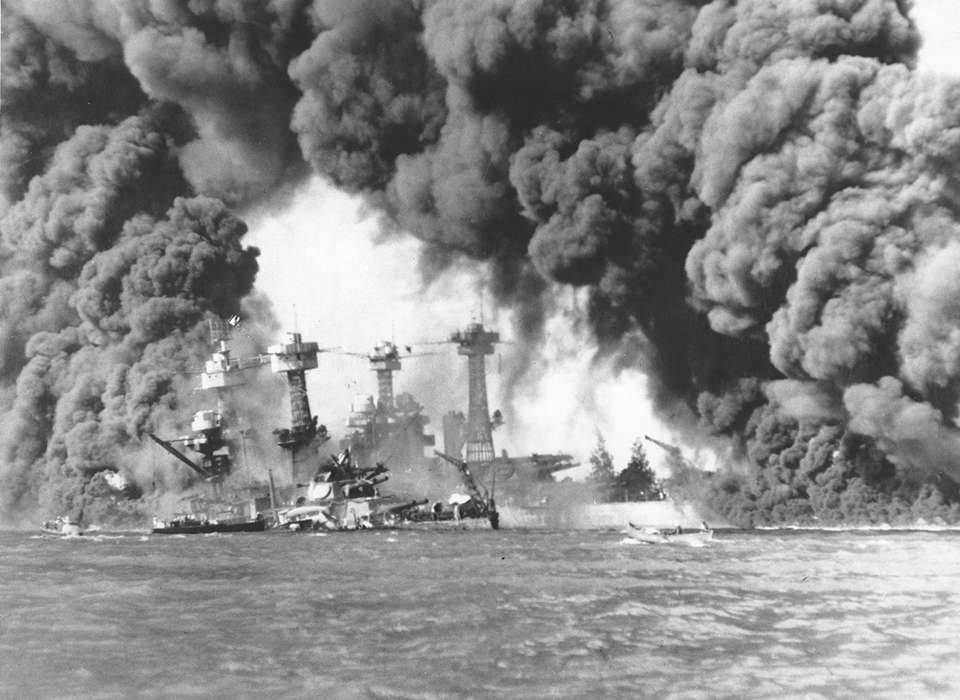
Japan dispatched all six of its precious “fleet carriers” across 3,000 miles of open ocean in total secrecy, with the fleet arriving a few hundred miles north of the Hawaiian islands. The carriers launched their aircraft early on a Sunday morning, December 7, 1941.
US forces were completely unprepared, and in less than ninety minutes, Japanese planes destroyed or damaged 19 US warships and 300 aircraft, and killed over 2,400 US servicemen. Almost half of the dead were crewmen from the battleship USS Arizona, which sank within minutes after a bomb struck its forward magazine, igniting more than a million pounds of ammunition. The ship’s remains still lie in the waters of Pearl Harbor, a constant memorial to that terrible morning.
Those Japanese Zeros and Kates and Vals swooping out of the sky were carrying out the first armed attack on US territory since the British burned Washington in August 1814—a long time ago, even in 1941.
Survivors, authors, and newscasters have described this attack.
Siblings Lydia Grant and Thomas Gillette witnessed firsthand the Japanese attack on Pearl Harbor. Moments after Thomas and Monty took refuge inside the Higgins home, fourteen-year-old Lydia was awakened by Japanese machine gun bullets slamming into the wall next to her bed. The enemy rounds had passed just over her head and would’ve killed her had she been sitting up. Not fully realizing what was going on, she got out of bed and walked out onto the roof outside of her bedroom window where she saw low-flying aircraft passing just over the tops of the palm trees in her front yard.
President Franklin D. Roosevelt spoke to Congress the next day.
Yesterday, December 7, 1941, a date which will live in infamy, the United States Of America was suddenly and deliberately attacked by Naval and Air Forces of the Empire of Japan. It is obvious that planning the attack began many weeks ago, during the intervening time the Japanese Government has deliberately sought to deceive the United States by false statements and expressions of hope for continued peace. The attack yesterday on the Hawaiian Islands has caused severe damage to American military forces, I regret to tell you that over three thousand American lives have been lost. No matter how long it may take us to over come this pre-meditated invasion, the American people in their righteous might will win through to absolute victory. Because of this unprovoked, dastardly attack by Japan, I ask that the congress declare a state of War.
Pictured above is Pearl Harbor Navy veteran Bob Fernandez smiling while being photographed at home Tuesday, Nov. 19, 2024, in Lodi, Calif. Fernandez was working as a mess cook on his ship, the USS Curtiss, the morning of Dec. 7, 1941, and planned to go dancing that night at the Royal Hawaiian Hotel in Waikiki. Today there are only 16 still living, according to a list maintained by Kathleen Farley, the California state chair of the Sons and Daughters of Pearl Harbor Survivors.
My grandparents heard the news about the attack on the radio. Daddy was attending a movie in downtown Charleston with a group of his Citadel cadets. The movie was silenced, and a man’s voice spoke into the auditorium with the news. Dad’s junior class was sent for training at various officer training schools and then to war the next year. The Greatest Generation answered America’s call.
It was eighty-three days ago today that Japan attacked America. Let’s remember Pearl Harbor.
Dr. Norman Vincent Peale wrote, “A basic law: the more you practice the art of thankfulness, the more you have to be thankful for.”
This time of year is full of memories for all of us. The holiday of Thanksgiving is family-centered, and Norman Rockwell made sure we didn’t forget it. The singular focus is on the attitude of gratitude in our home and the blessings that we have; they are too many to name. Jehovah has truly been gracious.
I learned this song in elementary school, and it still murmurs in my mind during this season. Perhaps you are familiar with it and wish like me that another trip to grandmother’s house would be just the thing.
Over the river and through the woods, To grandmother’s house we go; The horse knows the way to carry the sleigh, Through (the) white and drifted snow!
Over the river and through the woods, Oh, how the wind does blow! It stings the toes and bites the nose, As over the ground we go.
Over the river and through the woods, To have a first-rate play; Oh, hear the bells ring, “Ting-a-ling-ling!” Hurrah for Thanksgiving Day!
Over the river and through the woods, Trot fast, my dapple gray! Spring over the ground, Like a hunting hound! For this is Thanksgiving Day.
Over the river and through the woods, And straight through the barnyard gate. We seem to go extremely slow It is so hard to wait!
Over the river and through the woods, Now Grandmother’s cap I spy! Hurrah for the fun! Is the pudding done? Hurrah for the pumpkin pie.
I was born at Roper Hospital in Charleston, SC and went home to 128 Wentworth Street. My parents lived in an apartment below my grandparents’ apartment in a stately, two-story house for a couple of years.
My memories of that house are brimming over with fun. There is a curved, mahogany staircase between the two floors that I used to travel down in a sitting position, squealing all the way. Perhaps you have this kind of bumpy ride in your childhood history, too. The wide and empty downstairs hall was a playground for my dolls and me in bad weather, and I raced my tricycle from one end to another.
On a whim I looked up the Wentworth Street address on the Internet the other day. It is still a stately lady.
It was built in 1840. The realtor showed pictures of my grandparents’ apartment with the tiny kitchen, where I learned to drink coffee, laced with plenty of milk and sugar. I have sat cross-kneed in front of that fireplace and opened the French doors to the porch to reach the sunshine. Soap bubbles used to fill the claw foot tub, and I tried to swim in it.
This is the living room where Critt and I used to sleep on pallets in front of the fireplace when visiting our grandparents through the years. Those floors are still stunning. The two doors lead to the porch where Nanna used to hang her clean laundry for the morning sun to quickly dry. Looking up and down the street were other balconies adorned the same way.
I wonder if my love for history started in this house of large rooms, high ceilings, and an oversized hall. There is an ambiance to historical buildings and sites that embraces me today, and perhaps those feelings originated at a young age.
Thomas Wolfe declared in his book, You Can’t Go Home Again that “Some things will never change. Some things will always be the same. Lean down your ear upon the earth and listen.” I like to listen to those impressions.
What a gift it is when memories of the past can keep up with the present. With some family holidays around the corner, maybe you, too, might enjoy a look backwards, as I did at 128 Wentworth Street.
We will make new memories next week around the dining table I remember my folks buying for my childhood home. I can remember Nanna and Granddaddy sitting with us there for the holidays. Four generations have broken bread together there.
Marcie spoke truth to Charlie Brown when she said, “We should just be thankful for being together. I think that’s what they mean by Thanksgiving, Charlie Brown.”
In a few weeks, we will celebrate Thanksgiving, a national and family holiday in our country. We will gather together for fun, food, and fellowship. But will we be thankful for what we have? Will we count our blessings? Name them one-by-one? Will we serve others? Will we remember the sacrifices of those who settled our country?
“As we express our gratitude, we must never forget that the highest appreciation is not to utter words, but to live by them.”– John Fitzgerald Kennedy
Knowing nothing about the reality of the Pilgrims’ journey to America or those first years of deprivation and death, it was a fun holiday to celebrate during my younger years. At school, we would make Pilgrim and Indian hats and headpieces, eat vegetable soup and cornbread, and sing loudly, “Come Ye Thankful People Come.”
Growing up in twentieth century South Carolina, I could never have imagined this model of the insides of their ship.
The bravery of this group who was willing to give up all they knew for an unknown destination. It was their desire to worship God as they felt led that pushed them on the Mayflower.
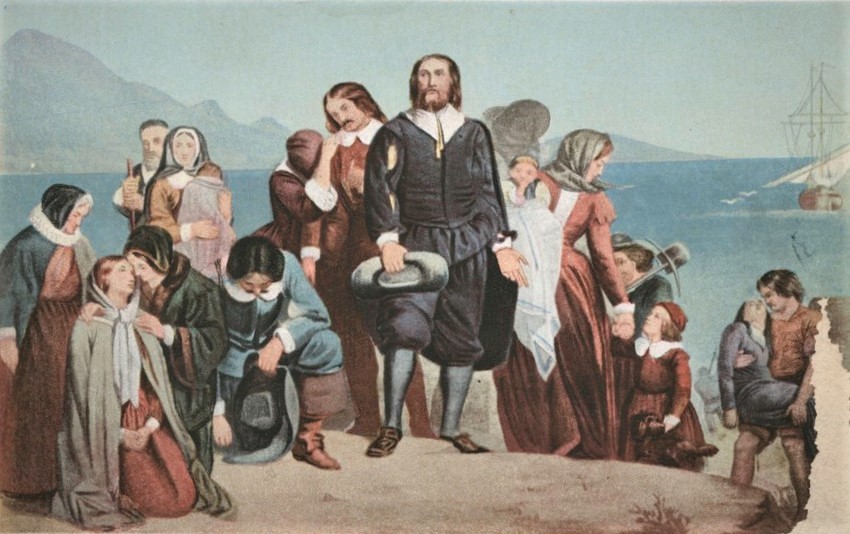
The above painting shows this group of settlers boarding their ship. On September 16, 1620, the Mayflower, no larger than a volleyball court today, sailed from Plymouth, England, bound for the Americas with 102 passengers. Headed for Virginia, storms and navigational errors pushed the Mayflower off course. And it was on November 21, they reached Massachusetts. This was the first permanent European settlement in New England.
The Embarkation of the Pilgrims (1857) by American painter Robert Walter Weir.
The painting below is a rendering of their arrival at Plymouth Rock. The faces are quite solemn and serious, as they look toward a forest and a wilderness.
The colonists began building their town. While houses were being built, the group continued to live on the ship. Many of the colonists fell ill. They were probably suffering from scurvy and pneumonia caused by a lack of shelter in the cold, wet weather. Although the Pilgrims were not starving, their sea-diet was very high in salt, which weakened their bodies on the long journey and during that first winter.
As many as two or three people died each day during their first two months on land. Only 52 people survived the first year in Plymouth. More than half of the heads of households died. Five of the eighteen wives lived through the scourges of pneumonia, tuberculosis, and scurvy.
“…Aboute no one, it began to raine…at night. It did freee &snow …still the cold weather continued…very wet and rainy, with the greatest gusts of wind ever we saw…frost and foule weather hindered us much; this time of the yeare seldom could we worke half the week.”
On March 24, a journal entry sums their situation up: “Dies Elizabeth, the wife of Mr. Edward Winslow. N.B. This month thirteen of our number die. And in three mons past dies halfe our company…Of a hundred persons, scarce fifty remain, the living scarce able to bury the dead.”
What a courageous group of men, women, and children; there are no words to laud their fortitude. During the third week of March, the weakened survivors from the Mayflower rowed ashore to their new homes in New Plimouth in those huts that needed rebuilding.
The earliest houses in Plymouth had thatched roofs, but because they were more likely to catch on fire, the colony eventually passed a law that required new homes be built with plank instead. Most houses had dirt floors, not wooden floors, and each had a prominent fire and chimney area, since this was the only source of heat as well as the only way to cook. Each house would have had its own garden, where vegetables and herbs could be grown. Each family was also assigned a field plot just outside of town, where they could grow corn, beans, peas, wheat, and other crops that required more space to grow, as well as to raise larger livestock.
Still, God’s grace was sufficient. English-speaking Indians named Samoset and Squanto helped the Pilgrims learn how to farm the land and harvest the bay. Squanto lived with the Pilgrims until 1622 when he died. His last request was that Gov. William Bradford would pray that he might go to the Englishman’s God in heaven. Bradford wrote: “Squanto continued with them and was their interpreter, and was a special instrument sent of God for their good beyond their expectation. He directed them how to set their corn, where to take fish and to procure other commodities and was also their pilot to bring them to unknown places for their profit, and never left them till he dyed.”
By 1621, passenger Edward Winslow wrote a letter in which he said “we have built seven dwelling-houses, and four for the use of the plantation.” In 1622, the Pilgrims built a fence around the colony for their better defense–the perimeter was nearly half a mile, and the fence was about 8 to 9 feet high.
They could have given up and returned to England. They could have thrown up their hands in despair. But their faith was in God, and they chose to not let the hardships make them bitter. Their trust laid the enduring foundations of our country America, and they were thankful.\A pilgrim is a person who goes on a long journey often with a religious or moral purpose, and especially to a foreign land.
After the Mayflower arrived, the first baby born was a boy. His parents (William and Susannah White) named him Peregrine – a word which means traveling from far away and also means pilgrim. Governor William Bradford wrote, “They knew they were pilgrims, and looked not much on those things, but lifted up their eyes to the heavens, their dearest country; and quieted their spirits.”
This beautiful cradle is believed to have been brought on the Mayflower by William and Susanna White, for the use of Peregrine White, who was born onboard the ship in November 1620 while it was anchored off the tip of Cape Cod. It is on display at the Pilgrim Hall Museum in Plymouth.
These few fought, fell, and rose to fight again against wild animals, extreme weather, poor housing, and a starvation diet. Then they intentionally celebrated a day of thanksgiving after a time of such hardship. Long-time chronicler and governor William Bradford described this celebration in 1621 with these words.
They began now to gather in the small harvest they had, and to fit up their houses and dwellings against winter, being all well recovered in health and strength and had all things in good plenty. For as some were thus employed in affairs abroad, others were exercising in fishing, about cod and bass and other fish, of which they took good store, of which every family had their portion. All the summer there was no want; and now began to come in store of fowl, as winter approached, of which this place did abound when they came first (but afterward decreased by degrees). And besides waterfowl there was great store of wild turkeys, of which they took many, besides venison, etc. Besides they had about a peck of meal a week to a person, or now since harvest, Indian corn to that proportion. Which made many afterwards write so largely of their plenty here to their friends in England, which were not feigned but true reports.
“It is therefore recommended . . . for solemn thanksgiving and praise, that with one heart and one voice the good people may express the grateful feelings of their hearts and consecrate themselves to the service of their divine benefactor . . . .”– November 1, 1777 (adopted by the 13 states as the first official Thanksgiving Proclamation) – Samuel Adams
For more information about our forefathers, look at MayflowerHistory.com.
Apples, pumpkins, and gingerbread are the foods that remind me of October. Smells from the first fire of the season and hot cider on the stove are perfect on any chosen day. Cinnamon toast is a favorite for breakfast, and hot chocolate is for Sunday nights.
There are some childhood memories that I hoard. Kicking leaves up in the air used to be fun. I smile remembering those huge leaf piles that my brother and I raked and then jumped into until they had to be raked again. Football, whether watching or playing, was entertainment in October. Fun was always at the fair, carnivals at school, and trick-or-treating.
Elizabeth George Spear wrote, “In October any wonderful unexpected thing might be possible.”
Boredom is not to be found during this month; unexpected happenings and parties were and are always around the corner.
October’s Party “October gave a party; The leaves by hundreds came – The Chestnuts, Oaks, and Maples, And leaves of every name. The Sunshine spread a carpet, And everything was grand, Miss Weather led the dancing, Professor Wind the band.
The Chestnuts came in yellow, The Oaks in crimson dressed; The lovely Misses Maple In scarlet looked their best; All balanced to their partners, And gaily fluttered by; The sight was like a rainbow New fallen from the sky.
Then, in the rustic hollow, At hide-and-seek they played, The party closed at sundown, And everybody stayed. Professor Wind played louder; They flew along the ground; And then the party ended In jolly “hands around.” ― George Cooper
My grandmother Lulu always added cooked spaghetti noodles to her chili. My mother continued this addition, and so do I. The rest of the recipe is the mundane beef, onions, tomatoes, and red kidney beans; the spaghetti is added toward the end.
I don’t know anyone else that cooks chili this way, but we enjoy it. One day, I asked Daddy why Lulu added the spaghetti. With a smile, he informed me that it was an easy way to stretch the recipe and fill up her family and the workers on Mirror Lake Farm.
Well, I don’t have that many to feed, but every time I make chili, I remember Lulu and add the spaghetti. This simple act transports me back to the past and the wonderful vacations we spent on her Kentucky farm. My mind goes from one picture to another, as it wanders; the collection is endless and precious.
Louis L’Amour said, “No memory is ever alone; it’s at the end of a trail of memories, a dozen trails that each has its own associations.”
As we continue to clean up after Hurricane Helene, yesterdays memories can become today’s fun. We bought our first gallon of apple cider and enjoyed its scent and flavor yesterday. There will be a pot of chili simmering on the stove today. It’s time to buy pansies to brighten up the porch and welcome us and friends.
Major Patrick Ferguson moved his troops into the mountainous regions of the South to track down Patriot sympathizers. To track down such Patriot sympathizers, Ferguson sent a Whig prisoner into the inhabited mountains to carry forth a warning. He warned if there were continued support against British arms, that his army would march “…over the mountains, hang their leaders, and lay their country waste with fire and sword.”
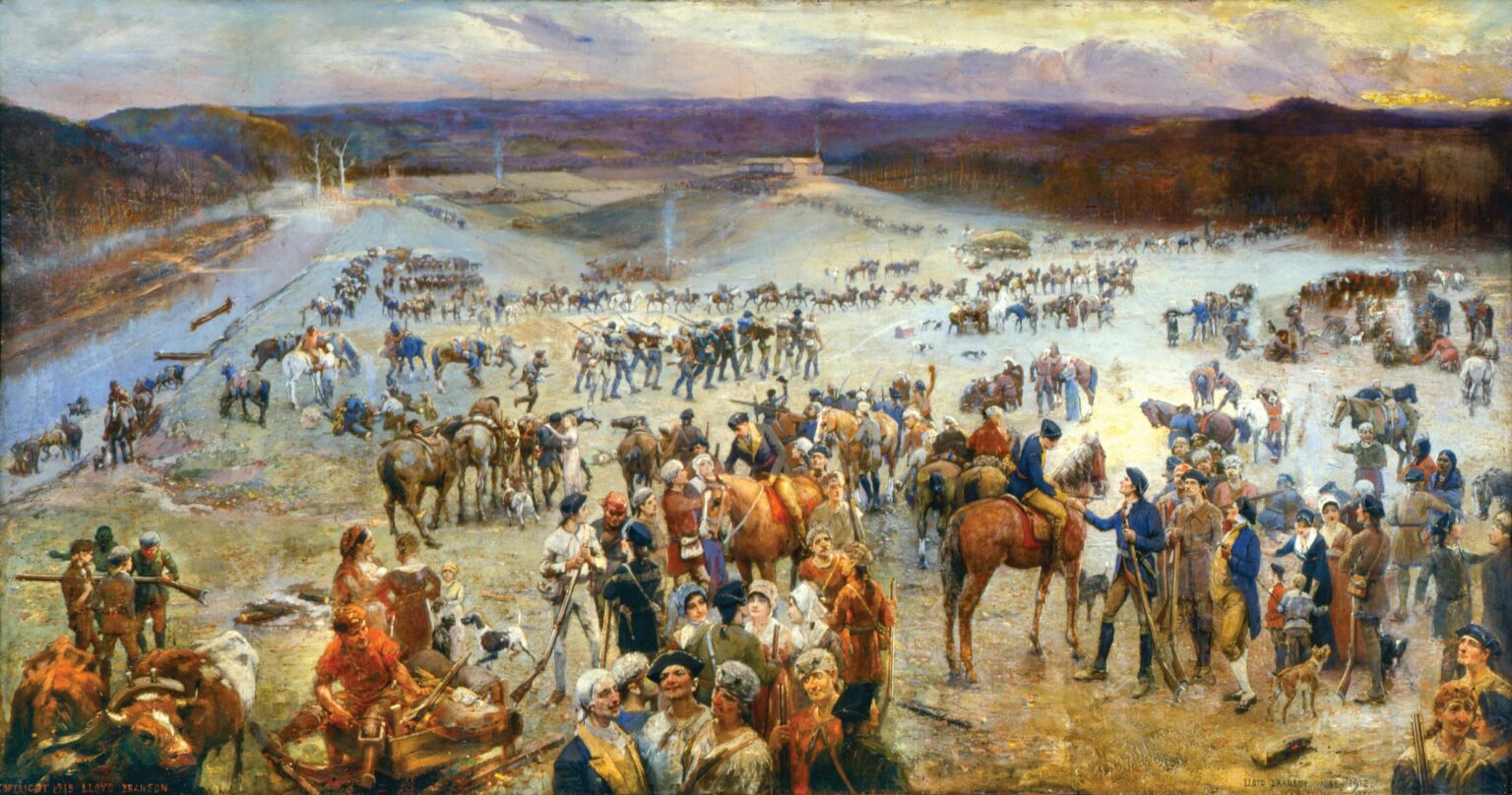
Among those Patriot leaders there in the Tennessee mountains were Colonels Isaac Shelby, Samuel Phillips, John Sevier, William Campbell, Arthur Campbell, Charles McDowell, and Andrew Hampton. Troops were gathered and congregated on September 25 at Sycamore Shoals, an outpost on the Watauga River.
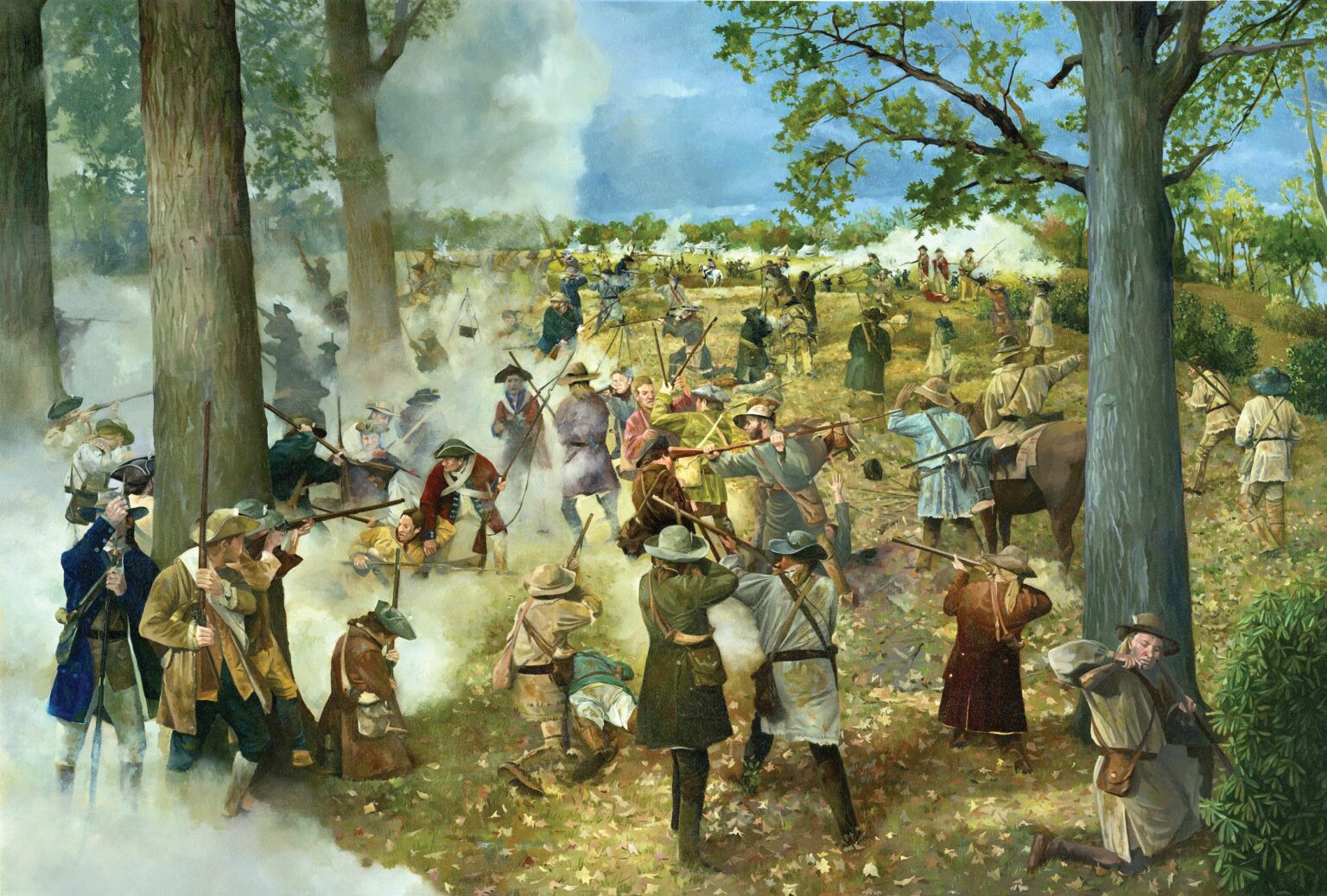
Gathering of Overmountain Men, Backcountry Militia and others at Sycamore Shoals, Tennessee, west of the Blue Ridge mountains. Led by Patriot militia commanders Isaac Shelby, John Sevier, and Charles McDowell, the group set out to find British Major Patrick Ferguson after he had threatened them and told them to stay home. The Patriots traveled over 100 miles before surrounding Ferguson and his Loyalists at Kings Mountain.
Minister Samuel Doak said to the gathered troops, “The enemy is marching hither to destroy your homes.…Go forth, then, in the strength of your manhood to the aid of your brethren, the defense of your liberty and the protection of your homes.”
Twenty-nine-year old Mary Patton was in the trade of making gunpowder; she had been trained in this occupation at her home in Ireland. Made at her own powder mill, she volunteered five hundred pounds of gunpowder for their expedition. Without powder, their rifles were of no use.
The men hiked approximately 330 miles along a wearisome wilderness road, abounding with mountains and valleys. Their path crossed the Blue Ridge Mountains through the present-day states of Tennessee, Virginia, North Carolina, and South Carolina. Nearing Ferguson’s force, the Overmountain Men stood at more than 1,000 strong.
During the last thirty-six hours, the riflemen from North Carolina, South Carolina and Washington County, Virginia, never alighted but once and then at Cowpens. They had little to eat but parched corn. A persistent rain made them wrap their guns and ammunition in sacks, blankets, and even their hunting shirts. It was necessary to keep their powder dry, even though their bodies were drenched by the cold downpour. When they did catch up with Colonel Ferguson, they went into the fight with neither rest nor refreshment.
In the early afternoon of October 7, 1780, the Overmountain men creep quietly toward Ferguson’s position. Captain John Ingle, my husband John’s great, great, great, great grandfather, of the 2nd North Carolina led a company of 82 men to the top. Fighting Indian style, they moved from tree to tree for cover, but always forward.
When the first shot rings out the Americans attack en masse from all sides. Ferguson deploys his Loyalist militia in the center of the hilltop. He remains mounted and personally leads the counterattack against the patriots surging from the southwest. After firing a volley and fixing bayonets, Ferguson’s men blunt the Overmountain men’s advance. But it is only on one side of the hill and the Overmountain men continue unabated to attack from the other sides using the undergrowth and woods to their advantage.
American Patriot militia gain the crest of Kings Mountain where Loyalist troops, including the King’s American Regiment wearing red coats, had circled their supply wagons for a defensive stand. The Loyalists, armed with muskets and bayonets, drove off several Patriot advances by charging with their bayonets, a weapon the Patriots lacked.
Many of the Overmountain Men and Back Country militia carried rifles, which proved superior on the rocky, wooded slope.One Loyalist later recalled that the Overmountain men looked “like devils from the infernal regions… tall, raw-boned, sinewy with long matted hair.” Ferguson and his men are surrounded, and their additional counterattacks fail to stop the Americans. The Overmountain men continue their yelling and whooping as they gain ground.
The only British regular in the Battle of Kings Mountain, Major Ferguson was hit by as many as eight bullets while rallying his troops. The 36-year-old Scotsman fell from his horse and was dragged across the battlefieldfell by a stirrup. His body was buried in a cairn at the site.
Unwilling to surrender to a “band of banditti,” Ferguson led a suicidal charge down the mountain and was cut down in a hail of bullets. After his death, some of his men tried to surrender, but they were slaughtered in cold blood by the frontiersmen, who were bitter over British excesses in the Carolinas. The Tories suffered 157 killed, 163 wounded, and 698 captured. Colonel Campbell’s force suffered just 28 killed and 60 wounded.
Twenty thousand shots fired in one hour and five minutes. Ferguson had boasted that “God and His angels” could not get him off the mountain. The words proved to be somewhat prophetic in that Major Ferguson was buried on the mountain.
Kings Mountain was a battle of militia–American Patriots against American Loyalists. Short and intense, it was the last desperate stand of British Major Patrick Ferguson and a turning point in the American Revolution.
John and I both enjoy hot cider. Apple and peach are our favorites. And this time of year invites us to the porch with a mug in hands. This has become a chosen response to the changing season.
Even though there are no fall breezes yet, the respite will be peaceful. Holding the warm mug and savoring the tart, yet sweet, flavors is only made better only by the ginger snaps I will dunk in the mug. (My Nanna taught me this added bonus to savoring cider or hot tea.)
Since I haven’t shared a colonial recipe with you, this drink made me think of the cider most often drunk by all ages during the eighteenth century.
One recipe/receipt gives these simple instructions for Hot Spiced Cider.
“Pour a gallon of cider into your kettle. Drop two cinnamon sticks and eight cloves into cider. This may be heated hearth side. You may wish to add one quart of scuppernong wine for extra flavor.”
The founders of our country enjoyed cider. Benjamin Franklin said: “He that drinks his cyder alone, let him catch his horse alone.”
One of my favorite memories of our visits to Williamsburg is walking the streets with a cup of hot cider and a molasses cookie. Along Duke of Gloucester Street at Chowning’s Tavern Cider Stand are these drinks and snacks.
As I look forward to inhaling the flavors from my cup, I know that the combined smell of fruit and spices would have also beckoned everyone to the fireplace in a one room cabin in the 18th century.
Good things in life don’t change, but we need to remember to choose them. A safe harbor of fellowship can be found on a porch or around a fireplace; the century doesn’t matter. It’s the people we are making the memories with who are the most important.
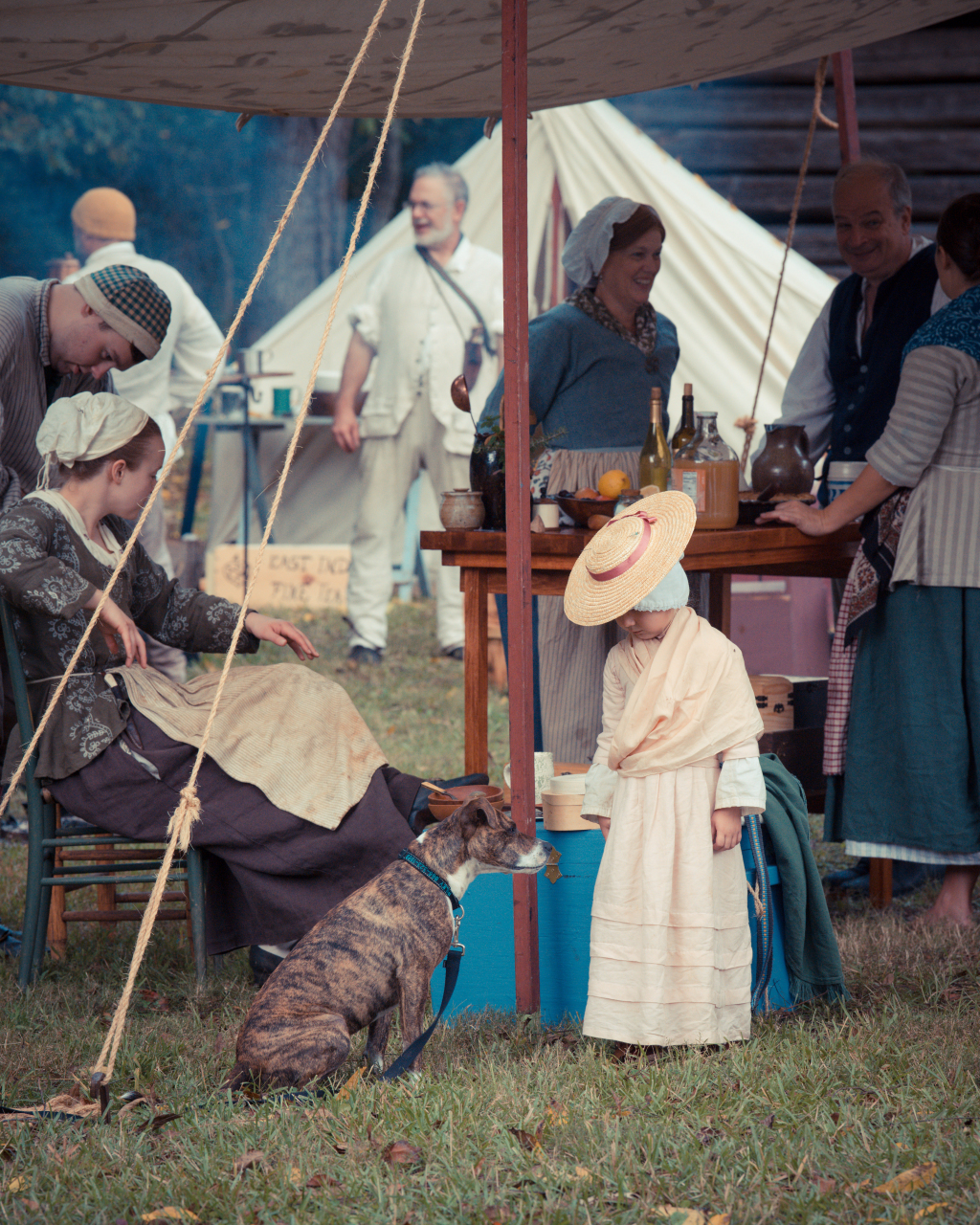
Speaking of smells, and also sights and sounds of the eighteenth century, I want to invite you to visit Festifall at Walnut Grove Plantation this first weekend in October. Today and tomorrow the community is invited to join reenactors to celebrate that early life in our county. This year, it is a free event to enjoy time together outside.
The only Revolutionary War fought in Delaware was the Battle of Cooch’s Bridge.
The American flag is said to have flown in battle for the first time, during Revolutionary War skirmish at Cooch’s Bridge, Delaware on September 3, 1777. Patriot General William Maxwell ordered the stars and stripes banner raised as a detachment of his infantry and cavalry met an advance guard of British and Hessian troops.
The U.S. light infantry was in the woods on either side of the road leading toward Cooch’s Bridge. Calling up reinforcements, they flushed the Americans out and drove them across the bridge. The rebels were defeated and forced to retreat to General George Washington’s main force near Brandywine Creek in Pennsylvania. About twenty Patriots are buried in an unmarked grave there.
Three months earlier, on June 14, the Continental Congress adopted a resolution stating that “the flag of the United States be thirteen alternate stripes red and white” and that “the Union be thirteen stars, white in a blue field, representing a new Constellation.” General Washington shared his sentiments: “We take the stars from heaven, the red from our mother country, separating it by white stripes, thus showing that we have separated from her, and the white stripes shall go down to posterity representing liberty.”
The national flag, which became known as the “Stars and Stripes,” was based on the “Grand Union” flag, a banner carried by the Continental Army in 1776 that also consisted of 13 red and white stripes. According to legend, Philadelphia seamstress Betsy Ross designed the new canton for the Stars and Stripes, which consisted of a circle of 13 stars and a blue background, at the request of General George Washington. Historians have been unable to conclusively prove or disprove this legend.
You’re a grand old flag, You’re a high flying flag And forever in peace may you wave. You’re the emblem of The land I love. The home of the free and the brave. Ev’ry heart beats true ‘neath the Red, White and Blue, Where there’s never a boast or brag. Should auld acquaintance be forgot, Keep your eye on the grand old flag.
You’re a grand old flag, You’re a high flying flag And forever in peace may you wave. You’re the emblem of The land I love. The home of the free and the brave. Ev’ry heart beats true ‘neath the Red, White and Blue, Where there’s never a boast or brag. Should auld acquaintance be forgot, Keep your eye on the grand old flag.
Written in 1906, George Coan penned these words for his musical, “George Washington, Jr.” The song has never lost its popularity, and this flag has been followed into many battles by the men and women of our country.
Sue Monk Kidd in The Secret Life of Bees wrote, “The month of August had turned into a griddle where the days just lay there and sizzled.”
I believe August had a head start this year by starting in June with its summer heat. But this is the South. If you have lived here for a while, you know that we, not only talk about the hot temps during the summer, but also enjoy them.
With the hurricane Debbie headed for South Carolina, thoughts of hurricanes come to mind. Hurricanes are a part of Charleston’s history. In 1700, the Rising Sun hit Charles Town with its destructive force. Edward Hyme wrote a letter describing it to his wife in England. Obviously, the damage from hurricanes has changed little.
“On Tuesday Septemb: 3d [that’s September 14 on the modern Gregorian calendar] here happened a most terrible Storm of Wind or Hurricane wth continual Rain; wch has done great Damage to ye Country. Thousands of Trees have been torn up by ye Roots; many Houses blown down & more damnified; much Rice Corn &c. spoiled, but ye greatest Mischeif fell amongst ye Shipping of which about a Dozen Sail (of all Sorts) were riding at Anchor before ye Town, some of wch were driven on Shoar & broke all in Pieces, some were carryed a great Way up into the Marshes & One (a Brigantine of about 80 Tons) driven clear over ye Point of Land wch parts ye Two Rivers into Ashley River [that is, over what is now White Point Garden], in her way breaking down a Pair of Gallows on wch 8 Pirat[e]s at once were hanged since my com[i]ng here)[.] Some [vessels] were turn’d Bottom upwards & lost. [Captain] Bell lost all his Masts & was turn’d Bottom upwards, but they have got her to rights again, & I believe she will be ye next Ship for England. . . . Being Spring Tides ye Water was very high & raging, so that if ye Wind had not shifted as it did about 2 Hours before high-Water, it is thought the best & greatest part of ye Town would have been washed down into ye River, as One or 2 Houses were & others very near.”
“The greatest and most deplorable loss of all was that of a great Scot ship called the Rising Sun, which … was riding at anchor [outside the] bar, with design to come in here and refit…. The storm rose and she foundered at anchor, the captain and all the Scots on board, being about 100, miserably perishing.”
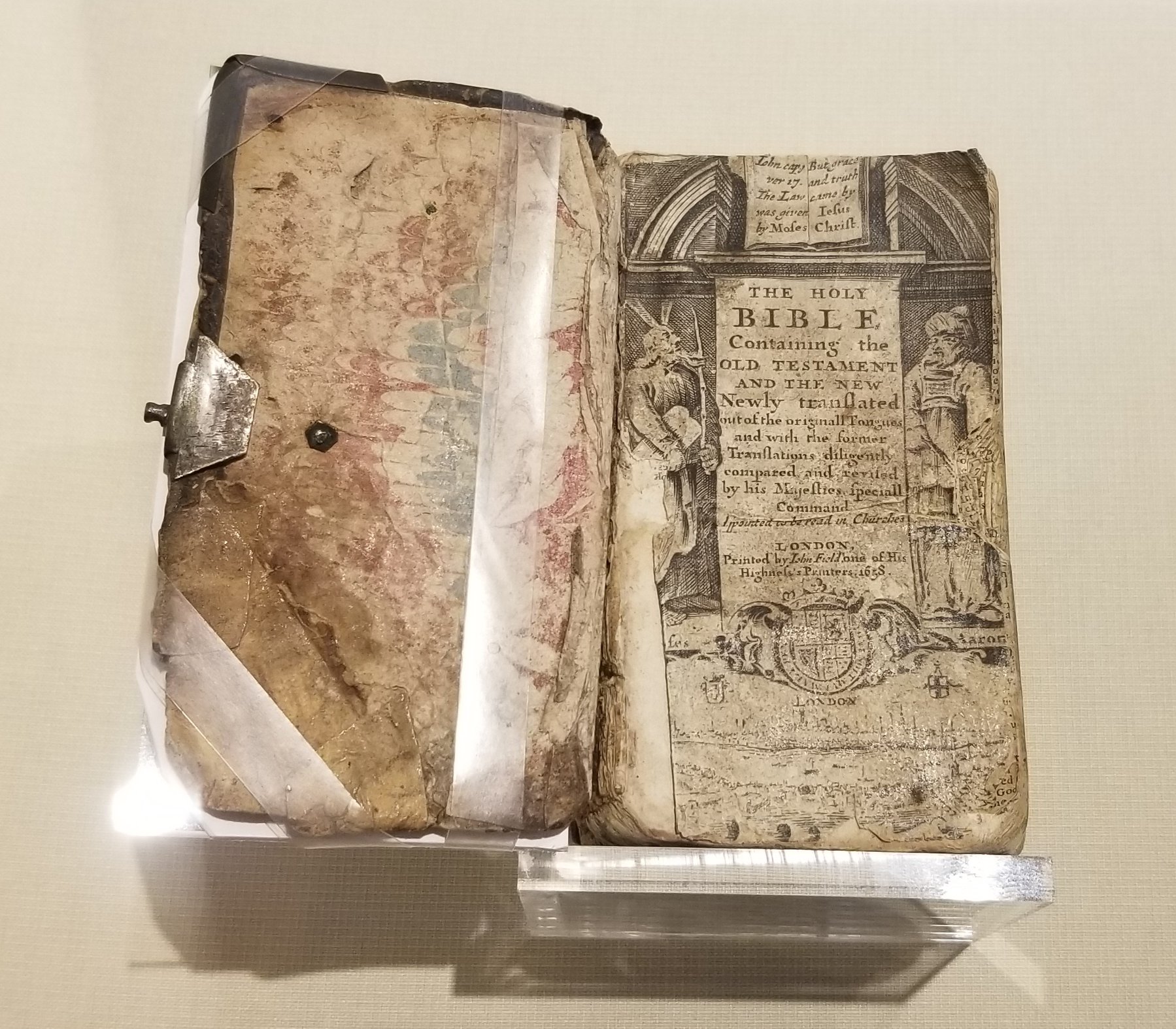
Saved from that ship is this Bible, which belonged to the Reverend Archibald Stobo, founding patriarch of the Presbyterian church in South Carolina. You can see this at the South Carolina Historical Society Museum. Reverend Stobo had been invited into town to preach at the White Meeting House (now Circular Congregational Church). He, his wife, and a small group from the ship were saved.
I was born in Charleston. My dad used to tell me that I slept through my first hurricane the year I was born. Of course, Hugo continues to be talked about. My brother and his family left the Holy City for the upstate, along with thousands of others. When they went back, it was to a destroyed city. Today, the rain sounds like it is going to pommel Charleston once again.
Folly Beach after Hugo
One of my early memories is of a quick meeting with the President of the United States. When I was around four, I met President Dwight D. Eisenhower. In a long line of people, my parents and I were outside a church in Augusta, Georgia. (Since then, I have found out that it was the Reid Memorial Presbyterian Church, where the President attended in that city.) I can still remember that it was Daddy, then Mother, then me standing beside the sidewalk. As the President walked by, he shook Daddy’s hand and then smiled and patted me on the head. It makes no sense that I can still visualize this occasion, but I do. I guess I am supposed to have this one in my memory bank.
Both my grandmothers and mother made jelly and preserves every summer. They started the spring season with strawberry preserves, following that with peach and blackberry preserves, and ending with apple jelly in the fall. I saw that it was hot work, as they all dealt with the steam from the jars boiling and the fruit being brought to a boil. But it wasn’t long after I married that I chose to follow in their footsteps. There really isn’t much enjoyment from the process, but there certainly is in eating the finished product. I, also, enjoy sharing them with friends and watching their eyes light up with anticipated pleasure. If I could only bake biscuits, like those three ladies, to go with those preserves, I would be truly following in their footsteps. (In case you didn’t know it, Mary B biscuits are a delicious second choice!)
As I continue to say, we need to share our stories. I hope, as you may have had extra time with family, that you have regaled another generation about your younger years.
To quote Sue Monk Kidd again, “Stories have to be told or they die, and when they die, we can’t remember who we are or why we’re here.”






















 Sheila Ingle