Category Archives: Uncategorized

In the Kitchen with our Colonial Sisters

Have you ever wondered why cornbread and biscuits were a staple during Colonial Days?

Corn was the first crop planted after the land was cleared. Both the colonists and the animals ate corn on a daily basis. For the family, it was some type of cornbread. Cooked in a Dutch oven in the coals on an open hearth, the smells filled the room.

There was plenty of corn available, so it was used. For many settlers, a mill soon made grinding the corn easier. There were also small kerns that could be used in the cabins to grind their own corn. Since there was a shortage of sugar and flour, it grew in its popularity. It was one of those stick-to-your-ribs recipes, and it was also quick and easy to make. Since it was good either hot or cold, it was good at home, on a hunting trip, or working in the fields. It could be made into Johnny cakes, spoon bread, corn muffins, Bannock cakes, ash cakes, corn dodgers, journey cakes, or slapjacks.

A simple recipe could be
1 cup cornmeal
4 Cups water
1 ½ cups whole wheat flour
1 tsp salt
Of course, using milk rather than water and adding eggs made for a creamier dish.
https://i0.wp.com/media-cache-ec0.pinimg.com/originals/c1/97/4b/c1974b735079ea0d1bfcab0d40b22c0d.jpg

These fireplaces were large, both in width and in height.  There was a door on the left that was  the bread oven. Wood is placed under the oven for a fire to cook the bread. The wood has to burn down to hot coals, and that means lots of hot coals to bake anything.

The pots over the fire on the crane would be for cooking soups and stews. You might have heard the rhyme, “Peas porridge hot. Peas porridge cold. Peas porridge in the pot nine days old. Some like it hot. Some like it cold. Some like it in the pot nine days old.” By adding meat and vegetables to the stew or soup, it could continue to feed a family for several days.

Below is a picture of some of the necessary items for cooking on an open fire in a hearth. The trivet is the curly thing. Under the trivet are the hot coals, and the skillet is placed on top. On top of the lid are coals to keep the baking even on the top and bottom of the cornbread. You might notice there is a lip on the lid; that keeps the coals in place. (Biscuits and cake were also baked in these Dutch ovens.)

https://i0.wp.com/denisonhomestead.org/wp-content/uploads/2011/02/ColonialKitchen.jpg

Usually the coals have to be replaced at least once during the baking, particularly on the lid.

When our son went on camping trips with his scout troop, they would often use this same method over the campfire to bake cornbread and pineapple upside-down cake. Isn’t it interesting that some things never change?

And would we not agree that there is nothing better than biscuits, cornbread, and fried chicken baked in an iron skillet? <#


Wouldn’t You Love to Have a Cup of Tea With Her?

Posted on

I have always been excited to learn about women who were first at something, and Elizabeth Timothy wins in that category in South Carolina.

Image result for photos of elizabeth timothy
When her publisher husband died in 1738, Elizabeth Timothy became the first female newspaper publisher and editor in America.
Elizabeth was born in Holland and immigrated to America in 1731 with her husband and four children. They sailed with other French Huguenots fleeing persecution.
Timothy met Benjamin Franklin, who hired him to be librarian of Franklin’s Philadelphia Library Company. Then Franklin trained him in the printing business at the Pennsylvania Gazette.

Image result for photos of elizabeth timothy
Franklin had helped establish the “South Carolina Gazette” in Charlestown. When the publisher died, Timothy took his place in 1733. They signed a six year contract with Timothy’s son Peter as the next in line as publisher. “The Gazette” became the South Carolina’s first permanent newspaper under Timothy.

Image result for photos of elizabeth timothy
The family joined St. Philip’s Anglican Church and became quite active. Timothy organized a subscription postal system that originated in his printing office. In 1736, he obtained 600 acres and a town lot.

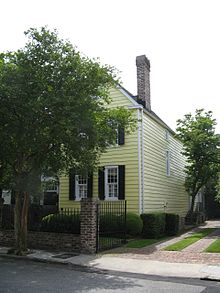
Image result for photos of elizabeth timothyTimothy Print Shop
Lewis died in 1739, and Elizabeth took over. She was the mother of five children and momentarily expecting the sixth, but she took on another job. She ran the Gazette under the name of her 13-year-old son Peter. There was a year left on the contract, but not an issue was missed.

Image result for photos of elizabeth timothy

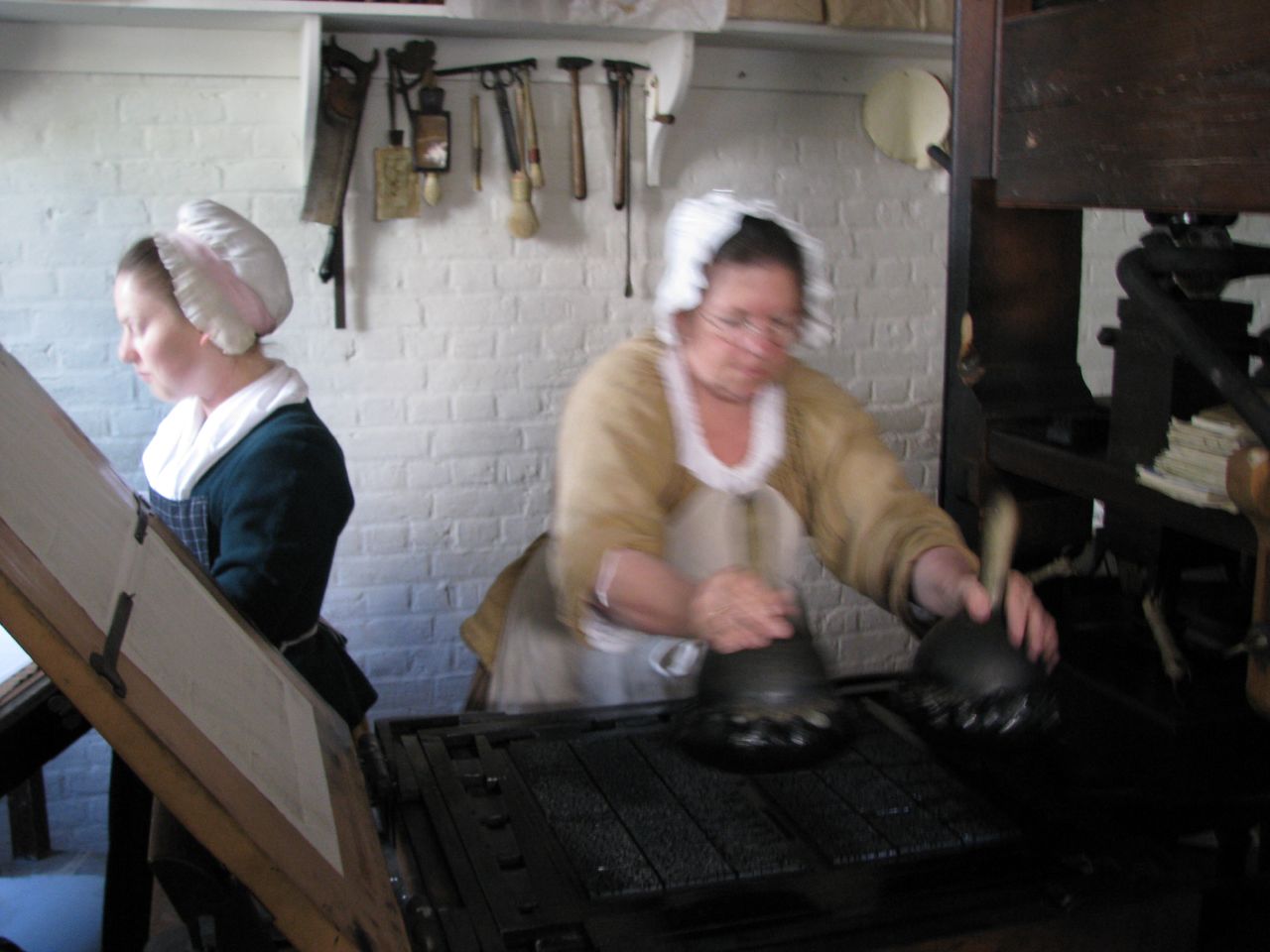
Likeness of printing presses in the 18th century.
Elizabeth added a personal touch to the Gazette by adding woodcuts for illustration and advertisements. In the first issue after her husband’s death, she included a sentimental message asking for continued support from their customers.
Besides the Gazette, she printed books, pamphlets, tracts, and other publications. Franklin said that she was superior to her husband in her accounts; she “continu’d to account with the greatesr Regularity and Exactitude every Quarter afterwards; and manag’d the Business with such Success that she not only brought up reputably a Family of Children, but at the Expiration of the Term was able to purchase of me the Printing House and establish her Son in it.”
When her son Peter turned 21 in 1746, he assumed the operation of the Gazette from his mother. She turned right around and opened her own business, a book and stationery store next door to the printing office on King Street. Of course, she advertised in the Gazette. (I wonder if she had to pay?) In an ad in October, 1746, she announced that she had books available like pocket Bibles, spellers, primers, and books titled Reflections on Courtship and Marriage, Armstrong’s Poem on Health, The Westminister Confession of Faith, and Watt’s Psalms and Hymns. She also sold bills of lading mortgages, bills of sale, writs, ink powder, and quills for reasonable prices.
Elizabeth ran her business for about a year before she left Charlestown for a season. She was back by 1756. She died in 1757, and her estate included three houses, a tract of land, and eight slaves. She was a wealthy woman.
As the mother of six children and the wife of a wealthy and influential publisher, Elizabeth Timothy enjoyed a social position attained by only a few women printers of the colonial period. But her success of the newspaper and printing business after Lewis Timothy’s death can only be attributed to her own business acumen and management skills.
As the first woman in America to own and publish a newspaper, she played a vital role in the development of Charlestown and South Carolina. As official printer to the colony, she was closely associated with the South Carolina Assembly and colony’s government. And as the proprietor of a commercial printing business and bookstore, she printed, published, and offered for sale numerous books and pamphlets, and was at the center of the colony’s cultural and literary life.

Image result for photos of elizabeth timothy
In 1973, Elizabeth Timothy was inducted into the South Carolina Press Association Hall of fame. She was inducted into the South Carolina Business Hall of Fame in 2000.
Mark Twain once said, “Twenty years from now you will be more disappointed by the things that you didn’t do than by the ones you did do. So throw off the bowlines. Sail away from the safe harbor. Catch the trade winds in your sails. Explore. Dream. Discover.”
Elizabeth Timothy was a South Carolina woman who didn’t need these encouraging words. In reading about her life, I believe she had some similar words as her motto.

Silkwood sampler created by Elizabeth Timothy in 1735. Image result for photos of elizabeth timothy

Ye Old Newsreels

Posted on

The news today is given to us in seconds on a program; only a chosen taste of a story is put on the air.

Newsreels used to be part of the movie theater experience. Rather than watching “commercials” of future movies coming to the screen, the audience was given several minutes of relevant and breaking news. At this site, some of the most famous newsreels are available. There is quite a variety of topics and years to choose from.

http://www.newsreelarchive.com/ – 15k

I just watched several of these and was fascinated to see history come alive at the touch of a button. There was little difference in the Boston Marathon pictures, but England’s royal family certainly had a look o foreignness from the way they are today.

These newsreels would be an added resource for history teachers, and I wonder if they use them.  YouTube has much to offer when it comes to education, and I could spend many hours going from one section to another.

I am writing about some new forgotten women who lived during the twentieth century. Looking at historical newsreels has enhanced my visuals of their lives. “A picture is worth a thousand words,” for sure.

We don’t go to the theaters much, but I have noticed that most audiences don’t pay attention to the trailers. This is a time to visit and prepare to be quiet for a while.

You might want to choose choose one of these newsreels to watch. Of course, they are in black-and-white, which is not what we are used to, but the information and news was relevant at the time.

Living in a different world today, where news is available on my Droid at the touch of a button, I can imagine that those theater audiences were mesmerized by what they saw in the newsreels. My parents used to talk about the newsreels and how much they learned by watching the news, not just reading about it.

The explorer Christopher Columbus said, “Following the light of the sun, we left the Old World.” He and his shipmates had no clue of where they were going or what they would find. As a writer, I can identify with this, because I don’t know where the muse’s light will lead me on any-given day.

John grew up listening to radio broadcasts, not television. His family enjoyed country music, and I had never really listened to it until we married. He introduced me to an amazing part of our Southern culture. Believe it or not, today I will be searching out the early years of the Grand Ole’ Opry, and I can’t wait.

Dr. Ben Carson

Posted on

Dr. Ben Carson, a graduate of Yale, went from being a poor student to receiving honors and he eventually attended medical school. As a doctor, he became the Director of Pediatric Neurosurgery at Johns Hopkins Hospital at age 33, and became famous for his ground-breaking work separating conjoined twins.

In his own words, this is how his mother’s choices and reading changed his life.

“We did live in dire poverty. And one of the things that I hated was poverty. Some people hate spiders. Some people hate snakes. I hated poverty. I couldn’t stand it. My mother couldn’t stand the fact that we were doing poorly in school, and she prayed and she asked God to give her wisdom. What could she do to get her young sons to understand the importance of developing their minds so that they control their own lives? God gave her the wisdom. At least in her opinion. My brother and I didn’t think it was that wise. Turn off the TV, let us watch only two or three TV programs during the week. And with all that spare time read two books a piece from the Detroit Public Libraries and submit to her written book reports, which she couldn’t read but we didn’t know that. I just hated this. My friends were out having a good time. Her friends would criticize her. My mother didn’t care. But after a while I actually began to enjoy reading those books. Because we were very poor, but between the covers of those books I could go anywhere. I could be anybody. I could do anything. I began to read about people of great accomplishment. And as I read those stories, I began to see a connecting thread. I began to see that the person who has the most to do with you, and what happens to you in life, is you. You make decisions. You decide how much energy you want to put behind that decision. And I came to understand that I had control of my own destiny. And at that point I didn’t hate poverty anymore, because I knew it was only temporary. I knew I could change that. It was incredibly liberating for me. Made all the difference.” Dr. Ben Carson~

So shall we continue reading?

Momma’s Gonna Buy You a Mockingbird”

Posted on

Hush, little baby, don’t say a word,
Mama’s Gonna Buy You a Mockingbird

“Hush, little baby, don’t say a word,
Mama’s gonna buy you a mockingbird.

If that mockingbird don’t sing,
Mama’s gonna buy you a diamond ring.

If that diamond ring turns to brass,
Mama’s gonna buy you a looking glass.

If that looking glass gets broke,
Mama’s gonna buy you a billy-goat.

If that billy-goat won’t pull,
Mama’s gonna buy you a cart and bull.

If that cart and bull turns over,
Mama’s gonna buy you a dog named Rover.

If that dog named Rover won’t bark,
Mama’s gonna buy you a horse and cart.

If that horse and cart falls down,
You’ll still be the sweetest little baby in town. ”

My Nanna used to sing this song to our son, as she rocked him to sleep. The simple melody and words of love would lull him to sleep.

There are a lot of promises in this lullaby, and I find it interesting that it is Mama who is doing the promising. Of course, Daddy, Grandpa, or Aunt Nell could also work, depending on who is singing,

The rewards will only come to the baby who will calm down, stop crying, and be quiet. Between the rocking motion and the soft singing, the goal of a sleeping baby happens.

No one knows the author or the origins, but perhaps the United States is the place. Mockingbirds originated here.

Artists have chosen to put their twist to this lullaby. Carly Simon and James Taylor were one pair, and Toby Keith and his daughter, Krystal, also shared their version. If you are interested in watching their performance , here it is on YouTube. http://www.youtube.com/watch?v=d9K12_3LeBM

I enjoy different kinds of music, but today I like the memories of Nanna’s version of this song. Her voice always took a more loving tone when she sang that last line, “you’ll still be the sweetest little baby in town.”

As I look back on past Mother’s Days, including this past one, mothers and grandmothers are still believing they have “the sweetest little baby in town.”

Where Have the Dogs Gone?

Posted on

Today was another one of those uneventful days with John finishing various fix-its in the house and my working on a short story.

And then came the afternoon….

John had graciously taken the very full kitchen trash out the door and returned shouting, “They are going up the street!”

“Who is going up the street, honey?” (My thinking was someone selling door-to-door or another fire truck. Obviously it wasn’t anything to keep me from finishing making sandwiches for a friend’s supper.)

As he grabbed dog treats and leashes out of the pantry came the identification of the “they.” “kita and Folly are out again.”

Being quite sure this was a mistake, I walked out the back door to find the gate open. Those two never miss an opportunity for exploration.

“Who left the gate open?” was the question that started calmly and then rose a level or two. There really was no time for discussion, as he headed out once again.

The title of this quest is commonly known as “Where have the Dogs Gone?” Perhaps you have played this serious game of search-and-rescue.

Within minutes, John called on his cell to report that some men working down the street had seen the duo headed for the train tracks. John was in hot pursuit with a destination in mind.

I went back to making sandwiches, knowing that all would be well shortly. It was a good thing that Plan B was at my front door by then, because my supposed delivery didn’t happen. My sweet friend picked up what I was planning to take and delivered my fixings with her fixings. Whew!

Next thing I know Folly is running through the neighbor’s yard and onto the porch. I politely let her in and bragged on her ability to return home. Folly went to the kitchen to get a drink and headed for the open back door.

Yes, you have the correct picture in your mind. I hadn’t shut the gate when I discovered their get-away plan. Racing behind her and knowing she would obey my commands of “stop” and “come,” I watched her walk through the gate, up the side yard, and back up the street from whence she came. I was sure she was going to find her big sister, Kita.

The minutes seemed much longer than they were, but Folly was back home once again. John came back to get the care to help him move faster.

When he returned, Kita, this 60 pound Alaskan Husky was more in the front seat than the back. She was filthy with black dirt and had shared much of the dirt with John’s clothes and my car.

To the tub she went and behaved like the Princess she is called. After blow-drying her, I couldn’t believe the first place she wanted to go was outside to potty. “Really” was my response to this common request, but I opened the back door once again. (In case you wondered, I did remember to secure the gate after the second escape.)

So how was your afternoon? 🙂

Old Ironsides

Posted on

Thomas H. Emory, John’s grandfather, was stationed on Old Ironsides on the maintenance crew before the Spanish-American War..

This is the oldest navy ship still in commission. It is made of live oak siding cut from trees on St. Simon’s Island. It was outfitted with 24 pound cannons; British ships only had 18.

During the War of 1812, the U.S. Navy frigate Constitution defeats the British frigate Guerrière in a furious engagement off the coast of Nova Scotia. Witnesses claimed that the British shot merely bounced off the Constitution’s sides, as if the ship were made of iron rather than wood. By the war’s end, Old Ironsides destroyed or captured seven more British ships. The success of the USS Constitution against the supposedly invincible Royal Navy provided a tremendous boost in morale for the young American republic.

The Constitution was one of six frigates that Congress requested be built in 1794 to help protect American merchant fleets from attacks by Barbary pirates and harassment by British and French forces. It was constructed in Boston, and the bolts fastening its timbers and copper sheathing were provided by the industrialist and patriot Paul Revere. Launched on October 21, 1797, the Constitution was 204 feet long, displaced 2,200 tons, and was rated as a 44-gun frigate (although it often carried as many as 50 guns).

It is interesting that all four of Thomas Emory’s grandsons served in the US Navy; perhaps it was the stories he told about his adventures.

Here is a beautiful picture of this ship taken in 1881.

You can still visit and walk the decks of this famous frigate in Boston Harbor. That sounds like a worthwhile field trip to me.

Perhaps you are wondering why I am interested in ships and/or our navy. I am writing a short story about Tom’s wife Julie and thought this connection was a back story worth visiting, particularly since John refers to his Grandpa and his sea travels quite frequently. The tales of family and history continue to be intertwined; they are fascinating to me. (Mayhap you can tell!)

Steganography and Revolutionary War Spies

Steganography comes from the Greek for hidden messages or writing.

Around 440 BC, a Greek ruler shaved the head of a slave, tattooed a message on his scalp, waited for the hair to grow back, and sent the slave to deliver the message. Of course, shaving the slave’s head again was necessary to uncover the message. The story goes that a return message was delivered the same way.

A more conventional use of hiding messages was to carve the message into a wooden tablet. Covering it with wax hid it, and scraping the wax away was the big reveal.

This undercover way of sending secrets doesn’t involve codes that have to be memorized, which makes it easier.

During the Revolutionary War, George Washington and his spies, the Culper Ring, as well as the British, used this method for hidden communications. In between the lines of a letter would be hidden lines that only could be seen if heated.

Benjamin Tallmadge’s leadership assisted George Washington in creating a strong and successful chain of spies throughout the New York area, beginning the secret service in America.

On Sunday nights, a new series has started on AMC called TURN, and it is about the Culper Ring. It is based on the book, WASHINGTON’S SPIES: THE STORY of AMERICA’S FIRST SPY RING. I would like to recommend both for your entertainment.

Just to set the record straight, steganography is not being used in this post. But it might be fun to try!

Lucy Knox and Martha Washington

Following the Drum

The image of Revolutionary War soldiers suffering in winter encampments remains strong in our national consciousness, thanks to the diaries and letters of Continental Army officers and soldiers as well as evocative works by authors and artists like Washington Irving and William B.T. Trego. Largely forgotten in these accounts and images are “camp followers”–the civilians who accompanied General Washington’s army and shared in its struggles. In Nancy K. Loane’s book, Following the Drum, she focuses on female camp followers during the American Revolution: among them nurses, cooks, laundresses, and even ladies of privilege, like Lucy Knox. Knox’s presence at numerous encampments not only kept her family together during the war, but also facilitated a lasting friendship with a fellow camp follower: Martha Washington.

“At twenty-two, Lucy Flucker Knox was one of the youngest of the officers’ wives to come to Valley Forge. Social, audacious, and officious, she was sure of her place and let everyone know it. ‘I hope you will not consider yourself as commander in chief of your own house,’ she wrote to her new husband soon after they were married, ‘but be convinced… there is such a thing as equal command.’ General Henry Knox, who commanded the Continental Army’s artillery, adored his big, bossy, brilliant wife.

“Lucy Flucker, who came from one of Massachusetts’ leading families, grew up surrounded by affluence and high style. Still she set her heart on Henry Knox, a bookseller with no imposing ancestors and no fortune, soon after she saw him in his Boston store… But there was a problem. Lucy’s parents were Loyalists, and wealthy, prominent ones at that… He and his wife ‘exploded in wrath’ when they realized their pampered and privileged seventeen-year-old daughter was smitten with the twenty-four-year-old shop owner. Not only was the man–oh the horror of it!–‘in trade,’ but, worse, he actively supported the rebel colonists…

“The American Revolution has been called the ‘First Civil War.’ Families were ripped apart when loyalties split between the British and Americans. Lucy’s parents, staunch Tories, sailed to England from Boston early in the war, and she never saw or heard from them again…

“Henry Knox and their children were all the family Lucy Knox had in America. This prompted Lucy, unusual among the wives of the American officers, to habitually follow her husband as he moved up and down the eastern coast during the war. For a woman born of privilege and wealth, living conditions with the Continental Army undoubtedly seemed primitive. Yet Lady Knox remained devoted to the cause and to ‘her ever dear Harry,’ her ‘only friend… in the world.’

“Little is known of Lady Knox’s activities once she arrived at Valley Forge. She came to camp after the celebration of both the May 6 French Alliance and the memorable performance of Cato, so did not participate in those festivities. Although Catharine Greene had already left for Rhode Island, Martha Washington was still in camp. In spite of differences in their ages–Martha celebrated her forty-seventh birthday at Valley Forge, Lucy was just twenty-two–the two ladies became friends, and they would have visited back and forth during the few weeks they spent together in Pennsylvania…

“Lucy Knox spent considerably more time at the fourth encampment, at Middlebrook, New Jersey, than she had at Valley Forge. The Continental Army’s 1778-79 winter camp became a far livelier place than Valley Forge had been. Henry and Lucy Knox did their part by staging an extravagant ‘entertainment’ to celebrate the anniversary of the French Alliance–a gala event attended by Mrs. Washington, Mrs. Greene, and a ‘vast concourse of spectators from every part of the Jersies.’ Henry Knox proudly wrote his brother that seventy ladies and about four hundred officers and gentlemen attended the festive frisk.

“Guests were greeted by a thirteen-cannon salute. Dinner was sumptuous and ‘would have done honour to the taste and opulence of the most flourishing cities.’ The magnificent display of fireworks, which was set off by the officers, lasted for over an hour and illuminated the façade of a specially constructed Greek temple… The fireworks over, the guests proceeded to an elegant ballroom, where Washington led a pregnant Lucy Knox in the first dance. ‘The power of description,’ gushed the New Jersey Journal on February 23, 1779, of the Knox’s extravaganza, ‘is too languid to do justice to the whole of this grand entertainment…’

“A few other snippets of information about Lucy Knox during the Revolutionary War survive. We know, for example, that during the 1779-80 Morristown encampment Lucy and Henry Knox and their two children lived on a farm near camp. According to [France’s principle liaison officer Jean de Beauvoir, Marquis de] Chastellux, Lucy and the little ones made up a ‘real family’ for General Knox, as she ‘never leaves her husband.’ In February 1780 General Washington and Lucy Knox opened the first Morristown Assembly ball. This was to have been another extravaganza, but hostile weather intervened and only sixteen ladies and sixty officers attended. And, as mentioned previously, Chastellux noted seeing General and Mrs. Washington riding out in a carriage to pay a social call on Lucy Knox at the New Windsor encampment.

“Martha Washington and Lucy Knox consoled and comforted each other at Mount Vernon during the siege of Yorktown. It is reported that, in later years, Lucy described to her children the suspense, trembling, fear, and hope that gripped the two friends as they waited for the daily express with news of the battle. After the Yorktown victory, a jubilant Henry Knox took the first opportunity to write his wife, ‘the charmer of my soul.’ ‘A glorious moment for America!’ Knox exalted. ‘This day Lord Cornwallis and his army march out and pile their arms in the face of our victorious army…’

“When the Treaty of Paris was finally signed and the long war over, Congress appointed Henry Knox as the first secretary of the war (the title was originally ‘secretary at war’). The Knox home became a favorite salon for the fashionable, the intellectual, and the cultivated. A contemporary of Lucy Knox described her as a ‘lively and meddlesome person but an amiable leader of society, without whose cooperation it was believed by many besides herself that nothing could be properly done in the drawing room or ballroom or an place indeed where fashionable men and women sought enjoyment.'”

Nancy K. Loane. Following the Drum: Women at the Valley Forge Encampment. (Washington, DC: Potomac Books, 2009), 78-84.

Grandmother Julie

John has been telling me as much as he knows about his grandmother Julie who died before he was born.

She was born in 1890 and died in 1939. Julie worked in both the Pacolet and Cowpens mills in South Carolina. All her brothers and sisters, as well as her parents, were mill workers. From around age 9 until the day she died, she was a weaver.

Her husband Tom was one of the Rough Riders. also called “Uncle Sam’s 1-2-3 Boys” and was badly hurt in the Battle of Manila Bay. In between his service times in both the Army and the Navy, he also was a mill worker.

They were active members of Central Baptist Church in Cowpens and raised two daughters.

Yesterday John’s brother gave him a wooden box of Julie and Tom’s things. Piece by piece, John looked at their history through a grandson’s eyes. A half a dozen .22 shorts were a surprise. There was a small leather coin purse and a twig toothbrush. A ledger full of their expenses and earnings. One year Tom received a raise from $15 a month to $25; they must have celebrated. Tom’s hand-woven lanyard was there, and John figured he must have been a boatswain mate like his grandfather. Interesting connectedness between generations. Julie had a beautiful handwriting; she had filled in pages in the family Bible, and her cursive script swirls.

Several weeks ago, I started writing a short story about Julie. We drove to Cowpens, saw where their house was, and followed the sidewalk she walked to work. Julie is more than a beautiful photograph now; I have held things she used and gazed at the ruins of Cowpens Mill.

I have two, soft leather coin purses of my grandmother’s. and now we have Julie’s. These small, everyday items are new treasures to us, because we treasured our grandmothers.

Maybe you, too, have treasures that you have inherited. Aren’t we blessed?

Design a site like this with WordPress.com
Get started