Riding the Rails During the Great Depression

Posted on

A hobo is a traveling worker who has little and is homeless. Unlike a “tramp”, who works only when forced to, and a “bum”, who does not  work at all. They carried their worldly goods in a bindle; this was their term for a bundle of bedding carried in a sack.

Image result for pictures of hobos during the great depression

During the Great Depression, people went across the country in search of work. But without a job, they didn’t have money to pay for transportation. The only way to get across the country, and potentially get the job, was riding the rails. This is how the hobos of the Great Depression lived from day-to-day.

Image result for pictures of hobos during the great depression

The above image illustrates the panic and reality that men faced in trying to feed themselves on the road and their families at home.

Sometimes families traveled together and made-do with camping along creek banks for a water source. They carried what they had with them, and often children had an essential to carry along.

Image result for pictures of hobos during the great depression

They had to think about food all the time. Finding it was a daily task, and they all knew it. Hobos developed a series of symbols in order to “talk” to each other, leaving messages so other hobos would get information. Friendly farms where they could find work and food were marked, as were the unfriendly farms where they would find neither.

John’s aunt Jenny Belle, who I write about in Tales of a Cosmic Possum, ran a boarding house in Union, South Carolina. Because of her kindness and proximity to the railroad, sometimes hobos stopped at her home. She always made sure they left her house with something to eat, even if she couldn’t help them any other way. If any farmers needed help, she would share that information with them, too.

In a list of thousands of men and women who rode the rails are names of many who later became famous –

  • Novelists Louis L’Amour, Ernest Hemingway, Jack London, and James Michener
  • Actor Clark Gable
  • TV host Art Linkletter
  • Oil billionaire H. L. Hunt
  • Journalist Eric Sevareid
  • Supreme Court Justice William O. Douglas

Teens struck out on their own for an adventurous life riding from one place to another.

Image result for pictures of hobos during the great depression

Unbelievable, but true, many hoboes attended the 1889 National Hobo Convention in St. Louis. The group constructed a strict ethical code for all hobos to follow. This is a partial listing of those rules.

1. YOU DO YOU.

“Decide your own life, don’t let another person run or rule you.”

2. SHOW SOME RESPECT.

“When in town, always respect the local law and officials, and try to be a gentleman at all times.”

3. DON’T BE AN OPPORTUNIST.

“Don’t take advantage of someone who is in a vulnerable situation, locals or other hobos.”

4. GET A JOB.

“Always try to find work, even if temporary, and always seek out jobs nobody wants. By doing so you not only help a business along, but ensure employment should you return to that town again.”

5. BE A SELF-STARTER.

“When no employment is available, make your own work by using your added talents at crafts.”

6. SET A GOOD EXAMPLE.

“Do not allow yourself to become a stupid drunk and set a bad example for locals’ treatment of other hobos.”

7. BE MINDFUL OF OTHERS.

“When jungling in town, respect handouts, do not wear them out, another hobo will be coming along who will need them as badly, if not worse than you.”

8. DON’T LITTER.

“Always respect nature, do not leave garbage where you are jungling.”

9. LEND A HAND.

“If in a community jungle, always pitch in and help.”

10. PRACTICE GOOD HYGIENE.

“Try to stay clean, and boil up wherever possible.”

11. BE COURTEOUS WHEN YOU’RE RIDING THE RAILS …

“When traveling, ride your train respectfully, take no personal chances, cause no problems with the operating crew or host railroad, act like an extra crew member.”

12. … AND WHEN YOU’RE NOT.

“Do not cause problems in a train yard, another hobo will be coming along who will need passage through that yard.”

13. HELP OUT THE KIDS.

“Help all runaway children, and try to induce them to return home.”

14. SAME GOES FOR HOBOS.

“Help your fellow hobos whenever and wherever needed, you may need their help someday.”

15. LEND YOUR VOICE.

“If present at a hobo court and you have testimony, give it. Whether for or against the accused, your voice counts!

The hobo culture was amazing. Starting after the Civil War as people were displaced and continuing on until after WW II, this way of life appealed to some men, but for others it was a necessary choice. Even the danger of jumping on and off those trains couldn’t stop them from that leap.

I enjoyed finding out about hobos and their lives, but I know it would not have been one I would have chosen. But then Lulu, my grandmother, used to say “sometimes you do what you have to do.”

“I grew up poor. I never had any money. I was a hobo, you know, ride the freights.” Art Linkletter

Mill Hill Recipes from “Tales of a Cosmic Possum”

Image result for cotton mill life quotes

Women in the mill hill villages depended on their own gardens, chickens, cows, pigs, as well as buying from the Company Store for their food. Fruit trees and pecan or walnut trees usually produced bounty to divide with neighbors. They freely shared with each other, and all had a kitchen specialty. Though they had little, the matriarchs made the best of what they had.
They cooked on a wood stove with light from the windows or kerosene lamps. Water was provided from a common well that several families shared. Wooden utensils stirred and turned food heating in cast iron skillets and bean pots (We have John’s mother’s/Lois.), and porcelain pots.
Meals were plain, uncomplicated, and similar. Any left overs were eaten at the next meal or fed to the animals. Drying and canning vegetables from summer and fall gardens improved winter diets. Nothing was wasted; even watermelon rinds were made into preserves. Though menus were sparse in variety, biscuits or cornbread topped with homemade butter and honey never grew old.

Here is  one.

Simple Slaw
Choose a solid and firm cabbage from your garden, and squeeze the cabbage head to check to see if it’s ready for the table or not. Cut the cabbage off the stem. Wash cabbage, and shake excess water out. Strike the bottom of cabbage down on table to loosen the core. Twist the core to remove. Cut the cabbage to slaw consistency with a very sharp knife. Add salt, pepper, and Duke’s mayonnaise to taste. (In 1917, this favorite was created by Mrs. Eugenia Duke at Duke’s Sandwich Shop in Greenville, SC.) Stir and serve this extra for Sunday dinner or when company was visiting.

Tales of a Cosmic Possum is just weeks from being published, and I am going to share some vignettes with you.

Image result for cotton mill life quotes

Strawberry Preserves: Part of My Heritage

Growing up I can remember my great-grandmother Minnie, as well as both my grandmothers, Edythe and Lucile, making preserves. For many years, my mother continued this tradition of making strawberry preserves in May, blackberry in July, and peach in August.

For my grands, canning and preserving was not a choice; it was a way-of-life. Both these generations lived through the Depression and knew the importance of saving any bounty. They each had specific stock pots that they used and shared jars with each other. All four covered the preserves with parafin wax to seal the jars and used Sure Jell as pectin.

Communities used to have canaries for locals to use; this brought a lot of fellowship to this task.

None of them grew these fruits, so they either picked them or bought them at a road side stand. Mother had a favorite stand in Inman owned by the Settles family, or she would find the fruit she needed at the old Farmer’s Market on Kennedy Street. Critt and I didn’t mind following her around on these shopping sprees, because she we always received free samples.

Farmers brought their produce, fruit, and plants, rented a space, and waited for the Spartanburg matrons to show up. As you can see from the above photo, parking spaces were angled. Patrons parked and walked down one side and then the other.
Conversations between buyers and sellers were usually short, because the goods were clearly marked by price. But meeting friends along the way made the excursion a bit longer. The ladies went home from a relaxing time at the market.
There was not an emphasis on buying local or fresh like there is today, but for many homes this was a good choice.
None of my family’s four homes was air conditioned, so the heat from the stove and the boiling of the fruit made this a hot chore. I can remember all of them with kerchiefs tied around their heads and wiping their faces with aprons, as they melted a bit from the excessive heat. All chose early morning for making preserves.
And here I am in the present, because this morning I made strawberry preserves from three gallons of strawberries from Strawberry Hill. And the only thing different about my morning from their mornings is that I didn’t use paraffin to help seal the jars. On three burners, the jars, lids, and bands boiled for sanitation, and on the front large burner, I stirred and stirred and stirred those strawberries. Yes, some of the sugary fruit popped out on the stove and my hands, but the finale was worth it all.
Now in the pantry are several dozen jars of the most delicious strawberry preserves. Yes, John and I both taste-tested it and decided no improvement was needed.
Image result for photo of woman making preserves
Yes, there was a bit of drudgery to this morning, but I still enjoy the tradition of having preserves on hand to serve and give to friends and family. No, I didn’t have to spend the morning like this; Smucker’s makes delicious strawberry preserves. I have to admit there was a lot of satisfaction in choosing to follow in my family’s footsteps in this task.
Image result for quotes on family traditions

“Way Down Yonder in the Paw Paw Patch”

Where, oh where is dear little Danny?
Way down yonder in the paw-paw patch.

Come on girls, let’s go find him,
Way down yonder in the paw-paw patch.

Pickin’ up paw-paws, put ’em in your pockets,
Way down yonder in the paw-patch.

Where, oh where is dear old Nellie?
Way down yonder in the paw-paw patch.

Come on boys, let’s go find her,
Way down yonder in the paw-paw patch.

Pickin’ up paw-paws, put ’em in your pockets,
Way down yonder in the paw-patch.

Where, oh where is dear little Jimmy?
Way down yonder in the paw-paw patch.

Come on girls, let’s go find him,
Way down yonder in the paw-paw patch.

Pickin’ up paw-paws, put ’em in your pockets,
Way down yonder in the paw-patch.

(If you know this song, I believe you might have ended up singing it as you read the words?!?)

Categorized as a children’s song or campfire song, I can remember singing about the paw-paw patch on the playground at school. Even though it really didn’t make any sense, we certainly enjoyed the acting out and vocalizing of it. I didn’t know Jimmy, Nellie, or Danny, and a paw-paw was also beyond my ken.

This song was similar to “Row, Row, Row Your Boat” and “The Bear Went Over the Mountain.” All three songs included action and repetition, though nonsensical. I have always loved music and grew up in a family that sang along in the car, raking leaves, or at church.

Shel Silverstein understood children and songs.

“There is a place where the sidewalk ends
And before the street begins,
And there the grass grows soft and white,
And there the sun burns crimson bright,
And there the moon-bird rests from his flight
To cool in the peppermint wind.

Let us leave this place where the smoke blows black
And the dark street winds and bends.
Past the pits where the asphalt flowers grow
We shall walk with a walk that is measured and slow,
And watch where the chalk-white arrows go
To the place where the sidewalk ends.

Yes we’ll walk with a walk that is measured and slow,
And we’ll go where the chalk-white arrows go,
For the children, they mark, and the children, they know
The place where the sidewalk ends.”

Whether adult or child, songs speak to us. Sometimes it’s the rhythm, sometimes the words, but more often it is the melody that sears our hearts. We sway, tap our feet, hum, or clap our hands to become part of the song. It not only tickles our ears, but we savor its essence.

I have a friend that listens to NPR daily and particularly enjoys the musical sections in the afternoon. Her grandchildren have learned to recognize famous composers and their works from their visits with her. What a legacy she is passing on to them.

As I muse about music and its importance in my life, I want to draw closer to it, and I challenge you to do the same. It is good for the soul. As Julie Andrews sang, “The hills are alive with the sound of music….”

“Where words leave off, music begins.”
― Heinrich Heine

1775 Charles Town

Charles Town was the 4th largest city in the 13 colonies in 1775. There was a lighthouse near the sand bar to guide ships into the harbor.

As one visitor said, it was “Fine, fertile looking country, well wooded with noble lofty pines and oaks forming a prospect upon the whole strikingly beautiful.”

A network of roads and rivers helped to make it a valuable importing and exporting center in the south, along with this natural harbor. Rice and indigo were the chief exports. Over a million pounds of indigo was departing annually. Lumber, corn, peas, potatoes, tobacco, deerskins, and oranges were also in great demand. An observer said that on one day he saw 350 ships in the harbor.

There are still eight cobble stone streets in Charleston. In the old wharf area on the Cooper River side of the peninsula, as the cobbles had all been used as ballast for the empty sailing ships coming to Charleston to pick up their goods. Difficult to walk on in any type of shoes, but the history of their journey across the Atlantic Ocean is a real. For three centuries, horses and carriages have picked their ways between the rocks. Below is Maiden Lane.

Image result for cobblestone streets of charleston sc

Merchants sold imported products. James McCall advertised Bristol window glass, candlesticks gloves, and silk umbrellas. John and Simon Berwick sold shoes in their shoe shop, made from their own tanyard. Tinsmiths, wigmakers, weavers, bakers, barbers, and tobacconists plied their wares and services.

In protest of the Tea Act of 1773, which embodied the concept of “taxation without representation,” Charlestonians confiscated tea and stored it in the Custom House. Representatives from all over the colony came to the Exchange in 1774 to elect delegates to the Continental Congress, the group responsible for drafting the Declaration of Independence; and South Carolina declared its independence from the crown on the steps of the Exchange.

Related image

There were at least 36 women who owned their own businesses. Frances Swallow ran a fashion shop and tavern. Katherine Bower owned a millinery shop that offered caps, lace, satin, needles, and beads. A pastry shop, owned by Margaret Nelson, offered plum cakes, custards, puddings, tarts, and marmalades. There was a cleaning business that Mary Drysdell ran, offering a service of starching, washing, and cleaning.

Charles Town was a boom town. New buildings, large and small businesses were everywhere. Along Broad and Meeting streets were large, handsome, brick houses. High ceilings and large windows were a must to help survive the heat. Piazzas were added to keep the sun’s rays from entering the house. Having the coolest house was a contest.

Taverns and inns vied for business; their food and choice liquors were important. They were similar to community centers as locals and visitors met together. Both men and women were owners; the women were called hostesses. Elizabeth Carne advertised as “entertainment for man and horse.” The Charlestown Chamber of Commerce was organized at Mrs. Swallows Tavern on Broad Street.

There was a social season that brought in the planters and their families; it started in January and lasted until early spring. Private clubs and public places were crowded. Concerts, balls, and plays were attended. Dancing and music was popular.

The first musical society was called the St. Cecilia Society. Sometimes as many as 250 ladies attended with their families or escorts. Only men were members, and they were the most prosperous planters, politicians, lawyers, physicians, and merchants in the SC Lowcountry.

Amateurs and female professionals appeared occasionally at the St. Cecilia Society’s concerts, as instrumental or vocal soloists. Professional singers, usually affiliated with the local theater, presented songs from popular English and French stage works. Young lady amateurs, generally performing on the harpsichord, piano, or harp, occasionally played solo works or appeared in small ensembles or as concerto soloists. Just like in the concert halls in London, they listened to Mozart, Brahms, Beethoven, and Handel

The Dock Street Theater was busy during the season; in 1774 season, 77 different plays were performed. The social elite were entertained.

old_dst

And this was the city that in 1776, four months before the Declaration of Independence was signed, South Carolina adopted a state constitution–drafted by a Provincial Congress–and elected John Rutledge as the state’s president and Henry Laurens as its vice president.

Walking or riding the streets of Charleston is a rich journey into the past. It is still a city of pirates, of churches, of cannons, a long sea wall, and harbors to welcome you with mossy fingers waving in the wind.

Charleston is my birth place. Whatever the year, it welcomes you and me.

What a Day to Celebrate South Carolina in Virginia!

Thursday, March 30, was the day to celebrate South Carolina during the Revolutionary War at the American Revolutionary War Museum in Yorktown. For their grand opening, each day for thirteen days, they celebrated one of our Thirteen Colonies.

Image may contain: 3 people, people smiling, people standing

It was a privilege to honor SC with our SCDAR State Regent Dianne Culbertson. Kim Claytor,  Past Regent Comte de Grasse Chapter, NSDAR, made us feel most welcome.

Image may contain: 2 people, people standing and indoor

She had a table ready for us to set up a display of colonial toys, a picture of Kings Mountain, and a pastel John painted of a colonial woman on a horse. There were classes visiting that day, and they enjoyed playing with the toys.

Image may contain: 2 people, people sitting

It was a dream to sign my books for the book store and to be part of a panel that talked about our SC Rev war history for four hours that afternoon. Believe it or not, some of our audience stayed for the whole program. South Carolina historians David Reuwer, Tray Dunaway, Doug McIntyre, Robert Dunkerly, and I tried our best to cover eight years in this limited time. and the evening speaker was author John “Jack” Buchanan.

Image may contain: one or more people and text
Image may contain: one or more people, people standing, sky, crowd and outdoor

There were about 50 South Carolinians that attended the flag raising ceremony. What a delight to see it proudly waving over the encampment! The fife and drums opened this part of the day, and a cannon salute closed it.

Image may contain: 1 person, standing, child and outdoor

The exhibits inside and outside are designed to educate and entertain.

Image may contain: 1 person, food and indoor
Image may contain: one or more people, people riding on horses, horse, tree, outdoor and nature
No automatic alt text available.

I will look forward to another day honoring SC’s part in winning the Revolutionary War at Yorktown.


“I’ll Fly Away”

I can picture my Granny (great grandmother Justus) singing when she was snapping beans in her back yard.

She sat in a white iron chair. She held a white, porcelain bowl in her lap and threw the bean snips on the ground. Another bent tin bowl held the beans from her garden was beside the chair. Her apron kept her dress clean, because there was plenty of dirt on the beans from the garden patch.

Her foot would keep rhythm to any song she was singing. “I’ll Fly Away” was one of her favorites, and I learned to clap, as she sang. Granny would smile, as she sang, and those smiles reached her eyes.

Born and raised in Hendersonville, North Carolina, she loved keeping house. There was a sense of welcome and love that I can’t explain that came to greet her and Pop’s guests. They lost so much during the Depression. Even taking in boarders to their house at Laurel Cliff could not stay the selling of the land and house for taxes. They rented that five-room house.

Granny and Pop had eight children that lived to adulthood, and most of them lived in Hendersonville. Almost every Sunday afternoon, they all showed up at their parents’ home, as well as grandchildren and great grands. Granny always had cake, cookies, and coffee ready to serve. As the talking died down, often singing would begin. The hymns they sang at church were the hymns they sang at home. This was another favorite.

There was trust, faith, and hope on their faces and in their singing. This mountain family worked hard with their manual labor and never had much in the way of money. But they loved Jesus, their family, and other people.

Granny spent her last years in the local nursing home. She seldom knew her family members-not even her own children. She held a doll most of the time and talked to it, like it was one of her babies. But any time the home had someone come in to play the piano she’d sit right there and sing every word of every old gospel song they played. She didn’t know her children-but those songs of faith that guided her through her long long life were still there for her to call upon. It was amazing to me as a child to watch the transformation.

As I did the research about John’s Appalachian family, I heard stories of similar trust. They made-do with little, as they worked in upstate cotton mills. Another trait I found that was similar was their choice to not be beholden to anyone, but their hands were always out to help others. They all lived generous lives.

In May, Tales of a Cosmic Possum will be released, and you can read the short stories of eight of the women in John’s family. Yes, there are lyrics to their favorite songs and Appalachian sayings and recipes. It is chock full of life descriptions of living in a mill village or in the mountains of Tennessee and North Carolina.

One of my granny’s sayings was “Don’t git too big for your britches.” It took me a long time to understand what on earth this meant, but it is still good advice today. As we tell our family’s stories, they won’t be forgotten, and we won’t get too big for our britches.

Snow Cone Cart

Image result for snow cones pictures

Newland Teague retired from Monarch Mill in Monarch, South Carolina. Being restless and without any hobbies, he started a new business for those in his community. This entrepreneur first built a snow cone  cart.

Using scrap lumber from his wood shed, he put together a cart, painted it white, and attached two bicycle wheels to it. He attached handles to push the cart with. (Maybe I would call it a glorified wheelbarrow.) The word, “Snow Cone,” a painted picture of a snowball, and the price five cents was on each side of the cart, so all would know what was available.

Ice was kept in a tin pan. He bought an ice chunk from the ice house on Perrin Avenue. With a cast iron scraper, he scraped the ice into the cone-shaped cups. Pouring the requested flavor over the ice, he hand delivered his product to his customer.

Along the inside of the cart was a shelf with holes to put the bottles of flavoring in. The choices were lemon, watermelon, and strawberry; each person along his route had their favorite.

There was a shelf that pulled down from the side. He served from the shelf. Mr. Teague had carved four small holes in the shelf to hold snow cones, while children dug in their pockets for their nickels.

On hot, summer days, he meandered around the town. Though his customer base was primarily children, all available adults would stand in line for this icy treat, also. This low stress, low overhead business was fun for Mr. Teague. All of his customers were greeted with his smile of welcome. Parents and children stood around visiting while they enjoyed the snow cones.

In the humid and hot South Carolina afternoons, Mr. Teague took an oasis to his neighbors and friends.

In larger cities, men chose established places on the sidewalk for their snow cone carts.

Image result for snowball cart pictures

It’s a business many people try today. America is dotted with snowball-selling sheds in parking lots and along roadsides. Sometimes, snowballs are sold from folding tables set up outside a home, just like a homemade lemonade stand. Stands traditionally serve snowballs in one of two ways: with crushed or shaved ice.

We can even make them at home now.

Image result for snowball cart pictures

Mr. Teague was certainly a good neighbor. Don’t you believe he was one of the most popular in his community?

So many truths can be read in books; this appears to fit herre.

“You can’t stay in your corner of the Forest waiting for others to come to you. You have to go to them sometimes.”
A.A. Milne, Winnie-the-Pooh

Buffalo Mill in Union, SC

Buffalo-Mill-Historic-District

Construction for Buffalo Mill began in 1900, and the two seven-story towers were completed in 1901. The engineering firm of W. O Smith Whaley was the designer. The Romanesque Revival detailing was popular during this time. The typical industrial design included arches and brick work.

This large complex of buildings included the main mill,  mill office, power house, ice factory, company store, warehouse, and company bank/drug store. Besides operative and supervisor houses in the mill village, a baseball park and school were built.

Buffalo-Mill-Historic-District

Power House

Buffalo-Mill-Historic-District

Clock Tower

Buffalo-Mill-Historic-District

Ice Factory

Buffalo-Mill-Historic-District

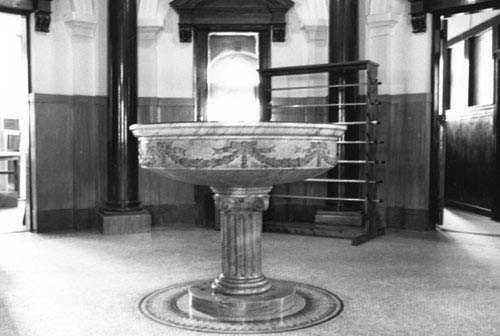
The stain glass dome, Terrazzo floor, and marble fountain were a touch of elegance to the office building.

Buffalo-Mill-Historic-District

Thomas Cary Duncan founded Union and Buffalo mills. He was known as Union’s pioneer capitalist and industrialist. He connected Union and Buffalo mills with his own railroad. Hundreds of families moved to Union from North Carolina and Tennessee and spent their lives working in these cotton mills. This investment introduced the textile industry to this land that once was hunting grounds for the Cherokee.

Thomas Cary Duncan

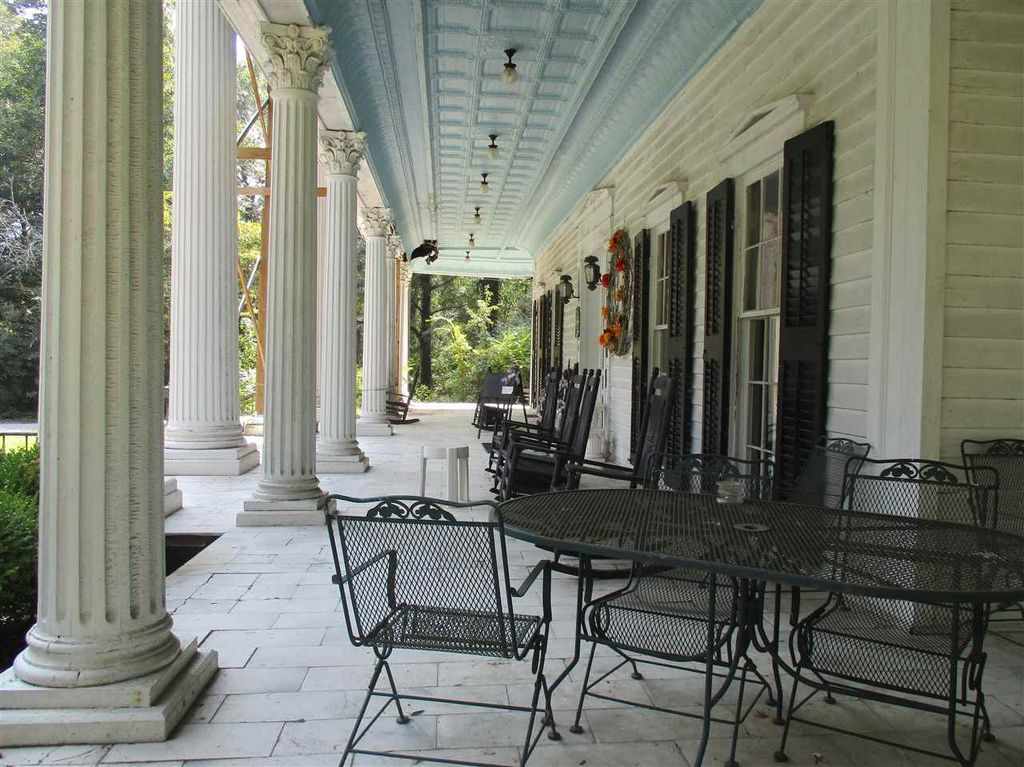
T. C. Duncan inherited Keenan Plantation from his grandparents, which he renamed Merridun. Remodeling this family property became important. Adding to the piazza resulted in 2400 square feet of porch space. He refurbished the 7900 square feet Georgian floor plan which included a stunning curved staircase, large foyers on both floors, a music room, parlor, library, dining room, kitchen, 7 bedrooms, multiple bathrooms, and a third story cupola. Frescoed ceilings in the music room and dining room, mosaic tiles and turn of the century stenciling and faux graining in the main foyer, and beautiful chandeliers enhanced the mansion’s beauty.

Image result for photo of inn of the merridun union south carolina

Image result for photo of inn of the merridun union south carolina

Image result for photo of inn of the merridun union south carolina

Related image

Perhaps you are wondering why I have shared this information with you today, and it really is back-to-the-past.

My husband John grew up in Union, South Carolina. His father, mother, as well as extended family members, worked in the Union and Buffalo cotton mills. This May, 2017, you will be able to read about their lives in my new book, Tales of a Cosmic Possum.

And on my fiftieth birthday, John treated me to dinner at the Inn at the Merridun with some of our friends. What a fun time it was! The house was lovely, as you can see by the above photos.

Below is one of the best chocolate muffin recipes I have ever tasted, and the owner of the Inn shared it with me. Since Valentine’s Day is in just a few days, I thought to share it with you. I believe you will like/love it. As you know, chocolate is my favorite. Enjoy!

Double Chocolate Banana Muffins
Makes 24 regular muffins or about 7-8 dozen mini muffins

I had the privilege of having this recipe included in an innkeepers’ cookbook – Chocolate for Breakfast and Tea. As much as I love chocolate, I’m not always fond of chocolate muffins or breads—this is one exception. They are rich and moist, and our guests gobble them up.

½ cup butter, softened
1-1/3 cups sugar
2 eggs
1-1/3 cups sour cream
2 teaspoons vanilla
2 cups flour
¼ cup cocoa
1 teaspoon baking powder
1 teaspoon baking soda
Pinch of salt
2 ripe bananas, mashed
1 cup semisweet chocolate chips
1/2 cup coarsely chopped walnuts

  1. Preheat oven to 350 F. Grease or line muffin pans.
  2. In a large bowl, mix butter, sugar, eggs, sour cream and vanilla. Add flour, cocoa, baking powder, baking soda and salt all at once. Mix just until ingredients are blended. Stir in mashed banana, chocolate chips and walnuts.
  3. Fill muffin cups 2/3 to ¾ full. Bake for 18-20 minutes or until a toothpick comes out clean—be careful not to hit a melted chocolate chip! Cool for 5 minutes; then remove muffins from tins, and place them on a rack to cool. Serve warm or at room temperature.

Image result for photo of inn of the merridun union south carolina

National Prayer Breakfast

On February 2 every year, the national prayer breakfast is held in Washington, DC.  The founder of this event was Abraham Vereide.  Born in Norway (October 7, 1886 – May 16, 1969), he was a Methodist minister and founder of Goodwill Industries in Seattle, Washington. He ministered to the down and out, the ones that society had backed away from. During the Depression, he provided relief work to all he could.

Realizing that he could help so few, he started mentoring the rich and powerful to work together and nurtured Christian leaders.

The event—which is actually a series of meetings, luncheons, and dinners—has taken place since 1953 and has been held at least since the 1980s at the Washington Hilton on Connecticut Avenue NW.

The breakfast, held in the Hilton’s International Ballroom, is typically attended by some 3,500 guests, including international invitees from over 100 countries. The National Prayer Breakfast is hosted by members of the United States Congress and is organized on their behalf by The Fellowship Foundation, a Christian organization. Initially called the Presidential Prayer Breakfast, the name was changed in 1970 to the National Prayer Breakfast.

This breakfast is designed to be a forum for the political, social, and business elite to assemble and build relationships. Since the inception of the National Prayer Breakfast, several U.S. states and cities and other countries have established their own annual prayer breakfast events.

Every U.S. president since Dwight D. Eisenhower has participated in the annual event, and these presidents have shared about their faith.

President Dwight Eisenhower

Soon after his election in 1952, Eisenhower told Dr. Billy Graham that the country needed a spiritual renewal. For Eisenhower, faith, patriotism and free enterprise were the fundamentals of a strong nation. But of the three, faith came first.

As historian Kevin Kruse describes in “One Nation Under God,” the new president made that clear his very first day in office, when he began the day with a preinaugural worship service at the National Presbyterian Church.

At the swearing in, Eisenhower’s hand rested on two Bibles. When the oath of office concluded, the new president delivered a spontaneous prayer. To the surprise of those around him, Eisenhower called on God to “make full and complete our dedication to the service of the people.”

Part of President John F. Kennedy’s remarks were,

These breakfasts are dedicated to prayer and all of us believe in and need prayer. Of all the thousands of letters that are received in the office of the President of the United States, letters of good will and wishes, none, I am sure, have moved any of the incumbents half so much as those that write that those of us who work here in behalf of the country are remembered in their prayers….

This morning we pray together; this evening apart. But each morning and each evening, let us remember the advice of my fellow Bostonian, the Reverend Phillips Brooks: ‘Do not pray for easy lives. Pray to be stronger men! Do not pray for tasks equal to your powers. Pray for powers equal to your tasks.’

In 1975, President Gerald Ford said,

Since we last met, I have discovered another aspect of the power of prayer: I have learned how important it is to have people pray for me. It is often said that the presidency is the loneliest job in the world. Yes, and in a certain sense, I suppose it is. Yet, in all honesty, I cannot say that I have suffered from loneliness these past six months.

The reason, I am certain, has been that everywhere I go, among old friends or among strangers, people call out from the crowd or will say quietly to me, “We’re praying for you,” or “You are in our prayers,” and I read the same sentiments in my mail. Of course, there are some that are not so inspiring, but the great ground swell of good will that comes from the true spirit of America has been a wonderful source of strength to me as it was, I am sure, to other Presidents before me. Believe me, having counted the votes and knowing that you have them is a great satisfaction, but the satisfaction of knowing that uncounted numbers of good people are praying for you is infinitely more rewarding.

Prayer is a very, very personal thing, at least for me. Yet, to me, as many of my predecessors, it is a terribly important source of strength and confidence.

President Reagan bows his head and prays during the

Then in 1984, President Ronald Reagan said,

We all in this room, I know, and we know many millions more everywhere, turn to God in prayer, believe in the power and the spirit of prayer. And yet so often, we direct our prayers to those problems that are immediate to us, knowing that He has promised His help to us when we turn to Him. And yet in a world today that is so torn with strife where the divisions seem to be increasing, not people coming together, within countries, divisions within the people, themselves and all, I wonder if we have ever thought about the greatest tool that we have — that power of prayer and God’s help.

If you could add together the power of prayer of the people just in this room, what would be its megatonnage? And have we maybe been neglecting this and not thinking in terms of a broader basis in which we pray to be forgiven for the animus we feel towards someone in perhaps a legitimate dispute, and at the same time recognize that while the dispute will go on, we have to realize that that other individual is a child of God even as we are and is beloved by God, as we like to feel that we are.

The seriousness of prayer is evident in the body language here of President George H. W. Bush.

President George H.W. Bush, along with First Lady Barbara

The National Prayer Breakfast has grown steadily over the years – from 400 attendees to close to 4,000. The presence of the U.S. president has made the event a draw for leaders worldwide and networking before and after the breakfast.

Just as speakers have become more diverse, so have attendees. There are Muslims and Jews as well as Christians. The Fellowship Foundation, an organization started by Vereide that sponsors the breakfast, considers the National Prayer Breakfast as an inclusive event. Mother Teresa, Tony Blair, Senator Joseph Lieberman, and musician Alison Krauss have attended.

But while the breakfast is an open tent, the small seminars and discussions that fill the days before and after are exclusive. These meetings, also organized by the Fellowship Foundation, convene clergy, politicians, military leaders and businessmen for high-level discussions on the global intersections of faith, power and money. The president does not attend these meetings, but his confidantes do.

Today, our new President Donald Trump spoke at the National Prayer Breakfast.

It was the great Thomas Jefferson who said, “The God who gave us life, gave us liberty.” Jefferson asked, can the liberties of a nation be secure when we have removed a conviction that these liberties are the gift of God?

At the second inauguration of President Bill Clinton, Dr. Graham again prayed for our nation.

Lord…remind us today that You have shown us what is good and what You require of us; to do justly, to love mercy and to walk humbly with our God. We ask that as a people, we may humble ourselves before You and seek Your will for our lives and for this great nation. Help us in our nation to work as never before too strengthen our families and to give our children hope and a moral foundation for the future. So may our desire be to serve You, and in so doing, serve one another. This we pray in the name of the Father, the Son and the Holy Spirit. Amen.

God bless America!


Design a site like this with WordPress.com
Get started