Advice from Poor Richard’s Almanac by Benjamin Franklin

Posted on

This 200+ year old advice appears to be relevant today. What do you think?

“Early to bed, early to rise, makes a man healthy, wealthy, and wise.”

“What is serving God?
Tis doing good to man.”

“God helps those who help themselves.”

“The poor have little,
Beggars none;
The rich too much,
Enough not one.”

“After crosses and losses, men grow humbler and wiser.”

“If you would not be forgotten
As soon as you are dead and rotten,
Either write things worthy reading,
Or do things worth the writing”

“Keep your eyes wide open before marriage, half shut afterwards. “(LOL)

“Work as if you were to live a hundred years,
Pray as if you were to die tomorrow.”

“One good Husband is worth two good Wives; for the scarcer things are, the more they’re valued.” (LOL again)

“Creditors have better memories than debtors.”

“Death takes no bribes.”

“A good example is the best sermon.”

“All would live long, but none would be old.”

“A long life may not be good enough, but a good life is long enough.”

“Anger is never without a reason, but seldom with a good one.”

“Beware of him who is slow to anger; he is angry for something, and will not be pleased for nothing.”

“Danger is sauce for prayers.”

“Bad commentators spoil the best of books.”
(for all you writers out there)

“Approve not of him who commends all you say.”

“Clean your finger, before you point at my spots.”

Writing About War – by author Jacqueline Winspear

Posted on

Writing About War

I’ve been in England recently to visit my mother, and while in London I naturally ambled into a few of my favorite bookstores—Hatchards and Waterstones along Piccadilly, Daunt Books on Marylebone High Street and John Sandoe Books just off the King’s Road. Needless to say, with two major war anniversaries this year—the 70th anniversary of the D-Day landings and the centennial of the outbreak of the Great War (WWI), the first devastating international war of modern times—the stores were full of books about war. I could have come home with my arms full. And it reminded me of the many times I’ve been asked, “Why do you write about war?”—especially by readers of my series featuring ex-WWI battlefield nurse, Maisie Dobbs, and those anticipating my new novel The Care and Management of Lies. That question has made me realize that, perhaps, it’s time to share a few thoughts on the subject.

According to Martin Parsons, Founder of The Research Center for Evacuee and War Child Studies at the University of Reading, England, in his book War Child, it takes three generations for an immediate experience of war to work its way through the family system.

I read his book when it was first published, and many years before had read Ben Wicks searing book about the 1.5 million children evacuated during WWII from Britain’s cities into the countryside, No Time To Wave Goodbye. I’d bought Wicks’ book for my mother, but she couldn’t read it—it brought back too many painful memories.

I knew a lot about war even by the time I was five years old, though I had never lived through a war. But I understood something of its aftermath.

As many of you know, my interest in WWI was kindled in childhood as I witnessed my grandfather’s suffering from wounds sustained at the Battle of the Somme in 1916, one of the most devastating battles of that terrible conflict. He had already seen action at Ploegsteert Wood and Ypres—names that echo from history books today—and he came home shell-shocked, gassed and with terrible leg wounds. He was a dear man, around whom we had to be quiet, and who was still removing shrapnel splinters from his legs when he died aged 77.

My father’s childhood in an otherwise happy family home was marked by his father’s ill health as a result of the war. The winters were hard on my grandfather, because his poor lungs could barely cope with the damp and smog of London’s streets, and when his breathing became most labored, the doctor was called and a special ambulance came to take him away to a sanatorium on the coast. The family would be plunged into economic distress, so visiting was out of the question. Then about a month later, he would come home and do his best to pick up the reins of his business again—my father and his brother having kept things going as best they could, working after school. Granddad would get the family on an even keel again—until the next time, and the next. And my father was raised in a quiet house, because my grandfather could not stand loud noises—they brought back unwanted memories of the fighting. Shell shock was often associated with sound and percussion injury, and my grandfather’s wounding was no exception.


My dad was a very talented runner in schooldays, a boy who was often deliberately handicapped by the teacher—and still he kept winning races. He had some big competitions in his sights, but the Air Raid Precautions men had him and other boys who were swift on their feet in their sights. At age 12, Dad became a “runner,” sprinting with messages from one depot to another through the Blitz. I wonder how he did it. When he turned 17, he received his military call-up papers, and was assigned to the Royal Engineers. This is a man who grew up in a quiet household and as a result hated loud noises—and he became an explosives expert due to his calm demeanor under pressure.

I think I get my distaste for loud noises from my dad—I don’t like going into stores with loud music and will walk out of a restaurant if I can’t hear myself think.

My mother’s mother was a munitions worker in WWI, and was partially blinded in an explosion at the Woolwich Arsenal in London.

But my grandmother loved reading and was determined that her disability would not stand in the way of her and a good book—she could polish off a book per day, and so can my mother. That love of books was passed down to her ten children and some thirty grandchildren. Perhaps it was the books that helped my mother and her siblings endure evacuation during WWII.

I know the stories about my mother’s experiences during that time—I’ve heard them from my aunts too. They are not to be shared here, but suffice it to say, children away from home, plunged into a different world with complete strangers, are open to abuse. Of course there were those who were treated well, but many weren’t—and the scars remain. When Ben Wicks wrote his book in the 1970’s, he embarked upon the project because he believed the stories of men and women like him should be heard—he was a well-known cartoonist-journalist in Canada, but as a child he had been one of those London evacuees. He placed an advertisement in a British newspaper and anticipated a few replies—instead, he was inundated. Thousands of letters were sent to him, with so many of those (then middle-aged) respondents opening their letters with “I haven’t ever been able to talk about this …”

None of the stories here are unique or unusual for someone of my generation—I’m a Baby Boomer, and that’s what many of our parents and grandparents endured. But school history lessons frustrated me; I wasn’t so much interested in dates and generals and the geopolitics of war—though it had its place in my learning—but I wanted to know what happened to ordinary people. The social history of war and its aftermath held my attention and touched my heart. From observing my family, and listening to stories at home, I knew intimately (as Lady Rowan says in the second Maisie Dobbs novel, Birds of a Feather), “That’s the trouble with war, it’s never over when it’s over, it lives on inside the living.”

It’s as true today, as it has been over centuries of conflict.

You can read the story of how I came to write The Care and Management of Lies here on the website, however, perhaps it makes more sense to you, now, why, when I first picked up a battered old copy of The Woman’s Book and saw it had been inscribed to a young woman on the occasion of her wedding in the summer of 1914, a month before war was declared, I immediately wondered what had happened to the young couple. Over the years that wondering became a story, and I tried to put into the novel—as I have with all my novels thus far—something of what I understood about war.

The Care and Management of Lies will be published on July 1st.

(I have bought my first book by Jacqueline Winspear after reading this blog post by her. She drew me into her writing by sharing her family’s stories. I agree with her desire to know about the ordinary people who were part of WW II, and I wonder if I could put my dad and uncle’s stories on paper. So far in my brief writing career, it does seem that what I wonder about finally finds itself on paper.)


Charleston – the Holy City

The word “sunballousa” is Greek for “placing together for comparison.” Pondering would be a good synonym.

I really like the sound of it, and it reminds me of something that is extraordinary. Since I am Southern both in birth and speech, I can make more than four syllables when pronouncing it. Believe it or not, this word makes me smile when I say it.

There are times when the dawn and my coffee move me to pondering. I think about yesterday, plan for the day, and wonder about tomorrow.

We are in Charleston, my birthplace for a couple of days, and already sunballousa has invaded my mind and heart.

The moss on the trees immediately reminds me that I am visiting a city that continues to delight and mesmerize me. I am always surprised by the Holy City. There are treasures in the gardens, and walking the old cobblestone streets is a conduit to an older time. I can’t, or maybe shouldn’t climb on the cannons on the battery like I used to, but I remember the excitement of doing it.

The churches, the flower ladies, the Ashley River, the Cooper River, the horse-drawn carriages, the walkers, the bicyclists, the narrow streets, the artists – the old and the new living side-by-side.

Maybe this poem says it best.

“Dusk”

by Dubose Heyward

“They tell me she is beautiful, my City,
That she is colorful and quaint, alone
Among the cities. But I, I who have known
Her tenderness, her courage, and her pity,
Have felt her forces mould me, mind and bone,
Life after life, up from her first beginning.
How can I think of her in wood and stone!
To others she has given of her beauty,
Her gardens, and her dim, old, faded ways,
Her laughter, and her happy, drifting hours,
Glad, spendthrift April, squandering her flowers,
The sharp, still wonder of her Autumn days;
Her chimes that shimmer from St. Michael‘s steeple
Across the deep maturity of June,
Like sunlight slanting over open water
Under a high, blue, listless afternoon.
But when the dusk is deep upon the harbor,
She finds _me_ where her rivers meet and speak,
And while the constellations ride the silence
High overhead, her cheek is on _my_ cheek.
I know her in the thrill behind the dark
When sleep brims all her silent thoroughfares.
She is the glamor in the quiet park
That kindles simple things like grass and trees.
Wistful and wanton as her sea-born airs,
Bringer of dim, rich, age-old memories.
Out on the gloom-deep water, when the nights
Are choked with fog, and perilous, and blind,
She is the faith that tends the calling lights.
Hers is the stifled voice of harbor bells
Muffled and broken by the mist and wind.
Hers are the eyes through which I look on life
And find it brave and splendid. And the stir
Of hidden music shaping all my songs,
And these my songs, my all, belong to her.”


So what is in the midst of your sunballousa today?

One thing I know it is time well-spent. Enjoy!

“If”by Rudyard Kipling

At the Chautaugua Festival last night at our Spartanburg Public Library, the actor playing Robert Smalls quoted a poem that I had to memorized at one time. Truly it is full of challenging thoughts and remembrances on how to live purposefully and without regrets.

There is something in me that responds to a poetic piece when I hear it or read it. Since this poem is still on my mind this morning, I thought I would share it with you.

“If”
By Rudyard Kipling
“If you can keep your head when all about you
Are losing theirs and blaming it on you,
If you can trust yourself when all men doubt you,
But make allowance for their doubting too;
If you can wait and not be tired by waiting,
Or being lied about, don’t deal in lies,
Or being hated, don’t give way to hating,
And yet don’t look too good, nor talk too wise:

If you can dream—and not make dreams your master;
If you can think—and not make thoughts your aim;
If you can meet with Triumph and Disaster
And treat those two impostors just the same;
If you can bear to hear the truth you’ve spoken
Twisted by knaves to make a trap for fools,
Or watch the things you gave your life to, broken,
And stoop and build ’em up with worn-out tools:

If you can make one heap of all your winnings
And risk it on one turn of pitch-and-toss,
And lose, and start again at your beginnings
And never breathe a word about your loss;
If you can force your heart and nerve and sinew
To serve your turn long after they are gone,
And so hold on when there is nothing in you
Except the Will which says to them: ‘Hold on!’

If you can talk with crowds and keep your virtue,
Or walk with Kings—nor lose the common touch,
If neither foes nor loving friends can hurt you,
If all men count with you, but none too much;
If you can fill the unforgiving minute
With sixty seconds’ worth of distance run,
Yours is the Earth and everything that’s in it,
And—which is more—you’ll be a Man, my son!”

Source: A Choice of Kipling’s Verse (1943)

Telling our Stories

The Importance of Story: Yours, Your Family’s, and Your World’s

“Story is what makes us human. Through our individual and family stories we can better understand and empathize with people we’ve never even met. Storytelling binds us together as a family, as a society, as humans.

Story is important because it’s a way for children to explore their fears, take risks, be the hero — or the villain — and find out what happens. Story teaches empathy. How does it feel to have autism, albinism, be a minority, be bullied for the religion you follow? Story can comfort us if we’re going through the same ordeal as the protagonist, or enlighten those of us who haven’t had those experiences but will likely deal with those who do. Story can teach a skill or teach us about ourselves or show us how to think in new ways, to see different cultures, and cultures within cultures. Story can teach us societal norms and traditions, or it can take us into a fantasy world that, though unreal, can be an allegorical window into our own world. Story can also make us laugh — at antics, at characters, at ourselves.

Even though I write for young readers, my goal is to tell a story for all ages, a story with heart and authenticity that makes it universal. Adults, after all, may be the librarians choosing the books, teachers assigning the books, or parents reading the books aloud. And adults, whatever age, have something in common — we were all children ourselves, children who loved stories. Who doesn’t enjoy being read to? Recorded books are not just for harried commuters. They can be savored in quiet moments. Stories soothe and inspire, and we can all use that.

Stories can be as simple as relating what happened to you twenty minutes ago or twenty years ago. It can be passing down a family legend that has been embellished over the years or a family secret that has been preserved intact. Hearing family stories is particularly fun if they’re about adults doing embarrassing things as children. I loved those stories about my own mother and my children plead to hear the ones about me. Why? Again, because it makes us human. “Please tell us about when you got locked in the school bathroom, or rode your bike into the pond, or went door to door selling stale candy telling people your family needed money!”

Your history, your family history is a part of who you are and makes you what you’ll become — even if you completely reject it. That, in itself, plays a role in forming who you decide to be.

In the Kitchen with our Colonial Sisters

Have you ever wondered why cornbread and biscuits were a staple during Colonial Days?

Corn was the first crop planted after the land was cleared. Both the colonists and the animals ate corn on a daily basis. For the family, it was some type of cornbread. Cooked in a Dutch oven in the coals on an open hearth, the smells filled the room.

There was plenty of corn available, so it was used. For many settlers, a mill soon made grinding the corn easier. There were also small kerns that could be used in the cabins to grind their own corn. Since there was a shortage of sugar and flour, it grew in its popularity. It was one of those stick-to-your-ribs recipes, and it was also quick and easy to make. Since it was good either hot or cold, it was good at home, on a hunting trip, or working in the fields. It could be made into Johnny cakes, spoon bread, corn muffins, Bannock cakes, ash cakes, corn dodgers, journey cakes, or slapjacks.

A simple recipe could be
1 cup cornmeal
4 Cups water
1 ½ cups whole wheat flour
1 tsp salt
Of course, using milk rather than water and adding eggs made for a creamier dish.
https://i0.wp.com/media-cache-ec0.pinimg.com/originals/c1/97/4b/c1974b735079ea0d1bfcab0d40b22c0d.jpg

These fireplaces were large, both in width and in height.  There was a door on the left that was  the bread oven. Wood is placed under the oven for a fire to cook the bread. The wood has to burn down to hot coals, and that means lots of hot coals to bake anything.

The pots over the fire on the crane would be for cooking soups and stews. You might have heard the rhyme, “Peas porridge hot. Peas porridge cold. Peas porridge in the pot nine days old. Some like it hot. Some like it cold. Some like it in the pot nine days old.” By adding meat and vegetables to the stew or soup, it could continue to feed a family for several days.

Below is a picture of some of the necessary items for cooking on an open fire in a hearth. The trivet is the curly thing. Under the trivet are the hot coals, and the skillet is placed on top. On top of the lid are coals to keep the baking even on the top and bottom of the cornbread. You might notice there is a lip on the lid; that keeps the coals in place. (Biscuits and cake were also baked in these Dutch ovens.)

https://i0.wp.com/denisonhomestead.org/wp-content/uploads/2011/02/ColonialKitchen.jpg

Usually the coals have to be replaced at least once during the baking, particularly on the lid.

When our son went on camping trips with his scout troop, they would often use this same method over the campfire to bake cornbread and pineapple upside-down cake. Isn’t it interesting that some things never change?

And would we not agree that there is nothing better than biscuits, cornbread, and fried chicken baked in an iron skillet? <#


Wouldn’t You Love to Have a Cup of Tea With Her?

Posted on

I have always been excited to learn about women who were first at something, and Elizabeth Timothy wins in that category in South Carolina.

Image result for photos of elizabeth timothy
When her publisher husband died in 1738, Elizabeth Timothy became the first female newspaper publisher and editor in America.
Elizabeth was born in Holland and immigrated to America in 1731 with her husband and four children. They sailed with other French Huguenots fleeing persecution.
Timothy met Benjamin Franklin, who hired him to be librarian of Franklin’s Philadelphia Library Company. Then Franklin trained him in the printing business at the Pennsylvania Gazette.

Image result for photos of elizabeth timothy
Franklin had helped establish the “South Carolina Gazette” in Charlestown. When the publisher died, Timothy took his place in 1733. They signed a six year contract with Timothy’s son Peter as the next in line as publisher. “The Gazette” became the South Carolina’s first permanent newspaper under Timothy.

Image result for photos of elizabeth timothy
The family joined St. Philip’s Anglican Church and became quite active. Timothy organized a subscription postal system that originated in his printing office. In 1736, he obtained 600 acres and a town lot.

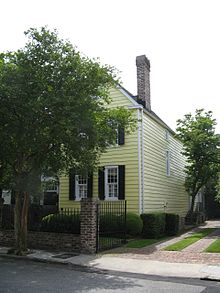
Image result for photos of elizabeth timothyTimothy Print Shop
Lewis died in 1739, and Elizabeth took over. She was the mother of five children and momentarily expecting the sixth, but she took on another job. She ran the Gazette under the name of her 13-year-old son Peter. There was a year left on the contract, but not an issue was missed.

Image result for photos of elizabeth timothy

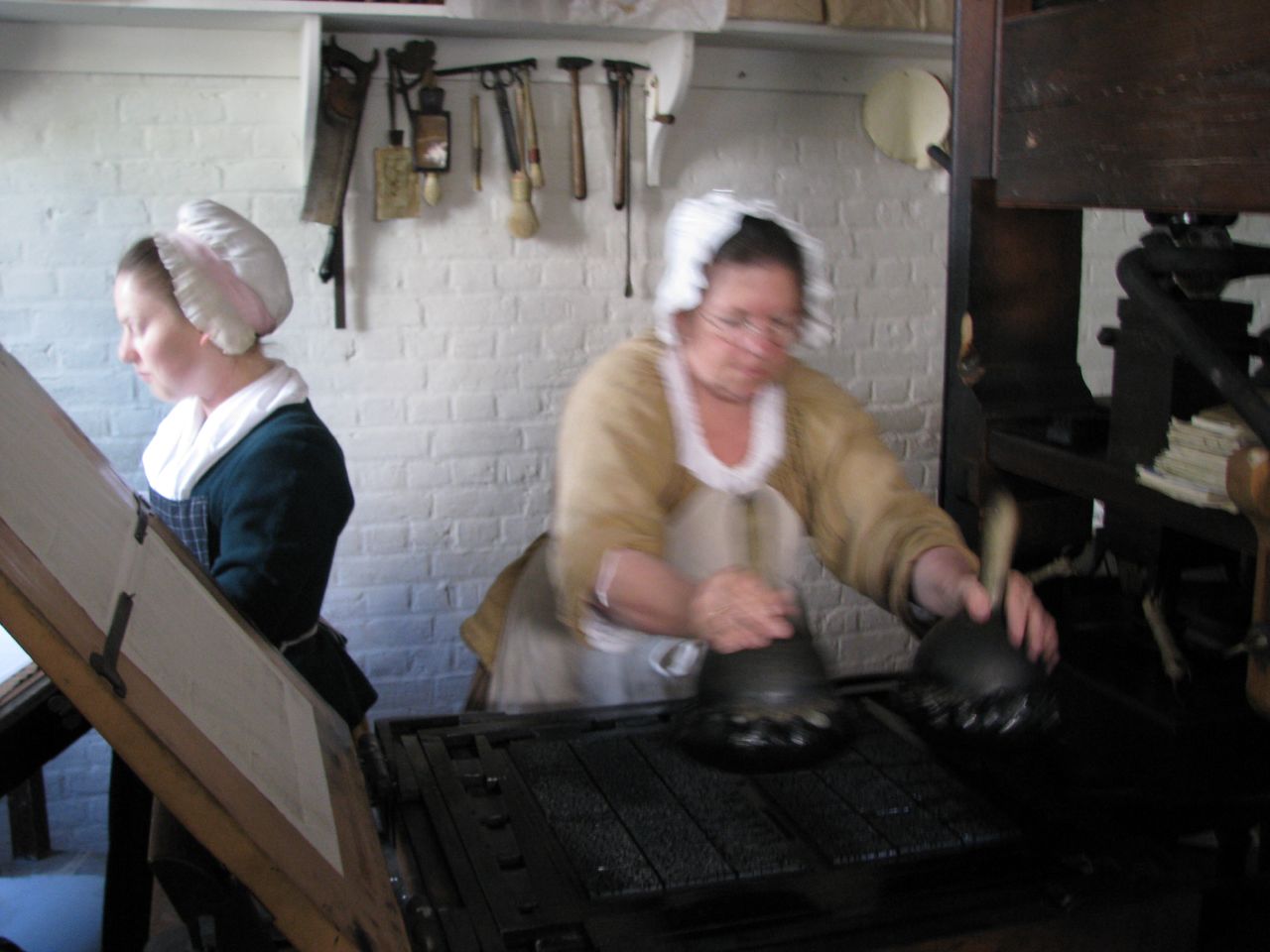
Likeness of printing presses in the 18th century.
Elizabeth added a personal touch to the Gazette by adding woodcuts for illustration and advertisements. In the first issue after her husband’s death, she included a sentimental message asking for continued support from their customers.
Besides the Gazette, she printed books, pamphlets, tracts, and other publications. Franklin said that she was superior to her husband in her accounts; she “continu’d to account with the greatesr Regularity and Exactitude every Quarter afterwards; and manag’d the Business with such Success that she not only brought up reputably a Family of Children, but at the Expiration of the Term was able to purchase of me the Printing House and establish her Son in it.”
When her son Peter turned 21 in 1746, he assumed the operation of the Gazette from his mother. She turned right around and opened her own business, a book and stationery store next door to the printing office on King Street. Of course, she advertised in the Gazette. (I wonder if she had to pay?) In an ad in October, 1746, she announced that she had books available like pocket Bibles, spellers, primers, and books titled Reflections on Courtship and Marriage, Armstrong’s Poem on Health, The Westminister Confession of Faith, and Watt’s Psalms and Hymns. She also sold bills of lading mortgages, bills of sale, writs, ink powder, and quills for reasonable prices.
Elizabeth ran her business for about a year before she left Charlestown for a season. She was back by 1756. She died in 1757, and her estate included three houses, a tract of land, and eight slaves. She was a wealthy woman.
As the mother of six children and the wife of a wealthy and influential publisher, Elizabeth Timothy enjoyed a social position attained by only a few women printers of the colonial period. But her success of the newspaper and printing business after Lewis Timothy’s death can only be attributed to her own business acumen and management skills.
As the first woman in America to own and publish a newspaper, she played a vital role in the development of Charlestown and South Carolina. As official printer to the colony, she was closely associated with the South Carolina Assembly and colony’s government. And as the proprietor of a commercial printing business and bookstore, she printed, published, and offered for sale numerous books and pamphlets, and was at the center of the colony’s cultural and literary life.

Image result for photos of elizabeth timothy
In 1973, Elizabeth Timothy was inducted into the South Carolina Press Association Hall of fame. She was inducted into the South Carolina Business Hall of Fame in 2000.
Mark Twain once said, “Twenty years from now you will be more disappointed by the things that you didn’t do than by the ones you did do. So throw off the bowlines. Sail away from the safe harbor. Catch the trade winds in your sails. Explore. Dream. Discover.”
Elizabeth Timothy was a South Carolina woman who didn’t need these encouraging words. In reading about her life, I believe she had some similar words as her motto.

Silkwood sampler created by Elizabeth Timothy in 1735. Image result for photos of elizabeth timothy

Ye Old Newsreels

Posted on

The news today is given to us in seconds on a program; only a chosen taste of a story is put on the air.

Newsreels used to be part of the movie theater experience. Rather than watching “commercials” of future movies coming to the screen, the audience was given several minutes of relevant and breaking news. At this site, some of the most famous newsreels are available. There is quite a variety of topics and years to choose from.

http://www.newsreelarchive.com/ – 15k

I just watched several of these and was fascinated to see history come alive at the touch of a button. There was little difference in the Boston Marathon pictures, but England’s royal family certainly had a look o foreignness from the way they are today.

These newsreels would be an added resource for history teachers, and I wonder if they use them.  YouTube has much to offer when it comes to education, and I could spend many hours going from one section to another.

I am writing about some new forgotten women who lived during the twentieth century. Looking at historical newsreels has enhanced my visuals of their lives. “A picture is worth a thousand words,” for sure.

We don’t go to the theaters much, but I have noticed that most audiences don’t pay attention to the trailers. This is a time to visit and prepare to be quiet for a while.

You might want to choose choose one of these newsreels to watch. Of course, they are in black-and-white, which is not what we are used to, but the information and news was relevant at the time.

Living in a different world today, where news is available on my Droid at the touch of a button, I can imagine that those theater audiences were mesmerized by what they saw in the newsreels. My parents used to talk about the newsreels and how much they learned by watching the news, not just reading about it.

The explorer Christopher Columbus said, “Following the light of the sun, we left the Old World.” He and his shipmates had no clue of where they were going or what they would find. As a writer, I can identify with this, because I don’t know where the muse’s light will lead me on any-given day.

John grew up listening to radio broadcasts, not television. His family enjoyed country music, and I had never really listened to it until we married. He introduced me to an amazing part of our Southern culture. Believe it or not, today I will be searching out the early years of the Grand Ole’ Opry, and I can’t wait.

Dr. Ben Carson

Posted on

Dr. Ben Carson, a graduate of Yale, went from being a poor student to receiving honors and he eventually attended medical school. As a doctor, he became the Director of Pediatric Neurosurgery at Johns Hopkins Hospital at age 33, and became famous for his ground-breaking work separating conjoined twins.

In his own words, this is how his mother’s choices and reading changed his life.

“We did live in dire poverty. And one of the things that I hated was poverty. Some people hate spiders. Some people hate snakes. I hated poverty. I couldn’t stand it. My mother couldn’t stand the fact that we were doing poorly in school, and she prayed and she asked God to give her wisdom. What could she do to get her young sons to understand the importance of developing their minds so that they control their own lives? God gave her the wisdom. At least in her opinion. My brother and I didn’t think it was that wise. Turn off the TV, let us watch only two or three TV programs during the week. And with all that spare time read two books a piece from the Detroit Public Libraries and submit to her written book reports, which she couldn’t read but we didn’t know that. I just hated this. My friends were out having a good time. Her friends would criticize her. My mother didn’t care. But after a while I actually began to enjoy reading those books. Because we were very poor, but between the covers of those books I could go anywhere. I could be anybody. I could do anything. I began to read about people of great accomplishment. And as I read those stories, I began to see a connecting thread. I began to see that the person who has the most to do with you, and what happens to you in life, is you. You make decisions. You decide how much energy you want to put behind that decision. And I came to understand that I had control of my own destiny. And at that point I didn’t hate poverty anymore, because I knew it was only temporary. I knew I could change that. It was incredibly liberating for me. Made all the difference.” Dr. Ben Carson~

So shall we continue reading?

Momma’s Gonna Buy You a Mockingbird”

Posted on

Hush, little baby, don’t say a word,
Mama’s Gonna Buy You a Mockingbird

“Hush, little baby, don’t say a word,
Mama’s gonna buy you a mockingbird.

If that mockingbird don’t sing,
Mama’s gonna buy you a diamond ring.

If that diamond ring turns to brass,
Mama’s gonna buy you a looking glass.

If that looking glass gets broke,
Mama’s gonna buy you a billy-goat.

If that billy-goat won’t pull,
Mama’s gonna buy you a cart and bull.

If that cart and bull turns over,
Mama’s gonna buy you a dog named Rover.

If that dog named Rover won’t bark,
Mama’s gonna buy you a horse and cart.

If that horse and cart falls down,
You’ll still be the sweetest little baby in town. ”

My Nanna used to sing this song to our son, as she rocked him to sleep. The simple melody and words of love would lull him to sleep.

There are a lot of promises in this lullaby, and I find it interesting that it is Mama who is doing the promising. Of course, Daddy, Grandpa, or Aunt Nell could also work, depending on who is singing,

The rewards will only come to the baby who will calm down, stop crying, and be quiet. Between the rocking motion and the soft singing, the goal of a sleeping baby happens.

No one knows the author or the origins, but perhaps the United States is the place. Mockingbirds originated here.

Artists have chosen to put their twist to this lullaby. Carly Simon and James Taylor were one pair, and Toby Keith and his daughter, Krystal, also shared their version. If you are interested in watching their performance , here it is on YouTube. http://www.youtube.com/watch?v=d9K12_3LeBM

I enjoy different kinds of music, but today I like the memories of Nanna’s version of this song. Her voice always took a more loving tone when she sang that last line, “you’ll still be the sweetest little baby in town.”

As I look back on past Mother’s Days, including this past one, mothers and grandmothers are still believing they have “the sweetest little baby in town.”

Design a site like this with WordPress.com
Get started