Author Archives: Sheila Ingle

Over 350 Million Dollars Given Away

He was fond of saying that “the man who dies rich, dies disgraced,” And so he, turned his attention to giving away his fortune. He abhorred charity, and instead put his money to use helping others help themselves. That was the reason he spent much of his collected fortune on establishing over 2,500 public libraries, as well as supporting institutions of higher learning. By the time his life was over, he had given away 350 million dollars.

Who was this American philanthropist? Andrew Carnegie.

Image result for andrew carnegie and cartoons

This industrialist and philanthropist Andrew Carnegie was born on November 25, 1835, in Dunfermline, Fife, Scotland. Carnegie grew up in a family that believed in the importance of books and learning. The son of a handloom weaver, Carnegie grew up to become one of the wealthiest businessmen in America.

At the age of 13, in 1848, Carnegie came to the United States with his family. They settled in Allegheny, Pennsylvania, and Carnegie went to work in a factory, earning $1.20 a week. The next year he found a job as a telegraph messenger. Hoping to advance his career, he moved up to a telegraph operator position in 1851. He succeeded at each new job; he worked hard, kept his eyes open, and mastered each position. As they say, the rest is history.

My hometown of Spartanburg, South Carolina’s first “public” library opened on October 17, 1885, on the top floor of a two-story building facing Kennedy Place; it was a gift to the city. Among the library’s first holdings was Dr. Kennedy’s 600-volume medical library and some 300 other books collected by the citizens of Spartanburg. The yearly subscription fee was $3.

The facility soon was adopted by the Ladies Auxiliary Association, which kept it stocked with books and furniture. By 1899, the ladies realized that Spartanburg was on the verge of outgrowing the little library. They wrote Andrew Carnegie, asking for a contribution to help build a new library. After four years of correspondence, the Kennedy Library Board was notified in June 1903 that Carnegie would donate $15,000 if the city would purchase the land and contribute $1,500 annually in support of the library. And it was done.

His generosity helped communities construct 2,811 free public libraries across America and 13 in South Carolina.

“A taste for reading is one of the most precious possessions of life.” -Andrew Carnegie

“There is not such a cradle of democracy upon this earth as the Free Public Library.” -Andrew Carnegie

“The man who enters a library is in the best society the world offers”                  -Andrew Carnegie

..

In Union, SC  is another library at 300 E. South Street which bears Carnegie’s name.

In Union Carnegie Library History, Jennie Holton Fant describes Carnegie as “a self-made immigrant,” who “succeeded in becoming the richest man in the world, with little education. He believed great wealth begets an obligation to provide for those of lesser fortune and he spent his money making books and information the shared property of all people, rich or poor. His free libraries were built to be a progressive hub of civic and cultural life for all citizens of a community. Fourteen towns in South Carolina benefited from the millionaire industrialist’s generosity between 1903 and 1920. He gave South Carolina $124,700 for thirteen public libraries to be built, and aid to one private library — the equivalent of over a million dollars today.”

The Union Library was the first public library in South Carolina.

Carnegie had a mission. This mission was born in Allegheny City, Pa., where Carnegie worked as a bobbin boy in a cotton mill — his job was to fill the bobbins with thread and oil them for the machines. He was determined to improve his lot, but he couldn’t pay the $2 subscription for a local library that was available only to apprentices (and he certainly couldn’t afford to buy books).

Image result for andrew carnegie photos

He sent a letter to the library administrator asking for access to the library, but the administrator turned him down flat. So 17-year-old Andy got the letter published in The Pittsburgh Dispatch.

“He made his case so well that the administrator backed off immediately,” explains Carnegie biographer David Nasaw. “And the library was opened to working men as well as apprentices. He got what he wanted.”

In 1889 Carnegie wrote an article called “The Gospel of Wealth,” in which he spelled out his views on philanthropy: “In bestowing charity the main consideration should be to help those who help themselves.”

I would describe myself as an avid reader. From the early years of reading about Dick and Jane, I have sought out stories. During elementary school years, there was a limit of 15 books that could be checked out of the Kennedy Library in Spartanburg. They could be kept for two weeks. I ravenously read my choices and was always ready to check out more before those weeks were up.

Following in the reading lists of Mother and my grandmothers, I tended to read historical novels and biographies. There was a series of biographies of famous people that were in orange covers that I perused over-and-over. Gwen Bristow, Ken Follett, and Inglis Fletcher enthralled me with places and times I could only read about. Historical fiction is still my go-to comfort, but suspense and stories about my state also have their places on my book shelves. Pat Conroy, David Baldacchi, Kristin Hannah, Anthony Doerr, John Grisham are a few favorites.

Another one of my favorite authors is Charles Dickens, and he said,  “No one is useless in this world who lightens the burdens of another.”

Thank you, Andrew Carnegie, for giving so much money away to brighten our lives one hundred years later.


Knights of the Golden Horseshoe

My brother and I grew up listening to the story of Lt. Governor Alexander Spotswood and the Knights of the Golden Horseshoe. We never tired of hearing our grandmother Lulu tell this exciting tale.

While on the Internet yesterday, I ran across an event that was celebrating the 300th anniversary of the Knights of the Golden Horseshoe Expedition, which took place in August and September 1716 and ended at Fort Germanna. Oh, how I wish I could have been in Virginia this past weekend.

Governor Spotswood was a visionary, as well as an entrepreneur. He designed the Governor’s Palace, the magazine,  and St. Bruton’s Church in Williamsburg. Looking for ways to expand the colony of Virginia, he recruited a “company of gentlemen,” to prove that the Blue Ridge could be easily crossed.  And he was the first to cross the Appalachian Mountains.

It was an illustrious group who mounted their horses and rode into uncharted forests, over rivers, and up mountains.

Many of these recruits had sons and grandsons who played important roles in the development of the American Republic. Among them was George Mason, whose son worked with George Washington to draft the Fairfax Resolves, and who designed much of the constitution of the new state of Virginia. Then there was James Taylor, the ancestor of two Presidents—James Madison and Zachary Taylor. Robert Brooke’s grandson became governor of Virginia in 1798, and Thomas Todd’s family helped secure Kentucky for the Americans during the Revolution, and produced a future First Lady for Abraham Lincoln.

We know about their adventures because John Fontaine described  and wrote about them; he kept a diary. Then there were others who recounted the narrative.

The reality started on August 20, 1716. Pack horses carried ample provisions. After all, this was a gentleman’s journey.

(See how Spotswood’s party lived on the trail in the picture to the right.)


el

Before beginning the ascent, the well-mounted, well-armed company had their horses shod, horses being accustomed to traverse the low country, where there were few stones, without shoes, and then camping and eating and drinking by night and pressing sturdily on by day the party finally reached the mountain’s summit, where they cut his Majesty’s name upon the rock of the highest peak, naming it Mount George, in honor of their sovereign, King George I, and the next highest peak Mount Alexander, in honor of Governor Spotswood.

The men, including the Indian chief, who had led their party sat on various rocks to behold the splendor of Virginia’s Blue Ridge. Governor Spotswood carried his thoughts into the future, and imagined the fine country which he beheld, peopled and glowing under the hands of the husbandman, and all his bright anticipations were more than realized. He could see farms, crops, dirt roads, and villages. At length he turned the man who sat near him not less entranced, and said, “They call me a visionary, but what imagination ever conjured up a vision like that?”

tomajestyFinally they descended to the Valley of the Shenandoah, loaded their muskets and feasted. They drank the health of the King in champagne and fired a volley; the health of the Princess in burgundy and fired a volley; the health of all other members of the royal family in claret and fired a volley, and wound up by drinking to the health of the energetic Governor who had led them to the promised land — not forgetting the volley.

goldenhorseshoe1And then they rode homeward as cheerily as they had set out reaching Williamsburg on September 17.

To commemorate the event and encourage new enterprises and settlements westward, Governor Spotswood gave to each of the company a miniature golden horseshoe, set with garnets to represent nail heads. Upon each was the inscription “Sic juvat transcendere montes” translated “Thus it is delightful to cross the mountains.” (Lulu’s voice took on a sense of wonder as she said these words.)

Thus the members of the expedition were known as the “Knights of the Horseshoe” and any gentleman entitled to wear this golden horseshoe proved he had drunk his Majesty’s health upon the summit of Mount George.

This is the only portrait of Governor Spotswood. The last time I saw it was hanging at Carter’s Grove Plantation. Don’t you love his wig? But his face is so kind. I believe I am going to be sharing more stories about this adventurer, because he was a Renaissance man that helped change America’s history.

Today in 1714: Virginia Gov. Spotswood takes note of new colony of Germans

“Bum, Bum, Bum Here We Come!”

Image result for children playing outside games

The serious Ralph Waldo Emerson said, “It is a happy talent to know how to play.”

As adults, we don’t play like we did as children, but the memories of those fun days of playing with neighborhood children can suddenly flood our minds.

Yesterday, I went to a PEO meeting and was asked by one of the members where I had been. I missed last month’s meeting, and she had missed the one in July, so we hadn’t seen each other.

What came out of my mouth was certainly unexpected and truly made me smile.

I replied, “Pretty girl’s station” and then went on to recite the rest of that game’s answers.

Sitting in front of me was one of my contemporaries, and we laughed together. Neither one of us could remember how it started, so I went to Google for information today. If you aren’t of a certain age, this outside game might not be familiar to you.

Pretty Girl Station is the game I remember playing in the front yard of our home on Penarth Road. Even though the name is exclusive for today’s time, it was played by the neighborhood children for a slew of years.

Participants are divided into two teams, and being even isn’t important. Even with all the trees in our front yard, it was easy to face each other in a line-of-sorts.

Both sides decide on an occupation they want to pretend to be for the other side to guess. Since this was a children’s game, those jobs were easy ones to guess and portray, like fireman, nurses, etc. Mostly the choices were from television or pictures in books that we were all familiar with.Then Team A, with much fanfare and drama, walked toward the other team, saying, “Bum, bum, bum. Here we come.”

And then the questions and answers begin.

Where’re you from? (Team B)
Pretty Girl Station (Team A)

What’s your occupation? (Team B)
Most any old thing (Team A)

Then get to work! (Team B)

And then Team A plays out their occupation, similar to charades. When the job is recognized Team B, then Team A runs screaming (a most important part of this game) to get back to their side without being caught by Team B. If caught, then a child had to become a member of Team B.

This game continues could while away many hours of a summer afternoon. I can picture the fun, even if I don’t recognize the children.

Besides playing it at school, we also played it on the playground at First Baptist kindergarten.

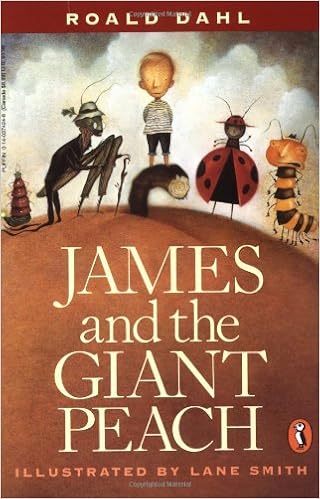
“Life is more fun if you play games,” said Roald Dahl, and his writing declares that reading can also be fun.

So I might not go to the yard to march around singing, “Bum, Bum, Bum, Here I come,” this afternoon, I will certainly have a book in hand for a while.

Why don’t you join me for a fun afternoon with your book? As Martha Stewart always says, “It’s a good thing.”


Donuts, Birthday Wishes, Starfish, and Turkeys

Image result for picture of elephant holding umbrella

We are all touched by the kindness of others.

“Kindness is the language which the deaf can hear and the blind can see.” -Mark Twain

My dad loved donuts, as well as all things chocolate and more specifically my mother.

When I was a teenager, I found out that he had a donuts ministry. At random times, he would visit Krispy Kreme to buy several boxes of donuts. Then he would deliver these boxes to his mechanic, his doctor’s and dentist’s offices, and the law offices of men that he worked with. Several times a year, this was his schedule before he went to work at the bank.

I found out about this when he had surgery and couldn’t drive. He asked me one day to help him with some errands. After we picked up the donuts, he shared his route with me. At each stop, Daddy delivered the boxes of donuts. It was quite obvious that he was welcomed by all.

When we headed home, I asked why he was taking donuts to these businesses. His response was simple; “I want to let them know I appreciate them.”

There is no telling how many years he treated his cohorts to a box of donuts, but I do know he gifted them after his retirement.

Then he started another thoughtful gesture with his friends at church. He was a member of a group called the Young At Heart. Obviously this was a group made up of retirees. They met each month for lunch and went on trips together. In their newsletter was listed individual birthdays. Daddy started calling those on the list to wish them happy birthday. Even when his macular degeneration took his eyesight, he would have mother dial the numbers for him and  then greet his friends.

It was amazing through the years to hear the genuine thanks from others for these two small things he did on a regular basis.

You probably remember this old story.

A young man is walking along the ocean and sees a beach on which thousands and thousands of starfish have washed ashore. Further along he sees an old man, walking slowly and stooping often, picking up one starfish after another and tossing each one gently into the ocean.

“Why are you throwing starfish into the ocean?,” he asks.

“Because the sun is up and the tide is going out and if I don’t throw them further in they will die.”

“But, old man, don’t you realize there are miles and miles of beach and starfish all along it! You can’t possibly save them all, you can’t even save one-tenth of them. In fact, even if you work all day, your efforts won’t make any difference at all.”

The old man listened calmly and then bent down to pick up another starfish and threw it into the sea. “It made a difference to that one.”

My brother had a turkey ministry. He bought turkeys and took them to families during the holidays. Whether they were members of his church or not, he seemed to find out about situations where a turkey would make a difference.

Then when he was going through his last bout with cancer, he took homemade chicken salad or pimento cheese to the those nurses and technicians that worked in the chemotherapy department. No, he didn’t make these Southern standbys; his sweet wife did that. But he never went to an appointment empty-handed. He was grateful they were trying to help him, and he appreciated it.

“There are things in human life are important. The first is to be kind. The second is to be kind. And the third is to be kind.” -Henry James

So shall we be more kind? Can you imagine the difference in our world if everyone chose to be kind?

Whether a box of donuts, a phone call, a turkey, or homemade pimento cheese, kindness takes on its own heart when shared with someone else.


Remembering Hurricane Hugo

In the Colonial period tropical storms and hurricanes were known as “September gales,” probably because the ones people remembered and wrote about were those which damaged or destroyed crops just before they were to be harvested.

Charleston was hit on September 25, 1686. It was described as “wonderfully horrid and destructive…Corne is all beaten down and lyes rotting on the ground… Aboundance of our hoggs and Cattle were killed in the Tempest by the falls of Trees…” But this gale also prevented a Spanish assault on the city by destroying one of their galleys and killing the commander of the Spanish assault.

Hurricanes and tropical storms are irregular visitors to coastal South Carolina. Starting in 1851, there is more information about each one. In the period, 1851-2016,  24 hurricanes have made landfall.

Hurricane Hugo attacked South Carolina and North Carolina 27 years ago, but for us that lived through its assault have not forgotten its sound and fury.

“The weather on September 21st, 1989 started off not much different than any other late summer or early Fall day. But that all began to change quickly as nighttime approached. For those that decided to stay it was certainly a night they will never forget.”

http://www.youtube.com/watch?v=eb34rcG6heQ&feature=youtu.be

Today the Eastern shores of Georgia and South Carolina await another hurricane named Hermine. It made landfall early this morning in Florida with a furious mix of rain, whistling winds and surging waves. As it continues to move, it has been downgraded to a tropical storm. Hermine’s toll has yet to be determined.

We don’t have to wait for storms to come into our lives; strong winds of hurt and loss can make us stumble during any day or month. But as Gandalf said, ““All we have to decide is what to do with the time that is given us.”

I watched a DVD series last month called the Winds of War. It was a 1983 miniseries based on books written by Herman Wouk. The plot follows an American family as they face the history before World War II. Even though the circumstances are the same, each individual has different reactions and chooses his own path, just as in life.

In her book, Bird by Bird: Some Instructions on Writing and Life, Anne Lamott tells this story.

“Thirty years ago my older brother, who was ten years old at the time, was trying to get a report written on birds that he’d had three months to write, which was due the next day. We were out at our family cabin in Bolinas, and he was at the kitchen table close to tears, surrounded by binder paper and pencils and unopened books about birds, immobilized by the hugeness of the task ahead. Then my father sat down beside him put his arm around my brother’s shoulder, and said, “Bird by bird, buddy. Just take it bird by bird.”

When we encounter someone who is buffeted by hurricanes, let’s choose to encourage them. In fact, we can walk beside them. That is what friendship is all about.


September Events:

September 10 – Pioneer Day in Gray Court, SC

September 16 – Revolutionary War History Museum in Simpsonville, SC

September 17 – Bethabara Apple Festival in Winston Salem, NC

September 22 – DAR Chapter in Bishopville, SC


“That Ragged Old Flag”


In 1974, Johnny Cash released an album that included “That Raggedy Old Flag.” It is a spoken word tribute to the flag of the United States, and it speaks of patriotism and how our flag has led us in battles and wars.

On June 14, 1777, the Second Continental Congress passed the Flag Resolution which stated: “Resolved, That the flag of the thirteen United States be thirteen stripes, alternate red and white; that the union be thirteen stars, white in a blue field, representing a new constellation.

There is mystery over who made the first flag and where it was first flown.

The Betsy Ross story is the most popular, though there is no credible historical evidence to prove it so.

The story started in 1870, almost 100 years after the first flag was supposedly sewn, when William Canby, Ross’s grandson, told the Historical Society of Pennsylvania in Philadelphia that his grandmother made the flag at George Washington’s request. His evidence was based solely on family tradition.

While Ross did make flags in Philadelphia in the late 1770s, it is all but certain that the story about her creating the American flag is a myth.

I don’t believe it truly matters as to whom sewed the first flag. Americans love our flag. It is displayed on homes, at government offices, in parades, and at funerals. In our home, we proudly displayed my dad’s folded flag and my husband’s grandfather’s flag.

Truly its symbolism can bring a tear to a veteran’s eye or a smile to a child reciting its pledge.

From America the Beautiful to Yankee Doodle Dandy, lyrics about this flag stir our hearts.

Yes, to this continued stirrings of our hearts and our belief that Tis the star-spangled banner: O, long may it wave O’er the land of the free and the home of the brave!

August Events:

August 18 – Sunrise Optimist Club

August 26-27 – SCDAR Fall Forum

Focus on the Family

I enjoy writing about families; my first books were about strong SC women and their families during the Revolutionary War. Researching that era made me realize the hard lives of two hundred years ago, and walking behind them at their home sites was a pleasure.

Then I wrote a piece about my dad’s years at the Citadel and how his junior class was sent to WW II. Interviewing him and his class mates taught me much about that Greatest Generation. Their tightness as friends in their 80’s was forged in their 20’s by their war experiences.

Next was an article on two audacious sisters in Greenville, SC who drove to ask Frank Lloyd Wright to draw the blueprints for their new house and he did. Being able to walk in that house and sit in the living room opened my eyes to an architecture that I had previously not appreciated. Having lunch with their contractor  and listening to him describe the materials he used gave an invisible depth to this home.

I have finished eight short stories about past generations of women in my husband’s family that worked in the cotton mills in SC. One will be published in the Savannah Anthology next month. Though I had met several of them, I had no idea of their challenges as mill workers; this was eye-opening.

After writing about John’s third great grandfather and three brothers who fought in the Battle of Fredericksburg, I learned much about their Appalachian history. I now have a visual of those tall, lanky, bearded, and blue-eyed men who wore slouch hats and ran into that bloody battle. Last summer, we walked along the Sunken Road where this grandfather died.

Looking back on these past ten years of retirement, I can see that my focus continues to stay on the same page, as my muse works with me to keep writing family stories.

Whether it is my family, your family, or a stranger’s family, they are all going to be a mixed bag of personalities and characters. One of my ancestors is the most famous thief in America, Jessie James. My grandmother always proclaimed he was maligned and more like Robin Hood. I am ready to discover his back story and maybe prove Lulu accurate.

We need to share our stories with the next generation. Seven years ago, I found myself the matriarch on both sides of my family. It was not a position I chose or was ready for. When my cousin Bobby accurately dubbed me the matriarch, I refused the title. Now I am intentionally sharing our stories, and they are my gift to the next generations.

Today, as I answered in an author’s site about what drove me to write, I realized again that my writing is a tribute to my family and other families. Can I suggest you tell your stories, too?

“What can you do to promote world peace? Go home and love your family.”– Mother Teresa

The Battle of Huck’s Defeat, July 12, 1780

Posted on

At Brattonsville, SC, this Saturday, July 11, will be an all-day celebration of the Battle of Huck’s Defeat.

You can find more information at http://www.chmuseums.org/battle-o.. Visit the original house, and walk where this family worked and lived.

I thought you might enjoy some of the back story of the Revolutionary War heroine, Martha Bratton, who made sure this battle happened. You can read more of her story in my biography about her called Fearless Martha.

In 1765, William, his four brothers and their families, and his sister and her family moved to Upcountry South Carolina from Rowan County, North Carolina. They purchased land grants and moved as a clan. Settling side-by-side, they soon became part of the community. They chopped down trees to build cabins and plant fields and joined the Bethesda Presbyterian Meeting House.

At the time of the Revolution, a woman’s role in society was limited. Most devoted themselves to taking care of home and family, and the men dealt with the political arena.

Still, many women became involved in events because they war came into their front yards. Some were Whigs – believers in independence for the colonies. Others were Loyalists – supporters of Britain’s king. All of the Bratton family, both men and women, were staunch Whigs.

Life wasn’t easy on the home front. With the men away at war, women had to protect their families, see to the crops, and defend family property. This was in addition to their normal every day routine that started before sun rise and ended long after dark. I believe the saying, “a woman’s work is never done” might be used to describe their daily lives. There were constant demands.

There is little known about the early life of this fearless woman, Martha Bratton. Traditions say that she was born onboard a ship crossing the Atlantic Ocean from Ireland to America about 1750. She was taught how to heal with herbs and had a gift for home health. When she and William moved to this area, known as the New Acquisition in the 18th century, there were no doctors. Because of her expertise, she treated and cared for her family and her neighbors.
The Bratton family brought little in the way of earthy goods with them, but they brought a strong allegiance to God and family, as well as a fierce love of liberty. Their Scots-Irish heritage was a clannish one, and their loyalty to each other was real.

Most of the factual information we know about Martha is during the summer of 1780. Charlestown fell to the British in May, and British and Tory soldiers were ordered to quell any rebellion.

Martha’s husband William and his militia were away for much of that summer at General Thomas Sumter’s camp, so Martha was in charge of their children, their home, and their land. Elizabeth, young William, young Martha, Jane, and Elsie were their children.

Two specific stories are told about how Martha stood up to the enemies of her new country. Both were in the summer of 1780.

A British soldier, Captain Christian Huck, was constantly attacking homes, meeting houses, and people in the New Acquisition. He had a hatred for the Scotch-Irish and made it clear with his words and the violence of his attacks.

In June, Huck had burned Reverend John Simpson’s home and killed a young neighbor. William Hill’s Iron Works was the headquarters of the Whig militia, and Huck burned it and the Hill home. His house-to-house raids struck fear in the whole community.

Soon it was July and time to get the wheat crop in. The crop was necessary to their livelihood, and there were only three days to get the wheat in before it would go bad. Besides using the wheat for baking, the stalks were fed to the livestock.
Martha and her four oldest children, as well as some of the older men including her brother-in-law Robert, were hard at work in the Bratton fields on July 11. It was a back-breaking job. The adults, as well as Elsie and Jane, all leaned over and cut the stalks as close to the ground as they could. Young Martha and William bundled them together. They all worked hard, but kept a watchful eye out for any British troops.

Word had come to the family that Huck was on the move that day. Martha knew that William and the rest of the men of the New Acquisition militia needed to know about these new atrocities. William’s militia was with Brigadier General Thomas Sumter at a camp. She sent Watt, one of their slaves, on a mission to alert the men that their homes and families were in danger.

Captain Christian Huck, a thirty-two year old lawyer, had been given new orders that read he was to “push back the rebels as far as you deem convenient.” His goal was to do just that.

When Captain Huck, his British soldiers, and Tory militia of over a hundred men galloped up the road to her home, everyone in the field hurried to the comparative safety of the house.

Martha hung the sickle on the outside wall, and stood with her loaded musket awaiting the intruders. Her children were with her, along with her brother-in-law. The wait was not long; within minutes enemy soldiers were standing beside her.
“Where is your husband?” was the quick question.

Martha’s reply was just as speedy, “I do not know the exact whereabouts of my husband.”

As she finished speaking, an unknown Tory soldier grabbed the sickle and Martha. He put the sharp sickle to her throat and asked again about William. Once more, Martha refused to give any information. The angry man tightened his grip, but Lieutenant John Adamson, another Tory, knocked the sickle away with his sword. Within seconds, the lieutenant used his sword to make sure the unruly soldier was off the porch and on the ground.

That afternoon Captain Huck tried his hand at finding out where William Bratton was, but he was not successful either. Martha didn’t know where the camp was, but she made it clear she wouldn’t divulge it even if she knew. Huck was nice to young William for a few minutes and allowed him to sit on his knee and play with his watch, but Huck’s anger at Martha’s uncooperativeness landed William on the floor with a bloody nose.

As a mother, Martha must have been angered by the man’s carelessness that caused injury to her son. But she knew she was not in a situation to aggravate him further. She had to protect her children, not put them in more jeopardy.
Huck demanded Martha cook a meal for him and his officers. I wonder how hard that was for her. If you have visited Brattonsville, you know how small the keeping room is. She cooked and served the enemies of her family and country at the same table where her family usually sat. It is said she considered poisoning the meal, but again that might have brought on more danger. Martha chose to protect her children by not taking this chance.

Finally Huck left. A guard was posted around the Bratton house. Doubtless, it was a long night.

Colonel Bratton did receive the news that Huck was wrecking havoc in his neighborhood and his family was in danger.
133 men under the leadership of William Bratton, John McClure, Andrew Neil, and Edward Lacy set out to protect their families and their land. There was a half moon that night of July 12, 1780, but the militia didn’t need it. They were in familiar territory, and anger drove them against the enemy.

Surprise was on the Whig side. The British forces were camped around the home of John Williamson. Huck had 35 British Legion Dragoons, 20 New York Volunteers, and 60 Loyalist militia. The four posted guards were shot quickly, and then the Whig militia marched in.

 Huck ran outside and was clearly seen in his white shirt. He mounted his horse and raised his sword to rally the troops. Seeing he was surrounded, he and several of his dragoons tried to escape. Huck was killed by a single rifle shot by John Carroll.

Within five minutes, the battle was over.

John Adamson was wounded.

Adamson feared for his life and asked someone to get Martha. He knew she would tell about how he saved her life. When she recognized John Adamson, she did not hesitate on telling her husband and the other soldiers about his actions on her front porch. She insisted that the wounded be taken to her home.

Besides nursing Captain Adamson back to health, Martha also nursed the wounded from both sides. She turned her home into a hospital. Martha demonstrated mercy to her enemies and the enemies of her country.

The winning of this battle encouraged the Whigs and gave hope to the Brattons and their neighbors that the enemy could be defeated. More volunteers joined the Whig cause, and these part time soldiers continued to taste victory. The defeat of the dreaded British Legion gave new heart to the Upcountry.

This battle could be called a turning point in South Carolina. During the rest of 1780 and early 1781, more than 35 more battles were fought in South Carolina. And the best part of that news is that 30 of them were Whig victories.

Besides her part in the Whig victory of the Battle of Huck’s Defeat, it is told that Martha stood up to another group of Tories the next month in August.

Before Charlestown fell to the British, Governor John Rutledge had sent around kegs of gunpowder to different citizens to hide until it was needed. The Brattons had a keg hidden on their farm.

Tory soldiers came to find the gunpowder to use for themselves, but Martha was warned ahead of time about their mission. She raced to the tree where it was hidden and blew it up just as the enemy arrived.

Of course, she was caught. There was nowhere to hide. Struggle against the arms that held her was as futile as escape. Angry voices asked her who had blown up the powder. The soldiers looked for a man, and they demanded the whereabouts of the traitor from Martha.

Martha boldly told them she was responsible with the words, “It was I who did it!” Though outnumbered once again by the enemy, she bravely announced her actions.

Martha was willing to pay the ultimate price for independence and freedom, but this was not required of her. Though she was threatened, Martha was fearless and never wavered in being a firm supporter of freedom. It is said that she encouraged her family and neighbors to stand tall.

William and Martha Bratton’s children obviously were proud of their parents.

On July 12, 1839, there was a celebration of Huck’s Defeat at Brattonsville. Dr. John Bratton, William and Martha’s youngest son, believed that the Whig victory should be celebrated. Many words of remembrance were spoken and toasts of spring water were offered to the Whig soldiers that were involved in this battle. I believe the toast made to Mrs. Martha Bratton on that day is worth noting.

“To the memory of Mrs. Martha Bratton – In the hands of an infuriated monster, with the instrument of death around her neck, she nobly refused to betray her husband; in the hour of victory, she remembered mercy, and as a guardian angel interposed in the behalf of her inhuman enemies. Throughout the American Revolution, she encouraged the Whigs to fight on to the last; to hope on to the end. Honor and gratitude to the woman and heroine, who proved herself so faithful a wife, so firm a friend to liberty.”

The Bratton children also had inscribed on William and Martha’s stone, “This Marble is erected by the children of the deceased in mournful testimony of their affection and respect for their dear parents Col. William Bratton and Martha Bratton.”

Along with her children, I believe we owe Martha Bratton “respect” as we remember her valiant fight to give us the freedom and liberty we enjoy today. I salute her fearless courage and encourage you to do the same.

As Abigail Adams wrote in a letter to her husband, John Adams, “Remember the women.”

A Day of Thanksgiving: July 4, 1783

Posted on

Picture of Alexander Martin  Late in June of 1783, Governor Alexander Martin of  the newly elected state of North Carolina, at the urging of the legislature, issued a proclamation stating that July 4 should be celebrated as a “Day of Thanksgiving and Peace.”

The proclamation read, “Resolved that the fourth Day of July, be and is hereby appointed a Day of General Thanksgiving and praise to Almighty God for the gratious Interposition of divine providence in behalf of this Nation: that it hath pleased him to deliver us from the Calamities of War, and Crown our wishes with the Blessings of peace; and that His Excellency the Governor notify the same by Proclamation.”

The Moravians were an industrious, inventive, highly organized, devout people who valued education for all. Their way of life can be observed today at a living museum called Old Salem.

They also had a strong pacifist tradition, dating to their founding amid the religious struggles of the 15th century as a “peace church.” Members were forbidden to serve in the military. They lived by the teachings in Christ’s Sermon on the Mount.

It’s little wonder that by 1783, the Moravians in Salem were thrilled that the battles were over. During the Revolution, both British and rebels harassed them, collected fines, and even attacked them physically. Some young men hid in the forest to escape being pressed into service. A few did join with the rebels; the church forgave them later.

The Moravians kept detailed records and diaries of each day in their community, and these words commemorate that day in 1783.

“According to the order of the government of this State we celebrated a day of thanksgiving for the restoration of peace. The congregation was awakened by the trombonists.

At the beginning of the preaching service the Te Deum was sung, with trombone accompaniment.

The Watch-Word for January 20th, the day on which the Peace Preliminaries were signed, was: The God of Jacob is our refuge, which was preached by Br. Benzien. The service closed with the singing of: Glory to God in the highest.

At two o’clock there was a happy love feast, during which a Psalm of Joy was sung with thankful hearts.

In the evening at eight o’clock the congregation again assembled in the Saal, and the choir sang: Praise be to Thee, Who sittest above the cherubim.

Then the congregation formed a circle in from the Gemeinhaus, and from there passed in procession through the main street of the town,with music and the antiphonal song of two choirs. The street was illuminated. Returning to the Gemein Haus the congregation again formed a circle, and with the blessing of the Lord was dismissed to rest.

Hearts were filled with the peace of God, evident during the entire day and especially during the procession, and all around there was silence, even the wind being still.” (from Records of the Moravians in North Carolina)

The Love Feast, a Moravian tradition that is more a celebration of community than a sacrament, was a regular part of this community. The simple meal included coffee heavy with cream and sugar, plus a sweet bun.

The log Gemenhaus, built in 1756,  burned and was rebuilt in 1788.

The church, call the “Gemeinhaus” even in the earliest records of the community of Bethabara, served as a residence for the minister and other church workers and had a “Saal” – a “meeting hall” – for the congregation; the most accepted translation of “Gemeinhaus” being “congregation house.”

Image result for pictures of love feast of moravian

Moravians believe in the clear word of God;“The steadfast love of the Lord never ceases, his mercies never come to an end; they are new every morning.” Lamentations 3:22,23 The first printed edition of the Daily Texts (Losungen) was published in Herrnhut, Saxony, in 1731. The title page of that edition quoted this passage from Lamentations and promised a daily message from God that would be new every morning.

For each of the 365 days in the year, they read from the Daily Texts that give them a specific Word/watchword for the day and a doctrinal response.

During the crucial days of the Revolution, the German-language edition was printed in Philadelphia by Heinrich Miller, who had worked for Benjamin Franklin when he first came to America. The daily text for July 4, 1776, was from Isaiah 55:5-“Behold, you shall call nations that you know not, and nations that knew you not shall run to you” (RSV).

This all-day celebration is the first one documented in our country, and this is still reenacted today in Old Salem.

Several years ago, John and I participated in the walk around the square on July 4. Just like in the year of 1783, there was singing thankfully of the day we celebrated. As I look forward to July 4, 2016, I am truly grateful to be an American. Learning about the lives of those that fought for our country during the Revolutionary War, I am amazed at their courage and perseverance to battle against England; they were fearless.

http://www.youtube.com/watch?v=8ZZf619DIpo

Happy Fourth of July!


Victory Gardens During World War II

“Food will win the war and write the peace,” announced Agriculture Secretary Claude Wickard in a statement to the press in early 1943. Even before the United States entered the war in 1941, U.S. farmers were producing at record levels to supply the food needs of the Allies. After the Japanese bombing of Pearl Harbor, getting food and equipment to our troops strained production and distribution systems to their limits. Farm labor was in short supply as men left for military service.

Patriotic fervor was contagious and victory gardens sprang up everywhere.

President Franklin D. Roosevelt said in 1943,

I hope every American who possibly can will grow a victory garden this year. We found out last year that even the small gardens helped.

The total harvest from victory gardens was tremendous. It made the difference between scarcity and abundance. The Department of Agriculture surveys show that 42 percent of the fresh vegetables consumed in 1943 came from victory gardens. This should clearly emphasize the far-reaching importance of the victory garden program.

Because of the greatly increased demands in 1944, we will need all the food we can grow. Food still remains a first essential to winning the war. Victory gardens are of direct benefit in helping relieve manpower, transportation, and living costs as well as the food problem.”

In 1943, Americans planted over 20 million Victory Gardens, and the harvest accounted for nearly a third of all the vegetables consumed in the country that year. Emphasis was placed on making gardening a family or community effort — not a drudgery, but a pastime, and a national duty.

Victory Gardens helped prevent a food shortage. Planting Victory Gardens helped make sure that there was enough food for our soldiers fighting around the world. Because canned vegetables were rationed, Victory Gardens also helped people stretch their ration coupons.

No one could just walk into a shop and buy as much sugar, butter, meat as you wanted, nor could you fill up your car with gasoline whenever you liked. All these things were rationed, which meant you were only allowed to buy a small amount (even if you could afford more). The government introduced rationing because certain things were in short supply during the war, and rationing was the only way to make sure everyone got their fair share.

Image result for ww2 picture of ration book
The Japanese attack on Pearl Harbor dramatically ended the debate over America’s entrance into the war that raged around the world.  As eager volunteers flooded local draft board offices, ordinary citizens soon felt the impact of the war. Almost overnight the economy shifted to war production. Consumer goods now took a back seat to military production as nationwide rationing began almost immediately.  In May of 1942, the U.S. Office of Price Administration (OPA) froze prices on practically all everyday goods, starting with sugar and coffee.
Then war ration books were issued to each American family, dictating how much gasoline, tires, sugar, meat, silk, shoes, and other items one person could buy. Even children received their own books.

In Ingle Holler, outside Union, SC, these gardens were dubbed vegetable gardens, because they were a way of life for this clan. Every year, a garden was planted by each family; World War II did not change their way of being self-suficient.

John’s grandfather, Make Ingle, bought fifty acres of land from Excelsior Mill (later Milliken Mill), during the Depression in 1937. His children then bought acreage from their father, built homes, and lived their lives similar to their Appalachian ancestors.

The third generation, which included my husband,  always had playmates, as well as working partners. Growing up solely around extended family isolated the children in some ways, but also instilled in them a sense of place and acceptance. All looked out for everyone else; the doors were always open in each home, and no one had to knock to be admitted.

Gardens were a family affair. John’s dad Oliver dug the garden with a hand plow. It had several ploughshares for breaking up the dirt, for cultivating and breaking up the clods, and a v-shaped one that laid off the rows. Then his mother Lois supervised her sons planting the seeds. Using broken sticks off nearby trees, the two boys poked holes in the rows and dropped the seeds. Oliver then came back with the v-shaped ploughshare and covered up the seeds.

Weeding was a daily job for the boys, and water was free from the nearby creek.

Because trains and trucks had to be used to transport soldiers, vehicles, and weapons, most Americans ate local produce grown in their own communities. More than one million tons of vegetables were grown in Victory Gardens during the war.


People with no yards planted small Victory Gardens in window boxes and watered them through their windows. Some city dwellers who lived in tall apartment buildings planted rooftop gardens, and the whole building pitched in and helped.

Many schools across the country planted Victory Gardens on their school grounds and used their produce in their school lunches. The U.S. government printed recipe books describing how to prepare home grown vegetables to make nutritional and tasty meals. Agricultural companies gave tips on how to make seedlings flourish in different climates.

My dad, Sam Collins, along with his brother Wallace, fought in the Army during World War II, in the European theater. Growing up during the Great Depression and on a farm in Kentucky, he knew the importance of providing for his family. His job was to milk the cows in the dairy; this meant waking up to go to the barn at 5:00 a.m. for this chore before he walked to school. Daddy had a strong sense of the importance of hard work and taking care of his family. Though he was not one who enjoyed the outdoors, for forty years he planted a garden in our back yard. As the years went by, it grew smaller and was finally only tomato plants for our summer eating.

I can see him now with the old hat he wore in the garden pinching the suckers off, so the tomatoes would grow. He would smile with glee when he brought tomatoes into the house. For some, this was a piddling and unremarkable task, but it was more. This farmer turned banker never got over the realization that the earth was created for our bounty and benefit. By example, he taught us that a victory/vegetable garden is for each generation

As James 1:17 says, “Every good and perfect gift is from above, coming down from the Father of the heavenly lights, who does not change like shifting shadows.”

By the way, my husband John picked his first tomato yesterday from our backyard.


Design a site like this with WordPress.com
Get started