Author Archives: Sheila Ingle

Little River, South Carolina

May 2009 037.jpgHugging the shore of eastern South Carolina, Little River still has the aura of a sleepy, fishing village.

It is one of the oldest settlements along the coast, with fishermen and farmers settling there in the late 1600s and 1700s. The wide tidal inlet, which narrows to a stream, was a cornucopia of fish and fertile land.

Indian tribes called the stream Mineola, meaning “little river” and that became its name.

Both pirates and shipwrecked survivors found this haven. The few settlers were forced to help pirates who demanded food and supplies; their weapons loudly spoke. Legends like Captain Kidd, Blackbeard, Stede Bonnette, and Anne Bonney supposedly dropped anchors here.

The village of Little River can trace its history back to 1734. It was then that a “young gentleman” from England recorded in his diary that he had stayed at Ash’s, or Little River, while traveling through the area.

In 1740, on his way to Savannah, Georgia, Rev. George Whitefield, an English Anglican preacher, apparently visited Ash’s inn also and wrote about his   “pleasant journey” and how “wonderfully delighted to see the porpoises taking their pastime, and hear, as it were, resounding to shore the praises of Him Who set bounds to the sea that it cannot pass.”

The tavern where Whitefield and the “young gentleman” lodged was probably that of Thomas Ash. Ash received a land grant for 350 acres on June 19, 1733. It is believed that he operated an inn or halfway house (midway between Cape Fear and Winyah Bay).

Francis Marion (the Swamp Fox) had a brother, named Isaac, who settled in Little River in the mid-1700s with his wife and family. During the American Revolution, Isaac Marion maintained the “Boundary House” on the NC/SC border at the small hamlet of Little River.

President George Washington, on his southern tour in 1791, stopped in Little River.  He entered South Carolina just north of Little River on April 27, 1791, where he stayed with the Revolutionary War veteran named James G. Cochran. Traveling the well-established coastal road, now known as the King’s Highway, he made his way south.

In his diary Washington stated, “In this tour I was accompanied by Major Jackson, my equipage and attendance consisted of a Chariot & four horses drove in hand – a light baggage wagon and two horses – four saddle horses besides a led one for myself and five – to wit – my Valet de Chambre, two footmen, Coachman & postilion.” The outriders wore bright livery of red and white which gave a touch of distinction to the procession. His carriage was described as a “white chariot.” (An impressive sight indeed!)

In 1826, Robert Mills, America’s first native-born trained architect, born in Charleston, SC, described the village of Little River: “There is another settlement made on Little river near the seaboard of about 25 persons, who carry on a considerable trade in lumber, pitch, tar, &c. … Little river admits vessels drawing 6 or 7 feet water up into the harbor, 4 miles from its mouth. There is a little difficulty at the entrance, but the harbor is perfectly safe from the effects of storms.”

The village became a prosperous port in the 1850’s, shipping fine lumber and naval stores to Northern markets. It had a sawmill, waterhouse, stores, school and bank. Several churches were organized and people built nice homes. The Civil War wiped out this progress. A large salt works produced much needed salt for the Confederate Army until it was burned by Union forces. Shipping and fishing were at standstill, with the coastal blockade.

In 1868 an Horry correspondent for The Marion (SC) Star [December 16] who signed himself Waccamaw wrote that Little River Village was “a flourishing commercial place, that bids fair to become of great importance in the industrial and commercial interest of Horry and of the adjoining counties in North Carolina. [It contained] four stores, one steam saw mill, two gum stills, one academy, church, no jail (!) and a curiosity, in a newfangled ‘Pinder Picking machine… Vessels of one hundred and fifty tons burden can come up to the village, and so make regular trips between this place and Northern cities, as well as to the West Indies. Waccamaw went on to describe the local food in a very favorable light by saying, “These [mullet], with the oysters, that were abundant, and the ducks, of which quite a number were killed, to appetites already good, and highly braced.”

The American Guide Series, 1938 tells an interesting story about Little River in the late 1800s. By then, seagoing steamers made regular runs between Georgetown, Little River and Wilmington, loaded with cargo and passengers. Sewing machines were something of a novelty in the South and greatly needed for family sewing. The few women who had machines would graciously invite friends and neighbors to share their use.

Summer afternoons found ladies gathered on wide porches, under sheltering oaks along the riverfront. The ladies might “piece quilts” or mend or sew for their families, taking turns to use the wonderful new Singer sewing machine. It looked like an old-fashioned “sewing bee.” Passengers on steamers coming into the harbor smiled and waved at the busy women, who happily smiled and waved back.

The influx of cars and roads severed the constant sea traffic into Little River, and now seafood restaurants bring in the travelers, along with opportunities for deep-sea fishing and charter boats. Two casino ships operate each day for further entertainment.

Twice this week at Little River, John and I have slurped up two seafood meals at Capt Juel’s Hurricane Restaurant.

A parade of boats entertained us. Those, on the restaurant deck, waved to the passengers on the boats’ desks. The water created a bridge for a sense of camaraderie, and no pirates decided to jump ship and detain us or our wallets.

W. B. Yeats wrote, “In the great cities we see so little of the world, we drift into our minority. In the little towns and villages there are no minorities; people are not numerous enough. You must see the world there, perforce. Every man is himself a class; every hour carries its new challenge. When you pass the inn at the end of the village you leave your favourite whimsy behind you; for you will meet no one who can share it. We listen to eloquent speaking, read books and write them, settle all the affairs of the universe. The dumb village multitudes pass on unchanging; the feel of the spade in the hand is no different for all our talk: good seasons and bad follow each other as of old. The dumb multitudes are no more concerned with us than is the old horse peering through the rusty gate of the village pound. The ancient map-makers wrote across unexplored regions, ‘Here are lions.’ Across the villages of fishermen and turners of the earth, so different are these from us, we can write but one line that is certain, ‘Here are ghosts.’ (“Village Ghosts”)”


Father’s Day

Posted on

702 Penarth Road

When I was five and my brother two, our great grandfather died. Leaving monies to his grandchildren, my dad invested in building a home on Penarth Road on the west side of Spartanburg. There are a couple of photos left of the house as it became a home. Critt and I played in the sand piles, and that was our contribution. Our parents lived there for forty years.

In those years, there were few changes. Added first was a screen porch and a larger den. Then large windows created a sun porch that quickly became the favorite gathering place for our family.

Later my dad meticulously added a brick and sand terrace in between the driveway and the back storm door. Running string around the edges to design the space, leveling the ground with a shovel, arranging the bricks in a simple pattern, and lastly pouring the sand to fill in the spaces were the steps.

My memories are of a banker, out of his element, dressed in shorts, collared shirt, socks and casual shoes down on his knees methodically occupied with his work. The suit and tie were out-of-sight. His glasses often slipped down his nose from the perspiration; I remember his skinned knees. His concentration showed when his tongue slipped between his lips. (This was a sign I always recognized.)

Through the years, the completed patio often brought smiles to us. Daddy was not dexterous, but he was determined to finish well all tasks that he started. He taught us this by example. Whether it was washing the cars on Saturday afternoon, studying a Sunday School lesson at his desk on Saturday nights, or loving on Mother with her Alzheimer’s disease, Daddy never quit. He took his responsibilities seriously.

By the way, sixty years later that patio continues to hug the back entrance to our old home! Legacy does embrace countless forms.

An unknown author wrote this about a father.

“What Is A Dad?”

A dad is someone who
wants to catch you before you fall
but instead picks you up,
brushes you off,
and lets you try again.

A dad is someone who
wants to keep you from making mistakes
but instead lets you find your own way,
even though his heart breaks in silence
when you get hurt.

A dad is someone who
holds you when you cry,
scolds you when you break the rules,
shines with pride when you succeed,
and has faith in you even when you fail…

Happy Father’s Day!

Author Events in June:
June 10 – Spartanburg Junior Writer’s program

The Simple Things

Posted on


“It is the sweet, simple things in life which are the dear ones after all.” Laura Ingalls Wilder

Founded in 1748, Continuing to Change Lives

Posted on

Established December 28th, 1748 by nineteen young gentlemen of various trades and professions wishing to avail themselves of the latest publications from Great Britain, these men wished not only to keep abreast of the intellectual issues of the day but also to “save their descendants from sinking into savagery.” Ten pounds sterling bought their first order.
The initial group consisted of nine merchants, two lawyers, a schoolmaster, a physician, two planters and a peruke maker (wig-maker).
• Alexander Baron, schoolmaster from Scotland
• Morton Brailsford, merchant
• Samuel Brailsford, merchant
• Robert Brisbane, merchant
• John Cooper, merchant and distiller
• James Grindlay, lawyer
• William Logan, merchant
• Alexander McCauley, peruke (wig) maker
• Dr. Patrick McKie, physican
• Thomas Middleton, planter
• John Neufville, merchant
• Thomas Sacheverell, planter
• John Sinclair, merchant
• Charles Stevenson, merchant
• Peter Timothy, printer
• Joseph Wragg, merchant
• Samuel Wragg, merchant

First, they ordered pamphlets and magazines from London that had been printed the year before. Then they started ordering books; copies of classical books were a priority. The society was “in a large measure, a social club,” and by 1750 had about 160 members. Leaders in Charlestown’s society coveted membership.
View of Charleston by W.R. Miller, 1853


Below is a water rice mill drawing view of SC John Drayton and the building that holds artifacts such as these.

Image result for charleston library society pictures

As Ralph Waldo Emerson said, “If we encounter a man of rare intellect, we should ask him what books he reads.”
This organization paved the way for the founding of the College of Charleston in 1770; a goal of the membership was to promote education. By purchasing scientific instruments and providing regional exhibits, they promoted the study of the regional natural history. This was the origin for the founding of the Charleston Museum (the first in America) in 1773.
This collection was quite mobile. At first, elected librarians safeguarded the Library’s materials in their homes. In 1755, William Henderson was elected librarian of the Society, and collecting he moved the collections into the Free School (of which he was headmaster) on Broad Street. From 1765 until 1778, it resided in the upstairs of Gabriel Manigault’s liquor warehouse. In 1792, the collection was transferred to the upper floor of the Statehouse, currently the County Courthouse at Broad and Meeting.

Edward Crisp, “A Compleat Description of the Province of Carolina in 3 parts.” 1711.
From 1835 until its 1914 move to the current King Street location, the Charleston Library Society occupied the Bank of South Carolina building at the corner of Church and Broad Streets. For their building fund, they sold “brick” memberships to the public.
This video takes us up the steps and inside the Library.
https://www.facebook.com/dialog/share?href=https%3A%2F%2Fvimeo.com%2F105079334%3Fref%3Dfb-share&display=popup&app_id=19884028963&redirect_uri=http%3A%2F%2Fplayer.vimeo.com%2Fshare_confirmation


Open for luncheons, author events, weddings, research, meetings, and whiling away a morning in the middle of another world, the Library is a popular venue in Charleston today. The newspaper collection dates back to 1732. The materials housed in the Library Society’s Archives and Special Collections contain more than 14,500 rare books, 5,000 rare and semi-rare pamphlets, 400 manuscript collections, and 470 maps and plats.


Image result for restaurant

Aren’t we grateful that those 19 young men believed in the import of reading. Louis L’Amour put it this way, “For one who reads, there is no limit to the number of lives that may be lived, for fiction, biography, and history offer an inexhaustible number of lives in many parts of the world, in all periods of time.”

How about a field trip to the Charleston Library Society?

Derby Pie

Posted on

1 stick butter, melted and cooled

2 eggs

1 cup sugar

1/2 cup flour

1 cup chocolate chips

1 1/2 cup chopped pecans

uncooked pie shell

Beat eggs with cooled butter. Add flour and sugar. Stir in chocolate chips and pecans. Bake at 350 degrees for 30 minutes. Cool and serve.

My Derby pie is in the oven, even though it won’t be served until tomorrow. This is my grandmother Lulu’s recipe, written in my mom’s handwriting.

Lulu always baked a day ahead. Her reasoning was that if a redo was necessary, there was plenty of time.

Mary B tea biscuits, so-like homemade, are in the freezer, and the ham has been baked. Not many Derby celebrations are without ham biscuits.

Today was the race for the fillies. The first running of the Kentucky Oaks was on May 19, 1875 when Churchill Downs was known as the Louisville Jockey Club. The women spectators will be dressed up with their hats, heels, and fashion dresses today, as well as tomorrow.

The hat fashion started with Col. Meriwether Lewis Clark Jr.’s vision for the Derby as an event that the high-class of society would attend, similar to European-style racing events, which mandated full morning dress for men and women. For the first running of the Kentucky Derby, he invited high-class, society women to recruit his target clientele to attend the race. The event quickly became just as much about the fashion as the racing. Going to a horse racing event became an opportunity to show off the latest in spring fashion and women were known to coordinate their hats, dresses, bags, shoes, and even parasols.

The extravagant hats that have become associated with the Kentucky Derby did not really come around until the 1960s, when social fashion norms loosened up and the presence of television gave women a reason to stand out. The hats became larger, brighter, and more extravagant.

Hats at the Kentucky Derby have become even more popular after the royal wedding in 2011, an event that showcased many elaborate hats and fascinators. The headgear of moms and daughters both vie for attention.

Image result for little girl at the kentucky derby

Image result for little girl at the kentucky derby

When it comes to fashion, surprise and awe rule.  Elaborate chapeaus, bright spring silks, pastel linens, feathers, and flowers almost breathe with the wearers. As for the hats, what do you think of this one?

The spectacular fashion often seen at the Kentucky Derby is not solely a product of modern times; rather, opulent feminized dress has played a large role in the history of the Kentucky Derby. What Colonel M. Lewis Clark Jr., (the founding father of the Kentucky Derby), envisioned was a racing environment that would feel comfortable and luxurious, an event that would remind people of the Epsom Derby and Grand Prix  in Europe that attracted an elegant crowd.

This 1920’s picture shows suits and roomy jackets with gloves.

Image result for 1930s fashionThis is a 1930’s picture; silk and larger hats.

For a well-to-do late 19th and early 20th century woman, a day at Churchill Downs, especially on Derby Day was an opportunity to be seen in the latest of fashions. A journalist from a 1901 Louisville Courier-Journal stated, “The seats in the grandstand were filled with gaily dressed women and men. The mass of green, pink, red, yellow, blue, all the colors of the rainbow, blending into one harmonious whole was as beautiful a sight as His Eminence in the lead.”

I can see my dad leaning into the television in high expectation of the beginning of this one race. Yes, he had watched the other horse races during the afternoon of Derby day and the Saturday races the months before, like the Wood Memorial. His blue eyes were twinkling, and a smile was on his face, as he anticipated the Run for the Roses.  I am so grateful he passed down his love for horses, the Derby, and Kentucky. Tomorrow is Derby Day!


“And They’re Off!”

Posted on

It’s Derby week in Louisville, in Kentucky, in the United States, and in the world! What a history this one horse race has.

Dating back to 1875, the Kentucky Derby is the longest running sporting event in the United States. During two world wars and the Great Depression, this race was still run by three-year-old Thorougbreds.

Meriwether Lewis Clark, the grandson of William Clark – famous for the Lewis and Clark expedition, attended the Epsom Derby in England. This horse race had been run since 1780. He then traveled to France and hobnobbed with the French Jockey Club.

Returning to America, he brought back a dream for a spectacular horse race in America. John and Henry Churchill, two of his uncles gave him the land to develop a racetrack. The Louisville Jockey Club was formed, and they raised the funds to build the racetrack. Fifteen horses, on May 17, 1875, raced one-and-a-half miles to the cheers of around 10,000 spectators. Aristides won, and the rest is history.

Traditions have multiplied through the years, as has the popularity of this event. Beautiful hats vie with the magnificent horses. Mint juleps are mixed and sold by the thousands; silver and pewter mint julep cups are listed on bridal registries. Standing to sing “My Old Kentucky Home” by Stephen Foster is a stirring and enthusiastic activity. Red roses crown the winner.

This Saturday we will gather in our home to watch the most exciting two minutes in sports. As Daddy taught us, we will stand to sing “My Old Kentucky Home.” There will be red roses on the table. Leaning forward, we will wait for the words, “And they’re off!” And after the race, we will celebrate the winner with Derby pie.

Family traditions are varied. For us, we are now teaching the fourth generation to enjoy the Kentucky Derby.

Aren’t family traditions the best? Yesterday, for lunch, I served my grandmother’s spaghetti casserole, Mom’s lime pie, and my banana pudding. On the table were my great grandmother’s pink peonies. Family traditions help to define us and give us a sense of being a part of those we know and those we don’t know.

Cookie Monster loves cookies, and I like what he says about friends. I believe this applies to families, too.

Image result for cookie monster quotes

May Events:
May 10 – Kings Mountain Chapter NSDAR
May 12 – Star Fort Chapter NSDAR
May 24 – Mt Ariel Chapter NSDAR
May 28 – Colonial Faire in Fountain Inn

“Hi! Ho! Silver! Away!”

http://www.youtube.com/watch?v=rZIqg0gBcYM

Today is my brother’s birthday, and he is celebrating it in heaven. I have been flooded with memories of our childhood.

He loved the outdoors. In our early years, it was playing Daniel Boone or the Lone Ranger. Fess Parker and Clayton Moore modeled lives of being brave and helping others; our interpretive versions became a different reality in the woods of the vacant lot across the street from our home. We used old brooms for horses. Critt had a holster set with two pistols for his role as the Lone Ranger and a wooden rifle and coonskin hat for Daniel. We hid behind tree trunks and whispered secret messages, so we could outwit the enemies that were stalking us. Then we would race and jump behind a stump or a fallen log.

Critt would usually carry his canteen, so we wouldn’t have to go across the street to civilization and drink out of the hose in the front yard. He pretended to build fires to keep us warm or for me to cook on. As we grew older, other children in the neighborhood joined in our sojourns in the back woods.

On January 31, 1933, The Lone Ranger premiered on the radio. It immediately became popular with adults, as well as children. An announcer introduced each episode with similar words, “In the early days of the western United States, a masked man and an Indian rode the plains, searching for truth and justice. Return with us now to those thrilling days of yesteryear, when from out of the past come the thundering hoof beats of the great horse Silver! The Lone Ranger rides again!”

Ten years later, the show became an instant hit on television, and a new introduction was memorized by the fans. “A fiery horse with the speed of light, a cloud of dust and a hearty Hi-Yo Silver! The Lone Ranger! … With his faithful Indian companion Tonto, the daring and resourceful masked rider of the plains led the fight for law and order in the early western United States! Nowhere in the pages of history can one find a greater champion of justice! Return with us now to those thrilling days of yesteryear! From out of the past come the thundering hoof beats of the great horse Silver! The Lone Ranger rides again!”

[smile]

Yesterday someone reminded me of the back story of The Lone Ranger. He was the only survivor of an attack on a group of six Texas Rangers. In 1823, Stephen Austin initiated this law enforcement group. Except for during the Civil War, this agency has continued to both investigate and bring to justice criminals in Texas.

At Bryant’s Gap, a band of outlaws ambushed these six Rangers in the series. They all died, except for the one Lone Ranger. Included in those killed was Daniel Reid, the Lone Ranger’s oldest brother. Tonto finds the slaughtered men and saves the life of the one barely alive. Burying the others and digging a sixth grave, so it would appear that all had perished, Tonto nurses the lone survivor. With part of his brother’s vest, the younger Reid brother fashions a black domino mask and vows to hunt down Butch Cavendish and his gang of outlaws.

Image result for lone ranger's black domino mask

The opening theme from “The William Tell Overture”; the wondrous horse, Silver, described by the show’s announcer as “a fiery horse with the speed of light and thundering hooves”; Tonto’s name for the Ranger, “Kemo-sabe”; the silver bullets; and the Ranger’s vow of refusing to shoot to kill and never removing his mask (unless in disguise) brought the wild west to our home on Penarth Road. Sitting on the floor beside our dad’s chair, the wild, wild west enthralled us all.

By the way, I was Tonto. Tightly putting my hair back in a pony tail, I would tie ribbons around it. My lines always ended in “Kemo sabe,” except when I was talking to my horse Scout.

[Jay 1]

Kemo-sabe is Potawotamie for “trusty scout” and others say “faithful friend”. Jay Silverheels was a descendant of the Mohawk tribe, and those words describe his role in this series. With my coal-black hair and olive complexion, I could pass for a Native American.

In looking for pictures for this article, I found this poem. Fran Striker, the American writer for radio and comics, who created the characters of The Lone Ranger, Green Hornet, and Sergeant Preston.

The Lone Ranger Creed
By Fran Striker
(circa 1933)
[lone ranger]
“I believe that to have a friend, a man must be one.

That all men are created equal and that everyone
has within himself the power
to make this a better world.

That God put the firewood there but that every
man
must gather and light it himself.

In being prepared physically, mentally, and morally to
fight when necessary for that which is right.

That a man should make the most of what equipment he has.

That ‘This government, of the people, by the people and
for the people’ shall live always.

That men should live by the rule of what is best for the greatest number.

That sooner or later… somewhere…somehow…
we must settle with the world and
make payment for what we have taken.

That all things change but truth, and that truth alone, lives on forever.
In my Creator, my country, my fellow man.”

This creed speaks to me today of a man who chooses to make a difference. As C. S. Lewis said, “Integrity is doing the right thing, even when no one is watching.” So as in our childhood, my brother and I played at doing good things, I applaud his doing good things as an adult.

http://www.youtube.com/watch?v=YIbYCOiETx0


He Doffed His Hat To Me!

Walking toward the visitor’s center at Musgrove Mill Historical Site on Saturday, I met a re-enactor. He, not only bowed to me, but doffed his hat! In response, I nodded my head.

Image result for 18th century American doff

The action of respect took me aback. Silent words of greeting were spoken, and for a moment, I felt like a queen. No, I was not attired as one; there was no crown on my head or long gown trailing behind me, but my presence had been noted with 18th century courtesy. In those years, this cultural expression was one of recognition, respect, gratitude, or simple greeting between two persons.

In retrospect, I believe I might have straightened my shoulders a bit and walked on with a slight smile. The unexpected salutation made me more aware of the manners that have changed in our world.

There is a connection between doffing and donning. One of the first uses of it in print can be found in Sir Thomas Malory’s Le Morte D’Arthur, published around 1470. He wrote, “Doffe of thy clothes, And knele in thy kyrtylle” (tunic or petticoat).

Image result for 18th century American doff

The English bard, William Shakespeare, frequently used  ‘doff,’ often in a figurative manner. In the balcony scene of Romeo and Juliet, Juliet entreats Romeo to change his name with the words, “Romeo, doff thy name.” In the The Taming of the Shrew,  Baptista chides the bridegroom with “Fie, doff this habit, shame to your estate”.

Obviously, we can don hats, clothes, or even character traits. Equally easy, all can be later doffed. These archaic words simply describe the actions of “do on” or “do off.”

A minister calling on a parishioner

From the 16th to the 18th centuries in England, the donning and doffing of hats was governed by a code of etiquette and custom that it is hard for us now to appreciate. Each man of standing wore a hat, and the form of hat and the rules were a part of society. This custom filtered down in society to the working classes, who greeted the gentry with a doff.

English settlers brought this custom with them, and polite society expected this courtesy on a new continent.

In the 21st century, men no longer routinely wear hats. Both my grandfathers and great-grandfathers traditionally wore hats when they left their homes. When they entered a building, they removed their hats. My dad owned a few hats and wore them occasionally for specific times; he owned a rain hat, a golf cap, a Master’s hat, and a Derby hat. Slowly hats have lost their places.

Whether a national leader or a farmer, men doffed their hats well into the 20th century.

Image result for art print: british prime minister winston churchill doffing hat outsidBritish Prime Minister Sir Winston Churchill

On July 4, 1892, there was a joint meeting to celebrate our nation’s birthday. This clear, sunny day was lightened with a calm breeze off the Potomac River.

The Daughters of the American Revolution, the Sons of the American Revolution, the Sons of the Revolution, and the Order of the Cincinnati met together at 9:00 at the Church of the Epiphany in our nation’s capitol. The organ refrain of God Save the State was as loud as the singing of America in this special religious and patriotic service.

A Chaplain gave directions for the order of the processional to the monument, and the men and women, on foot and in carriages, took their places. The Daughters of the American Revolution were at the end. As the parade reached the corner of G and the Fifteenth Street, business men hurried out of a hotel.

Police held back people and cars from interrupting the walk. Seeing the elegantly dressed men and women in the street, a gentleman asked, “Officer, what is this?”

The response was, “The Sons and Daughters of the Revolution.”

In one motion, that same man doffed his hat. All down the street, man after man followed suit as the men and women passed. Until all in the procession passed, no hats returned to their respective heads. It was a tribute to not only those who walked the streets of Washington, DC, but also for the memory of those who fought during the Revolutionary War. (from First “Safe and Sound” Movement by Helen Hardin Walworth, Founder and Honorary Vice President General NSDAR)

There are no photographs of this scene, but in my imagination those doffed hats respectfully speak to both the past and the future of our nation.

Golf has been dubbed the gentleman’s sport. I grew up in a family of golfers and was privileged to attend the Master’s on several occasions. There is something about how the golfers greet their fans as they walk up the fairway. Standing to their feet and loud clapping greet the golfers, and the players respond with a doffed cap or visor.

Phil Mickelson

Albert Einstein said, “I speak to everyone in the same way, whether he is the garbage man or the president of the university.”

No, doffing one’s hat is neglected in society these days, but respect is always in fashion.


Toys and Stories


Last night I attended a Rocking with Reading event at an elementary school in Greenville. Community leaders like firemen, policemen, a mayor, and various authors read to the students, and all the students took home a free book.

The music was loud, and the students enthusiastic. It was not a normal school environment. Teachers opened their rooms for various readings and monitored the halls. Babies in strollers, as well as fifth graders who had hit a growth spurt, wandered the school. Parents, grandparents, and children sat around an open desk in the speech room where I was. And what fun we had!

Besides my four books about the American Revolution in South Carolina, I had taken a couple of toys with me to start conversations.

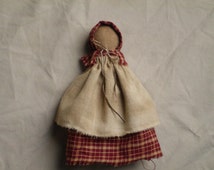
One of my first visitors was a first grader and her Poppy. I asked her what her favorite doll was (sounds like an innocent question). Her eyes became huge, and she backed away from me, emphatically saying, “I’m afraid of dolls.” In my hands was a church doll that I had made out of a cloth napkin. As I put my hand inside the doll and held it up, that sweet girl exclaimed, “It’s a puppet!” and moved back toward the table.

All smiles now, I talked about the “puppet.” Then she reached for it and placed it on her own hand. She felt the head and pulled the ribbons tied around the arms, as I told her how children used to take these “dolls” to church because they made no noise when dropped. Explaining that 200 years ago, the parents made the toys for the children. (I smothered my smile, as she looked at her Poppy with his long, gray beard that touched his chest. Perhaps in her eyes, he qualified!)

Another group of three siblings wandered in with their mother. They eyed the Jacob’s Ladder I had on the table and patiently listened to me read a couple of pages from Courageous Kate.

Finally, I picked up the Jacob’s Ladder and asked if they knew what it was. All three negatively shook their heads. (One even responded, “No, ma’am.”)

Showing off this folk toy crafted of wooden blocks held together by ribbons, I emphasize that the parents would have made this during colonial days. The blocks would have started as a tree; the father cut the blocks. Also called “tumbling blocks,” the mother would have spun the thread to make the ribbon. Once again, I shared that this would have been an allowed Sunday toy, since it was named after the Old Testament man who saw the ladder to heaven.

How fascinated the three were, as they quickly learned the ease of playing the Jacob’s ladder. They were ready to stay and play with this simple toy that had no batteries attached to it.

There are YouTube videos that show the tricks that can be played with the Jacob’s Ladder; here is one. http://www.youtube.com/watch?v=uqU2BX1bIc4

A fourth grader entered with both his parents. Showing John’s pictures in Brave Elizabeth, I shared some South Carolina history. Never having heard of a Marsh Tacky, he found out they were our state horse, the Carolina Parakeet was extinct, and President Andrew Jackson learned to read at an early age. As they left, his dad questioned him about the name of the horses and the Jacob’s Ladder he played with.

http://www.carolinamarshtacky.com/ shares some beautiful pictures of Marsh Tackies.

I loved to see how both the parents and children enjoyed the stories of how children used to entertain themselves with handmade toys and rode horses. Several even asked where a Jacob’s Ladder could be bought.

Living on a farm left little time for childhood play. Most of the time, they raced each other to complete the different chores they had. They also enjoyed tongue twisters that seem quite difficult like, “The skunk sat on a stump and thunk the stump stunk, but the stump thunk the skunk stunk.”

Charles Swindoll commented, “Each day of our lives we make deposits in the memory banks of our children.”

It was a fun evening at Armstrong Elementary, and I appreciated the invitation. There is something about spending time with children that is a blessing; it is better than a B 12 shot. They are inquisitive and open to learning. It shows in their eyes when they see or hear something new. We educators have called them sponges for years, and they are. Even though the world is a strange mystery, they are equal to the task of putting the puzzles together.

Perhaps we should volunteer more at schools or churches; it could help keep us young and engaged with the next generation.

As Nancy Reagan said, “To my young friends out there: Life can be great, but not when you can’t see it. So, open your eyes to life: to see it in the vivid colors that God gave us as a precious gift to His children, to enjoy life to the fullest, and to make it count. Say yes to your life.”

Happy April!

Happy April!


Playing an acoustic guitar, Warren Zevon sang these simple lyrics,

Don’t let us get sick.
Don’t let us get old
Don’t let us get stupid, all right?
Just make us be brave.
Make us play nice
And let us be together tonight.

My friend Clare has memorized these words and shared them with me before. Today I finally got around to listening to their author sing them, and, of course, they took on another dimension.

Music can stop us in our tracks with its bravado and power. Lullabies soothe hurts of the body and spirit. Refrains pull us from our seats to stand at attention. Hearing certain songs can bring back memories of particular places and people. Recognizing certain musical scores catch our attention in a movie, and we know that an explosion of some kind is about to occur.

With the door open now on the sun porch in the mornings, the various birds break the silence. I don’t recognize their warbles, but their cheerful greetings start my new day with carefree welcome.

This is my quiet time of the day; sipping on my first cup of coffee adds to the mix of calm. My prayers of petition are similar to the refrain above, and my thanksgivings are all about being with the ones I love

In The Fellowship of the Ring, J.R. R. Tolkein says, “All we have to decide is what to do with the time that is given us.”

Until seven years ago, the first week of April was all about The Masters. Grandaddy bought his first patron ticket in 1959; then Daddy a few years later. Three generations, four adults and two children, huddled in a blue Dodge for the road trip to Augusta, Georgia. Taking turns with spending time on the lush green course, the grown-ups spent the day. My brother and I weren’t included in those early years, but it was a fun trip. We usually would “play nice” by entertaining ourselves in the parking lot.

For fifty years, four Collins generations enjoyed days following our favorite golfers. Whether hot as blue blazes or under cloudy and windy skies, we savored pimento cheese sandwiches wrapped in green plastic. Then we would watch the rest of the tournament on television.
I have a couple of plastic glasses from our last visit in 2009. Believe that all this week, I will use this glass to saluting fun, family memories at The Masters. I might even have to mimic Daddy with a “Good night nurse!” if there is a poor shot made.

Image result for masters pictures


Design a site like this with WordPress.com
Get started